
Anacampsis
Curtis, 1827
Species Guides
26- Anacampsis agrimoniella(Agrimony Anacampsis Moth)
- Anacampsis argyrothamniella
- Anacampsis comparanda
- Anacampsis consonella
- Anacampsis coverdalella(Coverdale's anacampsis)
- Anacampsis fragariella
- Anacampsis fullonella
- Anacampsis innocuella(dark-headed aspen leafroller moth)
- Anacampsis lacteusochrella
Anacampsis is a worldwide of gelechiid moths established by Curtis in 1827. are predominantly distributed in the Nearctic and Neotropical regions, with additional records from Europe and Asia. Larvae of most species are leafrollers or leaf folders on deciduous trees and shrubs, constructing shelters from rolled or spun leaves. Several species have been studied in detail for their larval and plant associations.
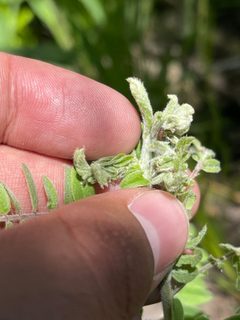
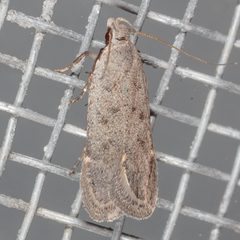
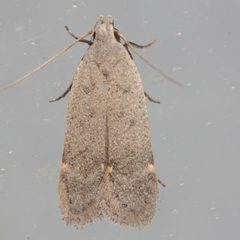
Pronunciation
How to pronounce Anacampsis: /ˌænəˈkæmpsɪs/
These audio files are automatically generated. While they are not always 100% accurate, they are a good starting point.
Identification
are small gelechiid moths with generally inconspicuous coloration. -level identification often requires examination of genital , as external appearance is frequently similar between closely related species. For example, Anacampsis wikeri and A. psoraliella are externally very similar but distinguished by genital characters and larval plant. Larvae can sometimes be differentiated by appearance and where species share host plants.
Images
Habitat
vary by and include forests with aspen or poplar (A. populella, A. innocuella), prairie with leguminous plants (A. wikeri on leadplant), coastal dune systems with creeping willow (A. temerella), and woodlands with Viburnum (A. rhoifructella, A. consonella).
Distribution
Worldwide distribution with concentration in Nearctic and Neotropical regions. Documented from North America (including Illinois, Vermont), Europe (Czech Republic, Germany, Austria, Bulgaria, Bosnia and Herzegovina, Russia, Scandinavia, United Kingdom), and Asia (China, Japan, Korea).
Seasonality
Varies by and latitude. Anacampsis populella is with from May 20 to early August. Anacampsis wikeri has mature larvae in late May, adults active from early June through autumn and winter. Anacampsis temerella larvae occur in May and June.
Host Associations
- Populus tremula - larval food plantA. populella
- Populus tremuloides - larval food plantA. innocuella
- Viburnum prunifolium - larval food plantA. rhoifructella and A. consonella
- Salix repens - larval food plantA. temerella
- Amorpha canescens - larval food plantA. wikeri
Life Cycle
varies by . Anacampsis populella is with , three larval instars, and within leaf rolls. Anacampsis innocuella overwinters as a larva in a . Anacampsis wikeri is univoltine with overwintering . Many species have larval stages that construct leaf rolls or spun shoots for shelter and pupation.
Behavior
Larvae are leafrollers or leaf folders, constructing shelters from plant material. Anacampsis populella larvae roll leaves toward the abaxial surface; 80% use single leaves, 20% roll 2-5 leaves together. Anacampsis innocuella larvae overwinter in on host trees. of some are active through winter months.
Ecological Role
Larvae function as folivores on woody plants, causing measurable leaf damage (A. populella damages approximately 12.2 cm² per larva). Serve as significant prey for natural enemies; A. populella experiences 63-88% mortality from insect , , and birds.
Human Relevance
Some are minor pests of forestry or ornamental plants due to leaf-rolling larval damage. Anacampsis populella and A. innocuella affect aspen stands. Taxonomic interest due to cryptic requiring morphological examination for identification.
Similar Taxa
- Other Gelechiidae generaAnacampsis is placed in Anacampsinae; distinction from other gelechiid requires examination of genital and wing venation patterns.
- Sympatric Anacampsis speciesMultiple may occur on same plants (e.g., A. rhoifructella and A. consonella on Viburnum prunifolium; A. wikeri and A. psoraliella in Midwest prairies), requiring larval examination or genital dissection for reliable identification.
Misconceptions
Anacampsis rhoifructella was originally described from specimens purportedly reared from staghorn sumac (Rhus typhina) fruits; subsequent study established this record was erroneous and the actually feeds on Viburnum prunifolium leaves. The similar A. consonella also feeds on V. prunifolium, and the two were historically confused.
More Details
Taxonomic history
Anacampsis consonella was revised from synonymy under A. rhoifructella to valid status based on larval appearance, , and genital ; Gelechia ochreocostella and G. quadrimaculella were synonymized under A. consonella.
Identification challenges
Sight identification of is problematic for several pairs, especially where plants are sympatric. Reliable requires rearing to associate larvae with host plants, or examination of adult genitalia.
Sources and further reading
- BugGuide
- Wikipedia
- GBIF taxonomy match
- iNaturalist taxon
- NCBI Taxonomy
- Catalogue of Life
- The biology of Anacampsis populella (Clerck) (Lepidoptera, Gelechiidae)
- Biology of Anacampsis innocuella (Zeller), a Leafroller on Aspen1
- Anacampsis rhoifructella (Clemens): clarification of its identity and larval biology, and differentiation from a similar species, Anacampsis consonella (Zeller), revised status (Lepidoptera: Gelechiidae)
- A new, prairie-restricted species of Anacampsis Curtis (Lepidoptera: Gelechiidae) from Illinois
- Zur Morphologie, Biologie und Ökologie von Anacampsis populella (Clerck) (Lep., Gelechiidae) Contributions to the morphology, bionomy and ecology of Anacampsis populella (Clerck) (Lep., Gelechiidae)
- Morphological characterization of the antennae and sensilla distribution in the Anacampsis phytomiella (LEPIDOPTERA: GELECHIIDAE)
- The status and distribution of the nationally rare micro-moth Anacampsis temerella (Lienig and Zeller, 1846) (Lepidoptera: Gelechiidae) in Lancashire in 2021, with observations on other Salix repens L. – feeding Lepidoptera