
Anacampsis comparanda
(Meyrick, 1929)
Anacampsis comparanda is a small gelechiid described by Edward Meyrick in 1929. It is known from limited records in the southwestern United States, specifically Arizona and Texas. The has a wingspan of 13–14 mm. Its and remain poorly documented.
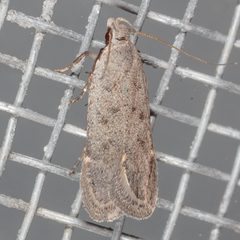
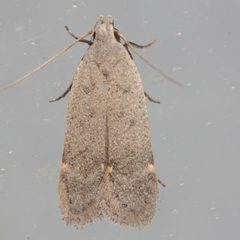
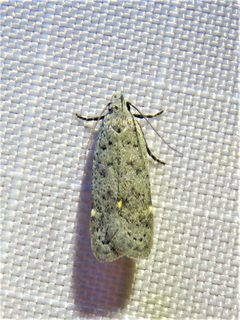
Pronunciation
How to pronounce Anacampsis comparanda: //ænəˈkæmpsɪs kɒmpəˈrændə//
These audio files are automatically generated. While they are not always 100% accurate, they are a good starting point.
Identification
Distinguishing Anacampsis comparanda from other Anacampsis requires examination of genitalia or detailed wing pattern analysis, as external is often similar within the . The southwestern U.S. distribution may help narrow identification possibilities, though overlap with related species occurs in this region.
Images
Appearance
Small with a wingspan of 13–14 mm. As a member of the Anacampsis, it likely has narrow, forewings with characteristic patterning typical of the group, though specific coloration and markings are not well documented in available sources.
Distribution
Recorded from Arizona and Texas in the southwestern United States. Distribution records are sparse, suggesting either genuine rarity or undercollection.
Similar Taxa
- Other Anacampsis speciesExternal is often convergent within the ; genitalia dissection or molecular analysis typically required for definitive identification.
More Details
Taxonomic history
Described by Edward Meyrick in 1929 based on material from the southwestern United States. The epithet 'comparanda' (Latin: to be compared) may allude to its similarity to related species.
Collection status
With only 126 iNaturalist observations and sparse literature records, this appears to be infrequently encountered or underreported.