
Anacampsis fragariella
Busck, 1904
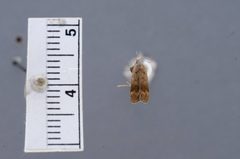
Anacampsis fragariella is a small gelechiid described by August Busck in 1904. It occurs in North America with records from the northeastern United States, Great Lakes region, and Pacific Northwest. The is associated with strawberry plants (Fragaria), with larvae feeding on these . have a wingspan of approximately 16 mm and exhibit characteristic forewing patterning with a darker fascia.
Pronunciation
How to pronounce Anacampsis fragariella: /ˌænəˈkæmpsɪs frəɡəˈriːɛlə/
These audio files are automatically generated. While they are not always 100% accurate, they are a good starting point.
Identification
Distinguished from similar Anacampsis by the combination of light whitish brown forewings with a broad, ill-defined darker mahogany-brown fascia specifically at the third. The relatively uniform base color deepening toward the tip, rather than having strong basal markings, aids separation from . Dark fuscous hindwings provide additional contrast characteristic of this species.
Images
Appearance
Small with wingspan approximately 16 mm. Forewings light whitish brown, deepening in color toward the apex. Broad, ill-defined mahogany-brown fascia present at third of forewing. Hindwings dark fuscous. Overall coloration subtle with muted brown tones.
Distribution
North America: recorded from Illinois, Indiana, Massachusetts, Michigan, and Washington in the United States; also present in Alberta, Canada.
Diet
Larvae feed on Fragaria (strawberries). feeding habits not documented.
Host Associations
- Fragaria - larval larvae feed on Fragaria
Human Relevance
Minor potential relevance as a pest of cultivated strawberries, though economic impact not documented.
Similar Taxa
- Other Anacampsis species share general gelechiid and size; distinguished by specific forewing pattern of A. fragariella with mahogany-brown fascia on light background
- Other Gelechiidae with brown patterningmany small gelechiids exhibit similar coloration; precise wing pattern and geographic range help separate