
Alcathoe
Edwards, 1882
Species Guides
5- Alcathoe autumnalis
- Alcathoe carolinensis
- Alcathoe caudata(Clematis Clearwing Moth)
- Alcathoe pepsioides
- Alcathoe verrugo
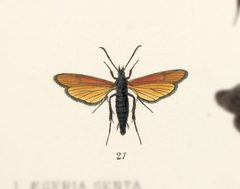
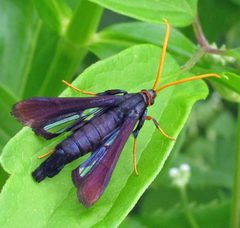
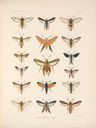
Alcathoe is a of clearwing moths in the Sesiidae, restricted to the New World tropics and extending north into the southern United States. These are notable for their striking mimicry, with five currently recognized north of Mexico. Males possess distinctive morphological features including highly bipectinate and often a single tail-like appendage from the tip that approximates the dangling legs of wasps. The genus is rarely encountered due to activity and general disinterest in light traps.
Pronunciation
How to pronounce Alcathoe: //ˌæl.kəˈθiː//
These audio files are automatically generated. While they are not always 100% accurate, they are a good starting point.
Identification
Distinguished from other sesiid by combination of: New World tropical to southern U.S. distribution; male's single tail-like abdominal appendage (in some ); highly bipectinate male ; specific wing venation and patterns requiring microscopic examination. Alcathoe pepsioides specifically resembles small tarantula hawk but flies with subtly different pattern. Differentiation from similar clearwing genera (e.g., Synanthedon, Melittia) requires examination of genitalia and wing scale patterns.
Images
Habitat
Associated with plants of larvae; specifically areas where Clematis grows for at least one (A. pepsioides). encountered along river shores, in meadows at high elevations (over 10,000 feet recorded), and in areas with flowering vegetation.
Distribution
New World tropics, extending north into southern United States. Five documented north of Mexico. Specific records include: Colorado (Arkansas River west of Cañon City), Kansas (Gypsum Hills), Nebraska (Pine Ridge), Vermont, and high elevation meadows in Colorado (Maroon Bells-Snowmass Wilderness).
Seasonality
active during daylight hours. Records from July and October suggest extended period. Not attracted to light traps; encounters largely opportunistic.
Host Associations
- Clematis - larval plantCaterpillars are stem borers in Clematis
Life Cycle
Larvae are borers in stems of plants (documented for Clematis). Complete with , larval, pupal, and stages. Specific timing of life stages not documented.
Behavior
activity pattern. visit flowers for nectar. pattern distinct from actual —slightly different enough to alert observant observers. Males have been observed perching cooperatively on vegetation. Not attracted to artificial lights; short of lures, encounters are largely by chance.
Ecological Role
Pollination through nectar feeding. Larval boring activity in plant stems. mimicry likely provides protection from through , though some do not closely resemble any specific wasp species.
Human Relevance
Subject of entomological interest due to rarity and mimicry. Occasionally encountered by collectors using lures. One (A. pepsioides) documented in National Week observations as example of moth diversity.
Similar Taxa
- MelittiaAlso clearwing moths with mimicry; Melittia are generally larger and more spectacular, with different wing patterns and larval in cucurbits
- SynanthedonSimilar clearwing ; Synanthedon often attracted to lights (unlike Alcathoe), have different plant associations, and lack the male tail-like abdominal appendage
- EuhagenaAnother sesiid with mimicry and ; Euhagena nebraskae shows similar bipectinate male but differs in specific wing markings and thoracic tuft structure
More Details
Taxonomic history
established by Edwards in 1882. -level requires microscopic examination of genitalia and wing patterns for definitive identification.
Collection challenges
The exemplifies why diversity is underrepresented in collections—standard light-trapping methods fail to capture these , and their -like appearance leads to overlooking by observers expecting typical moth characteristics.
Sources and further reading
- BugGuide
- GBIF taxonomy match
- iNaturalist taxon
- NCBI Taxonomy
- Catalogue of Life
- Bug Eric: Wasp Wednesday: Not Wasp VIII
- Euhagena nebraskae… again | Beetles In The Bush
- Alcathoe Bat (Myotis alcathoe) in the Czech Republic: Distributional Status, Roosting and Feeding Ecology
- The northernmost findings of the Alcathoe bat (Myotis alcathoe von Helversen & Heller, 2001) in Poland
- Male Reproductive Behavior in the Anthomyiid Fly Hylemya alcathoe (Diptera)
- New Genetically Confirmed Record of Myotis alcathoe (Chiroptera, Mammalia) from Ukraine
- Taxonomic revision of the Euploea alcathoe complex (Lepidoptera: Nymphalidae) from Australia and New Guinea
- Hidden in our pockets: building of a DNA barcode library unveils the first record of Myotis alcathoe for Portugal
- Myotis alcathoein Poland and Ukraine: new data on its status and habitat in Central Europe