
Alcathoe caudata
(Harris, 1839)
Clematis Clearwing Moth
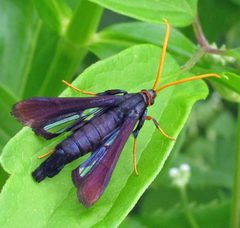
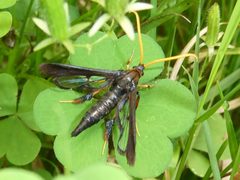
Alcathoe caudata is a clearwing moth in the Sesiidae, commonly known as the Clematis Clearwing Moth. The Alcathoe is restricted to the New World tropics and southern United States, with five occurring north of Mexico. This species exhibits mimicry, with transparent wings and a body form resembling spider wasps. Males possess a distinctive single tail-like appendage from the tip. The caterpillars are stem borers in Clematis plants.
Pronunciation
How to pronounce Alcathoe caudata: /ˈælkəθi kɔːˈdeɪtə/
These audio files are automatically generated. While they are not always 100% accurate, they are a good starting point.
Identification
Distinguished from other clearwing moths by the male's single tail-like abdominal appendage. Resembles spider wasps (Pompilidae) and tarantula hawks in , but flight pattern differs—less direct and hovering than true . Distinguished from Alcathoe pepsioides and other by geographic range and morphological details requiring microscopic examination. The combination of transparent wings, wasp-like body, and association with Clematis plants aids identification.
Images
Habitat
Associated with riparian areas and where Clematis grows. Found along river shores and in areas supporting the larval plant. Elevational range extends to at least moderate elevations, with related documented above 10,000 feet in the western United States.
Distribution
Nearctic region. Documented from Vermont and other eastern United States locations. The extends from New World tropics north into the southern United States, with A. caudata representing the more northern portion of the genus range.
Seasonality
active in mid-summer. Documented observation date of July 15 in Colorado for related suggests summer period.
Host Associations
- Clematis - larval plantCaterpillars are borers in the stems of Clematis
Life Cycle
Complete . Larvae are stem borers in Clematis. emerge in summer. Specific details of and not documented in available sources.
Behavior
activity pattern, flying during daylight hours. Visits flowers for nectar. distinct from true —less direct, with hovering tendencies that differ from spider wasp flight.
Ecological Role
of flowers when visiting for nectar. Larval boring activity in Clematis stems may influence plant growth form, though specific ecological impacts not documented.
Human Relevance
Subject of interest for lepidopterists due to rarity and convincing mimicry. Potential minor impact on ornamental Clematis plantings from larval boring, though not documented as a significant pest.
Similar Taxa
- Alcathoe pepsioidesSimilar appearance and mimicry; distinguished by geographic distribution and subtle morphological differences
- Synanthedon speciesOther clearwing moths with transparent wings; distinguished by body shape, color pattern, and plant associations
- Pompilidae (spider wasps)Mimicry target; distinguished by , structure, and wing coupling mechanism
More Details
Taxonomic note
The five Alcathoe found north of Mexico are rarely encountered or collected, making this poorly represented in most collections.
Mimicry system
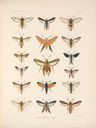
Part of a broader mimicry complex in Sesiidae where clearwing moths have evolved convergent resemblance to various groups, including spider wasps and paper wasps.