
Euhagena nebraskae
Edwards, 1881
Nebraska Clearwing Moth
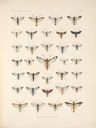
Euhagena nebraskae is a clearwing moth in the Sesiidae, known for its -like appearance and activity. Males exhibit highly bipectinate and wispy white thoracic tufts, while females differ notably in appearance, showing strong . The has been documented in the Great Plains region of North America, including Nebraska and Kansas, and is rarely attracted to light traps.
Pronunciation
How to pronounce Euhagena nebraskae: /juːˈhæɡənə nɛˈbræs.keɪ/
These audio files are automatically generated. While they are not always 100% accurate, they are a good starting point.
Identification
Distinguished from other clearwing moths by the male's highly bipectinate and white thoracic tufts. The combination of transparent wings with dark margins and the specific pattern of thoracic scaling separates it from similar Sesiidae. is marked, with females lacking the male's prominent antennae and thoracic ornamentation. Most similar clearwing lack the distinct white thoracic tufting seen in male E. nebraskae.
Images
Appearance
have transparent wings with dark margins and reduced wing scaling typical of clearwing moths. Males possess highly bipectinate (feathery) and prominent white thoracic tufts composed of hair-like . The thoracic scales and flattened marginal wing scales are distinctive under close examination. is pronounced, with females differing in appearance from males.
Habitat
Documented from prairie and grassland regions, including the Gypsum Hills of south-central Kansas and the Pine Ridge area of northwestern Nebraska. have been observed perching on dried flower . Specific plant requirements for larvae remain undocumented in the provided sources.
Distribution
Recorded from the Great Plains of North America. Documented occurrences include northwestern Nebraska and south-central Kansas. GBIF records indicate presence in Alberta, Canada, suggesting a broader Nearctic distribution across the northern plains.
Seasonality
active in early October, with observations from fall collecting trips. Single individuals have been encountered during relatively warm fall conditions.
Behavior
and generally unattracted to light sources. Males have been observed perching cooperatively on vegetation. are active during daylight hours and are rarely encountered at blacklights, making detection dependent on visual searching or chance encounters. appears -like, consistent with presumed mimicry of Hymenoptera.
Ecological Role
may function as Batesian mimics of or bees, gaining protection from through resemblance to stinging Hymenoptera. The specific model , if any, remains unclear.
Human Relevance
Of interest to lepidopterists and photographers due to its distinctive appearance and habits. lures have been used successfully to attract males for collection in Missouri, demonstrating potential for survey and monitoring applications. Not known to be an agricultural pest.
Similar Taxa
- Melittia spp.Other clearwing moths in the Sesiidae, but generally more spectacular in coloration and pattern; males lack the specific white thoracic tufting and highly bipectinate structure of E. nebraskae
- Synanthedon spp.Some occasionally attracted to blacklights (e.g., S. acerni, S. scitula), unlike E. nebraskae; differ in wing pattern and lack the pronounced male sexual characters
- Alcathoe autumnalisAnother clearwing moth with dark coloration, but differs in specific markings and male genitalia structure
More Details
Photography and observation notes
Close examination reveals remarkable details in structure, including hair-like thoracic scales and flattened marginal wing scales that are not visible without magnification. Cooperative perching in males has been documented under warm fall conditions, though this appears exceptional rather than typical.