
Ceratomia igualana
Schaus, 1932
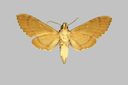
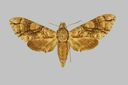
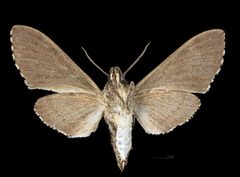
Ceratomia igualana is a hawkmoth in the Sphingidae. It is known from a limited number of specimens collected from Mexico to Rica. The exhibits in size, with females notably larger than males. Biological details including larval plants, , and complete remain undocumented due to its rarity in collections.
Pronunciation
How to pronounce Ceratomia igualana: /sɛɹəˈtoʊmiə ˌɪɡwəˈlænə/
These audio files are automatically generated. While they are not always 100% accurate, they are a good starting point.
Identification
Distinguished from primarily by geographic distribution (Mexico to Rica) and the documented size dimorphism between sexes. Positive identification likely requires examination of genitalia or molecular analysis given the limited descriptive material available. May be confused with other Ceratomia occurring in overlapping range, particularly C. catalpae or C. undulosa where ranges approach; however, C. igualana appears restricted to more southern distributions.
Images
Distribution
Mexico to Rica. Specific preferences within this range have not been documented.
Similar Taxa
- Ceratomia catalpaeOverlapping hawkmoth with somewhat similar southern distribution; C. catalpae is well-known and associated with Catalpa trees, whereas C. igualana is unknown
- Ceratomia undulosaWaved sphinx with broader North American range; northern may approach southern range of C. igualana, but C. undulosa is documented ash-feeder with known larval
More Details
Taxonomic history
Described by Schaus in 1932. The specific epithet 'igualana' likely refers to the type locality.
Collection rarity
Explicitly noted as having been caught in only small numbers; this rarity limits biological understanding and may reflect genuine scarcity, cryptic habits, or under-sampling of its actual range.
Research needs
Critical gaps include: larval plant identification, complete description, , associations, and status assessment.
Sources and further reading
- BugGuide
- Wikipedia
- GBIF taxonomy match
- iNaturalist taxon
- NCBI Taxonomy
- Catalogue of Life
- Ready for a Saturday Night of Bioblitz at the UC Davis Arboretum? | Bug Squad
- For Ash-Dependent Insects, Some Plants Make Good Alternatives—But Others Don't
- Bug Eric: National Moth Week 2021 Review
- Bug Eric: Wasp Wednesday: Wasp Workshop
- Megalopygidae | Beetles In The Bush
- Notodontidae | Beetles In The Bush