
Palmodes dimidiatus
(De Geer, 1773)
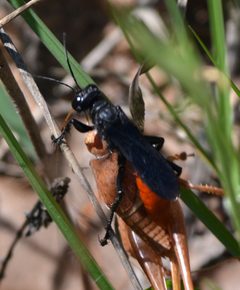
Palmodes dimidiatus is a of thread-waisted wasp in the Sphecidae. It is a solitary, ground-nesting that hunts katydids (Tettigoniidae) as prey for its larval offspring. The species is known to be parasitized by the kleptoparasitic wasp Stizoides renicinctus, which raids its food caches. Palmodes dimidiatus occurs in North America and Middle America.
Pronunciation
How to pronounce Palmodes dimidiatus: /pælˈmoʊdiːz ˌdɪmɪdiˈeɪtəs/
These audio files are automatically generated. While they are not always 100% accurate, they are a good starting point.
Images
Distribution
North America and Middle America.
Diet
females hunt katydids (Tettigoniidae) as food for their larval offspring.
Life Cycle
Females dig burrows in soil, stock with paralyzed prey, and lay a single on a prey item. Larvae consume the provided food and develop within the underground cells.
Behavior
Solitary nesting with females excavating burrows, provisioning them with prey, and sealing the entrance upon completion. Males have been observed taking nectar from flowers.
Ecological Role
of katydids; serves as for kleptoparasitic including Stizoides renicinctus.
Similar Taxa
- Palmodes laeviventrisSame , similar and ; both hunt katydids and are parasitized by Stizoides renicinctus.
- Prionyx spp.Related sphecid with similar thread-waisted appearance and ground-nesting , but hunt grasshoppers (Acrididae) rather than katydids.
- Sphex pensylvanicusLarger black sphecid with similar overall appearance, but hunts katydids rather than katydids and has different body proportions.