
Palmodes
Kohl, 1890
Species Guides
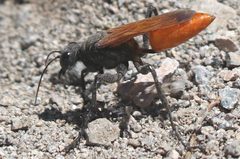
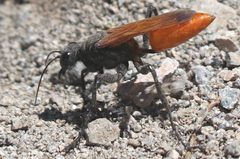
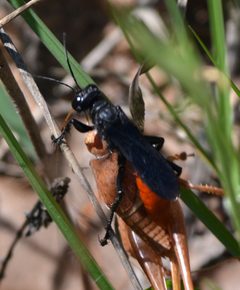
2Palmodes is a of thread-waisted wasps in the Sphecidae, comprising more than 20 described . These solitary are known for hunting katydids (Tettigoniidae), particularly large species such as , which they paralyze and provision in underground burrows for their larval offspring. The genus has attracted scientific attention due to its role as a for kleptoparasitic wasps in the genus Stizoides.
Pronunciation
How to pronounce Palmodes: //pælˈmoʊdiːz//
These audio files are automatically generated. While they are not always 100% accurate, they are a good starting point.
Images
Distribution
of Palmodes are found in North America, with records from the western United States including Nevada, and extending into Mexico. The has also been documented in southern Arizona.
Diet
females hunt katydids ( Tettigoniidae), including large such as (Anabrus simplex), as food for their larvae. Prey items are paralyzed and stored in underground nest .
Host Associations
- Tettigoniidae - preykatydids including
- Stizoides renicinctus - kleptoparasitic that exploits Palmodes food caches
Life Cycle
Females dig burrows in soil, constructing angled tunnels approximately 10 cm long with terminal . Each cell is provisioned with paralyzed prey; a single is laid on the last victim. Larvae feed on the stored prey, with development presumably including a pre-pupal stage typical of sphecid .
Behavior
Females dig burrows in soft soil and provision them with paralyzed katydids. They enter and exit burrows -first, in contrast to many burrowing that back out. Nest entrances are closed and disguised after provisioning. Females make orientation before departing to hunt. Multiple nests may be constructed by a single female during her lifetime.
Ecological Role
As of katydids, including agricultural pests like , Palmodes contribute to natural . They serve as for kleptoparasitic wasps, forming part of complex interactions in western North American .
Human Relevance
Palmodes have been documented providing services through on , which can cause significant agricultural damage during . The has been studied in the context of and - relationships.
Similar Taxa
- PrionyxBoth are sphecid that hunt Orthoptera; Prionyx preys on grasshoppers (Acrididae) rather than katydids, and may be distinguished by prey type and subtle morphological differences.
- SphexLarge black sphecid that also provision nests with Orthoptera; Sphex typically hunt grasshoppers or crickets rather than katydids and may differ in size and geographic range.
More Details
Kleptoparasitism
Palmodes laeviventris has been documented as a for the kleptoparasitic Stizoides renicinctus, with rates estimated at approximately 7.5% in some . This relationship has been studied in Nevada where Palmodes wasps were contributing to control of Mormon cricket populations while simultaneously supporting populations.
Taxonomic History
The was established by Kohl in 1890 and is classified in the tribe Prionychini within the Sphecinae of Sphecidae. Over 20 have been described, though species-level identification requires examination of genitalic characters.