
Eremnophila
Menke, 1964
thread-waisted wasps
Species Guides
1- Eremnophila aureonotata(gold-marked thread-waisted wasp)
Eremnophila is a of solitary thread-waisted wasps in the Sphecidae, comprising approximately nine described distributed primarily across the Americas. These are specialized caterpillar hunters that provision subterranean nests with paralyzed prey for their larvae. are frequent flower visitors, particularly to spotted horsemint (Monarda punctata), goldenrods, and other late-summer asters. A distinctive behavioral trait involves prolonged tandem mating, where males grasp females by the neck and accompany them during foraging activities.
Pronunciation
How to pronounce Eremnophila: /ɛrɛmˈnɒfɪlə/
These audio files are automatically generated. While they are not always 100% accurate, they are a good starting point.
Identification
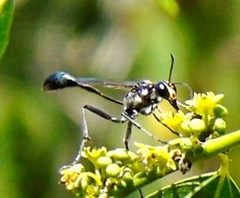
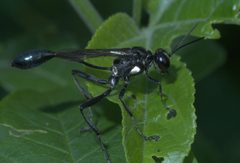
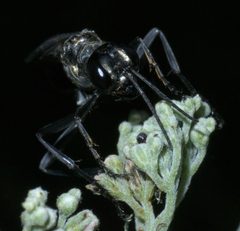
Thread-waisted wasps with an elongated, slender petiole connecting and . Females have a pointed abdominal tip with retractable stinger; males have a blunt abdominal terminus. Eremnophila aureonotata, the most commonly observed eastern North American , displays yellow and black coloration. Distinguished from similar Ammophila by subtle morphological differences in wing venation and body proportions; definitive identification often requires examination of male genitalia or detailed wing patterns.
Images
Habitat
Open meadows, prairies, and disturbed with abundant flowering plants. Nesting occurs in bare or sparsely vegetated soil where females excavate burrows. Frequently associated with spotted horsemint and other late-summer blooming asters that provide nectar resources.
Distribution
North, Central, and South America. E. aureonotata occurs throughout eastern United States and adjacent southern Canada. E. binodis documented in Atlantic tropical rainforest of southeastern Brazil.
Seasonality
active primarily late summer through early autumn (August–October in temperate North America), coinciding with peak bloom of spotted horsemint and goldenrods.
Diet
feed on nectar from flowers including spotted horsemint, goldenrods, and other Asteraceae. Larvae are , consuming paralyzed caterpillars provisioned by the mother.
Life Cycle
Females excavate subterranean burrows, provision each chamber with one or more paralyzed caterpillars, deposit a single on the prey, then seal the nest entrance with debris and pebbles to conceal it from and . Larvae develop through several instars feeding on the living but immobilized prey, then pupate within the chamber.
Behavior
Solitary nesting in soil. Females hunt caterpillars, delivering paralyzing sting before transporting prey to burrow. Prolonged tandem mating : male grasps female by the neck with , remaining attached while female forages at flowers—functioning as mate-guarding to ensure paternity. Some thread-waisted wasps (-level trait) sleep by clamping jaws on vegetation and hanging suspended overnight.
Ecological Role
of caterpillars, potentially providing of herbivorous lepidopteran . contribute to pollination of late-summer flowering plants. Subterranean nesting activities may influence soil structure.
Human Relevance
Generally beneficial; caterpillar may reduce pest . Non-aggressive toward humans; sting used only for prey capture and defensive situations. Attracted to garden plantings of spotted horsemint and goldenrod, providing observation opportunities.
Similar Taxa
- AmmophilaSimilar thread-waisted and caterpillar-hunting ; distinguished by wing venation patterns and subtle body proportions
- SphexLarger relatives in Sphecidae with similar hunting but more robust build and different prey preferences (grasshoppers, katydids)
Sources and further reading
- BugGuide
- Wikipedia
- GBIF taxonomy match
- iNaturalist taxon
- NCBI Taxonomy
- Catalogue of Life
- Thread-waisted wasps really dig spotted horsemint: Thread-waisted wasp, Eremnophila aureonotata — Bug of the Week
- Thread-waisted wasps traveling in tandem - what’s that about? Thread-waisted wasp, Eremnophila aureonotata — Bug of the Week
- Bug Eric: Wasp Wednesday: Wasps in Love
- Bug Eric: Wasp Wednesday: Wasp Workshop
- Archive — Bug of the Week
- Diggers and daubers - Thread-wasted wasps, Sphecidae — Bug of the Week
- Nesting behaviour, male territoriality and larval development of Eremnophila binodis (Fabricius) from Brazil (Hymenoptera: Sphecidae).