Poecilopompilus interruptus interruptus
(Say, 1837)
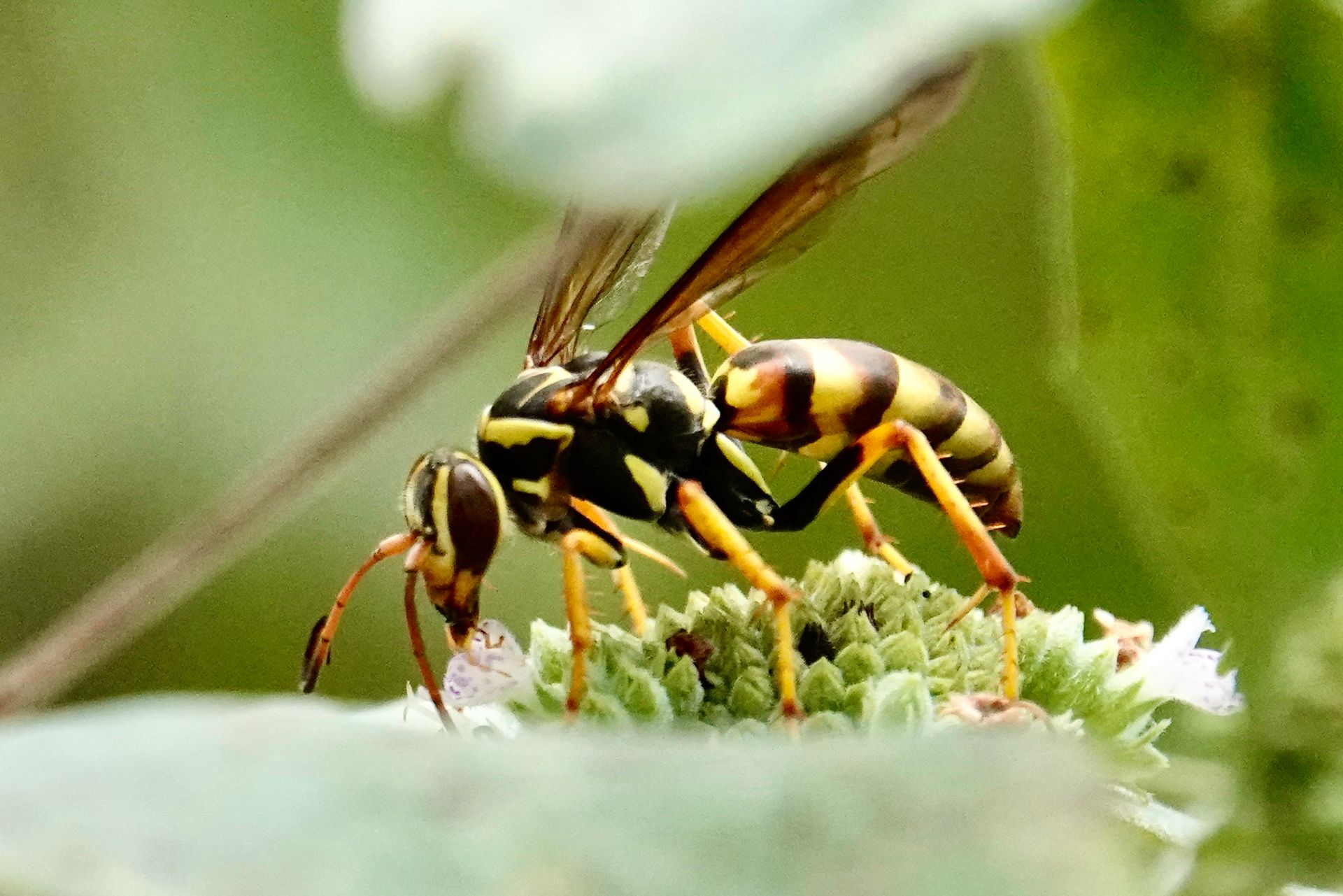
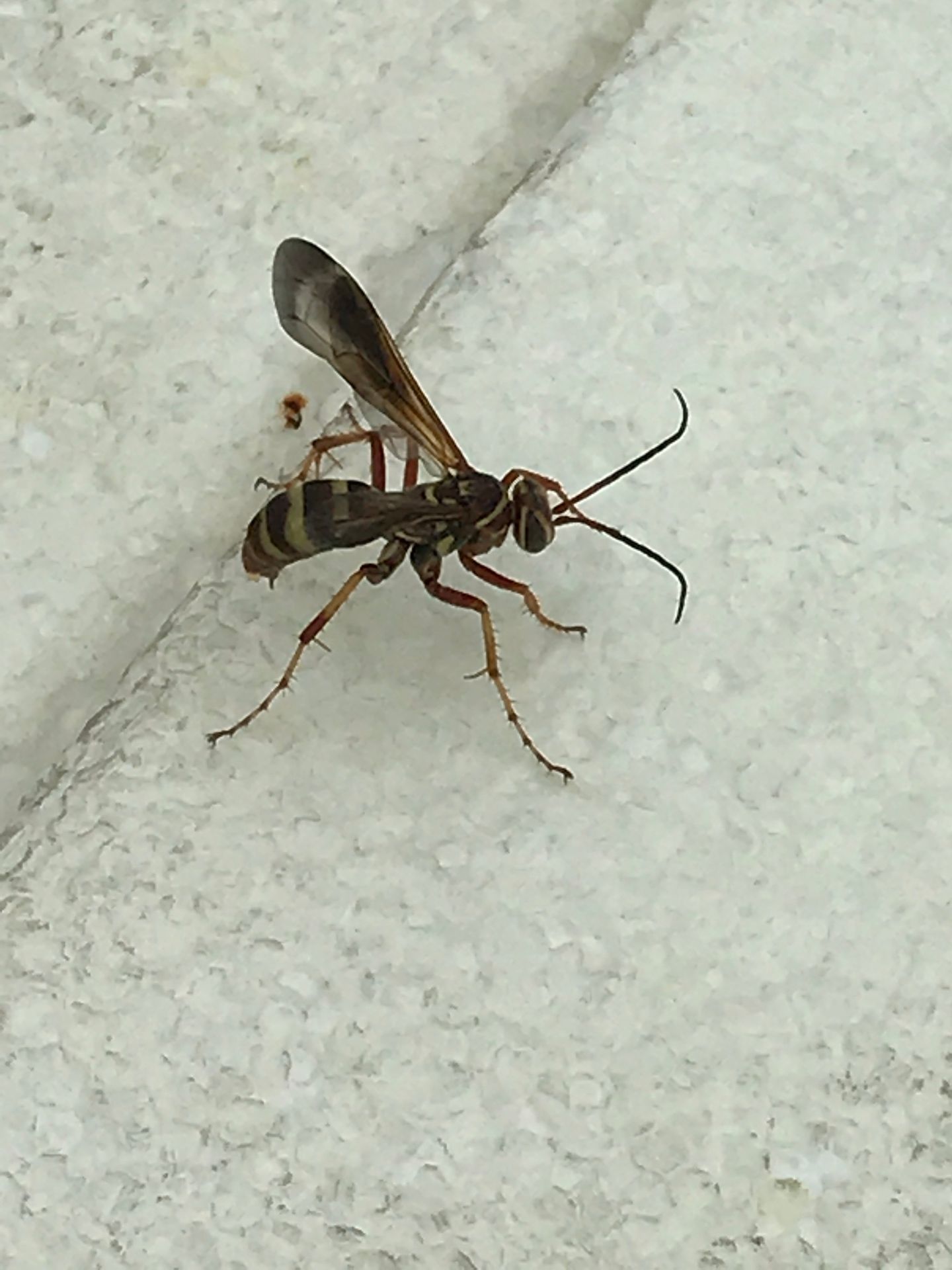
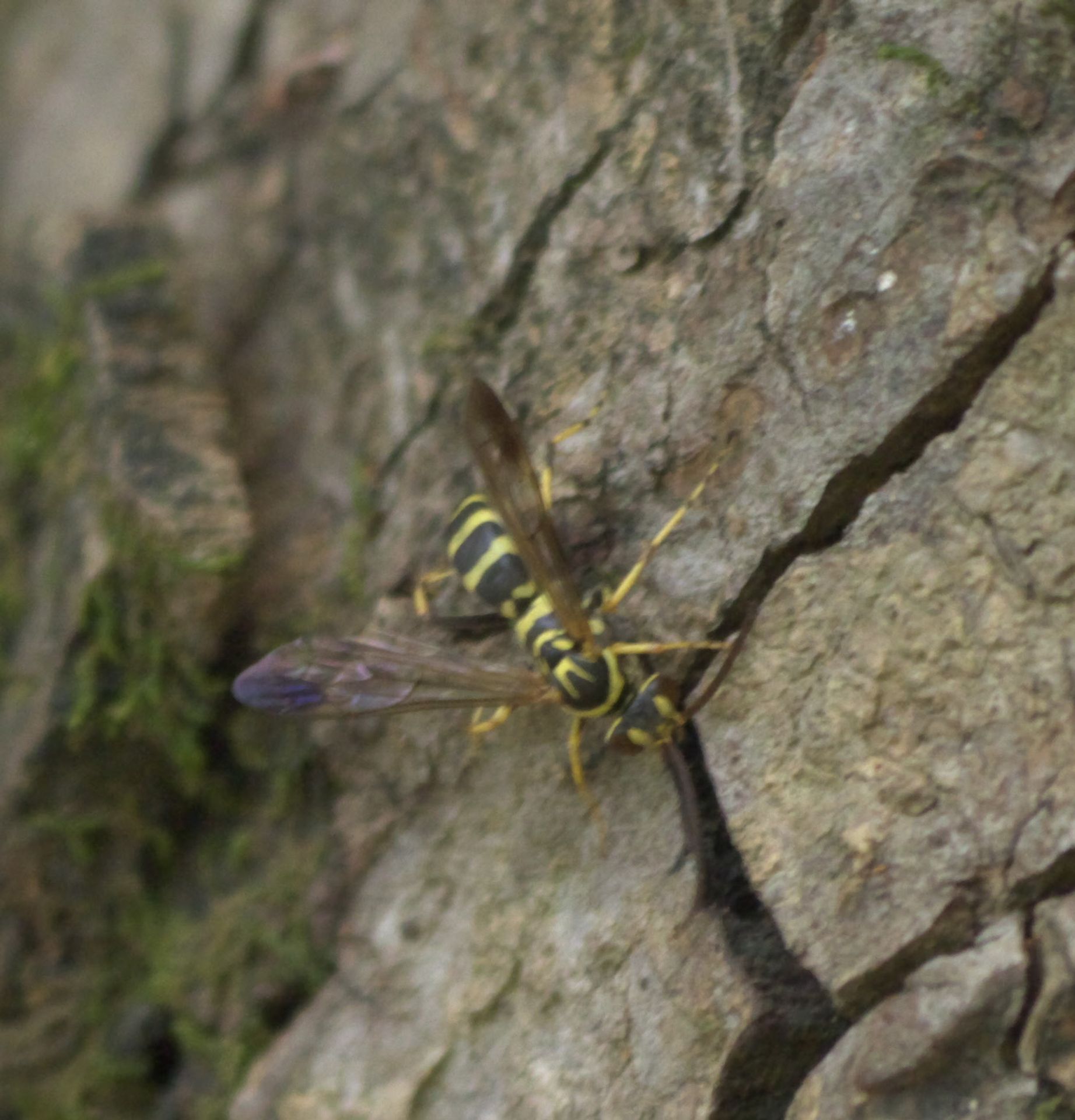
Poecilopompilus interruptus interruptus is a of spider wasp in the Pompilidae. It is part of a known for Müllerian mimicry of paper wasps (Polistes), displaying bold aposematic coloration. The is distributed across much of North America, with this nominate subspecies representing the eastern . Females are solitary hunters that provision nests with paralyzed orbweaver spiders.
Pronunciation
How to pronounce Poecilopompilus interruptus interruptus: /poː.ki.loˈpɔm.pɪ.lus ɪn.tɛˈrʌp.təs ɪn.tɛˈrʌp.təs/
These audio files are automatically generated. While they are not always 100% accurate, they are a good starting point.
Identification
Females of Poecilopompilus interruptus can be distinguished from P. algidus by having 4 weak spines on the front (versus 3 strong spines in P. algidus) and parallel inner margins at the top (versus strongly convergent in P. algidus). Color patterns are not reliable for separating these two , as both exhibit considerable variation. The nominate P. i. interruptus occurs in the eastern United States and lacks the regional color modifications seen in western subspecies.
Images
Distribution
Eastern United States; the nominate represents the eastern of the , with other subspecies occurring in western and southern regions.
Diet
Host Associations
Life Cycle
Females excavate shallow burrows 2.5–11 cm deep in bare soil, angling 45–90 degrees depending on soil . At the bottom of the burrow, a spherical chamber is constructed where the paralyzed spider is placed and a single is laid upon it. The burrow entrance is carefully concealed after oviposition to deter and .
Behavior
Females hunt orbweaver spiders, sting them into weak paralysis, and transport them backwards overland to nesting sites. Prey is often temporarily deposited in vegetation crevices while the burrow is excavated. are frequently observed visiting flowers and extrafloral .
Ecological Role
As a of orbweaver spiders, this helps regulate spider . Its nectar-feeding may contribute to pollination. The participates in Müllerian mimicry complexes with other aposematically colored wasps, reinforcing predator avoidance learning.
Human Relevance
Females can deliver a memorable sting when handled; one collector reported a particularly vivid sting from P. interruptus in Cincinnati, Ohio. The poses minimal risk to humans unless directly handled. Its mimicry of paper wasps may cause unnecessary alarm.
Similar Taxa
- Poecilopompilus algidusOverlapping distribution and highly similar coloration; reliably distinguished only by female tarsal spine count and inner margin shape, not by color pattern
- Polistes spp.Müllerian mimic; P. interruptus resembles paper wasps in coloration and pattern but belongs to different (Pompilidae vs. Vespidae)
More Details
Mimicry variation
While southern of Poecilopompilus tend to mimic large paper wasps (Polistes), northern populations of P. algidus (and potentially P. interruptus in similar latitudes) may instead mimic the all-black, red-banded spider wasp Anoplius. This geographic plasticity in mimicry targets has led to the recognition of multiple .
Nesting observations
Detailed nesting has been documented for P. interruptus: females may bite through hard soil and kick excavated material beneath them with their front legs. Prey transport overland can cover considerable distances, with one observer noting a female carrying a Neoscona oaxacensis spider down a road in Arizona.