
Anoplius apiculatus
(Smith, 1855)
spider wasp
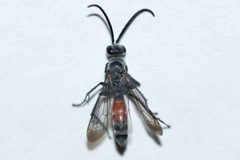
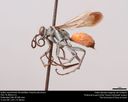
Anoplius apiculatus is a of spider wasp in the Pompilidae. It is a solitary that preys on spiders, specifically known to hunt the Beach Wolf Spider (Arctosa littoralis). The species is part of the diverse Anoplius, which contains numerous spider wasp species across North America. Like other members of its genus, females dig burrows and provision them with paralyzed spiders as food for their developing larvae.

Pronunciation
How to pronounce Anoplius apiculatus: //əˈnoʊpliəs əˌpɪkjʊˈleɪtəs//
These audio files are automatically generated. While they are not always 100% accurate, they are a good starting point.
Images
Diet
Preys on spiders. Documented : Beach Wolf Spider (Arctosa littoralis), a lycosid wolf spider found in sandy .
Host Associations
- Arctosa littoralis - preyBeach Wolf Spider; paralyzed and used as larval food source
Behavior
Females dig burrows and provision them with paralyzed spiders. The stings the spider to induce paralysis, then transports it to a burrow where an is laid on the victim.
Ecological Role
of spiders; contributes to control of wolf spiders in sandy coastal and inland .
Similar Taxa
- Anoplius atroxSimilar black coloration and body form; both are spider wasps in the same that can be confused by non-entomologists
- Anoplius aethiopsLarge black spider wasp with similar general appearance; requires microscopic examination for definitive separation
- Anoplius semicinctusBlack body with red/orange markings on ; similar color pattern and size range
More Details
Taxonomic Note
Catalogue of Life lists this as a synonym, while GBIF and NCBI recognize it as accepted. Taxonomic status may require verification.
Sources and further reading
- BugGuide
- Wikipedia
- GBIF taxonomy match
- iNaturalist taxon
- NCBI Taxonomy
- Catalogue of Life
- Bug Eric: Spider Sunday: Beach Wolf Spider
- Bug Eric: Wasp Wednesday: Anoplius aethiops
- Bug Eric: Wasp Wednesday: Anoplius
- Bug Eric: Wasp Wednesday: Stizoides renicinctus
- Bug Eric: Moving, Again
- Bug Eric: Wasp Wednesday: Poecilopompilus algidus