
Therion circumflexum
(Linnaeus, 1758)
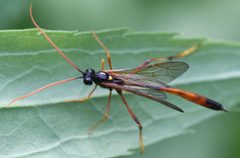
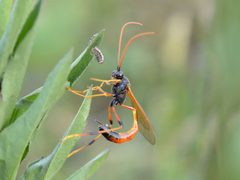
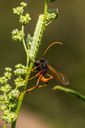
Therion circumflexum is a relatively large ichneumonid , 14–25 mm in length, with distinctive black, orange, and yellow coloration. It is a widespread Palearctic and Nearctic that parasitizes caterpillars, including geometrids, sphingids, notodontids, and noctuids. are active from mid-June through September. The species was first described by Linnaeus in 1758 and has been subject to recent taxonomic revision in Japan.
Pronunciation
How to pronounce Therion circumflexum: //ˈθɪəri.ən ˌsɜːrkəmˈflɛksəm//
These audio files are automatically generated. While they are not always 100% accurate, they are a good starting point.
Identification
Distinguished from by the combination of: orange with black terminal segments and black marking on third tergite; yellow scutellum contrasting with black ; orange-hyaline wings; evenly curved hind tarsal claws; and absence of tooth on . The specific epithet 'circumflexum' refers to the circumflex pattern on the propodeum. In Japan, T. circumflexum can be separated from T. giganteum, T. carinatum, and T. nigrigasterum using morphological keys based on propodeal and coloration patterns.
Images
Habitat
Associated with supporting its ; likely found in deciduous forests, woodlands, and areas with abundant lepidopteran larvae. Specific microhabitat preferences are not documented.
Distribution
Widespread across the (Europe, Asia, North Africa) and the (North America). Confirmed records include Belgium, Canada (Alberta, Red Deer area), and Japan. The has been introduced or naturally occurs across a broad latitudinal range.
Seasonality
fly from mid-June to September in the Palearctic; activity period in Nearctic not explicitly documented but likely similar.
Host Associations
- Ectropis crepuscularia - small engrailed (Geometridae)
- Sphinx ligustri - privet hawk- (Sphingidae)
- Sphinx pinastri - pine hawk- (Sphingidae)
- Notodonta ziczac - pebble prominent (Notodontidae)
- Noctuidae - various owlet moths
Life Cycle
Females lay in caterpillars of . Larvae feed internally on the host and pupate within a thin web. emerge from the host pupal stage.
Behavior
Females use their short, spine-like ovipositor to inject into caterpillars; the structure is not used for defense. are and active during summer months.
Ecological Role
Primary of caterpillars; contributes to of several lepidopteran including Geometridae, Sphingidae, Notodontidae, and Noctuidae. May function as a agent for certain moth pests.
Human Relevance
Potential agent for caterpillars that are agricultural or forestry pests. No known negative impacts on humans; the ovipositor is not a functional stinger.
Similar Taxa
- Therion morioSimilar size and coloration (black and orange/yellow pattern), but T. morio has more extensive black on and different Nearctic distribution; T. circumflexum has more extensive orange on abdomen
- Therion giganteumOverlaps in Japanese distribution; distinguished by larger size and different propodeal and coloration patterns
- Therion carinatumJapanese ; distinguished by carinate propodeal features and coloration differences
- Therion nigrigasterumJapanese ; distinguished by predominantly black and other morphological features
More Details
Taxonomic history
First described by Linnaeus in 1758. Therion rufomaculatum (Uchida, 1928) was synonymized with T. circumflexum, then reinstated as valid, and synonymized again in 2021 based on Japanese revision work.
Etymology
The specific epithet 'circumflexum' refers to the circumflex (curved) pattern on the propodeum, a key diagnostic feature.