
Ectropis crepuscularia
([Denis & Schiffermüller], 1775)
Small Engrailed, Engrailed
Ectropis crepuscularia, commonly known as the Small Engrailed, is a in the Geometridae. The exhibits extreme variation in color and pattern, ranging from distinct markings to nearly plain individuals. It occurs across a broad geographic range including North America, Europe, and Asia, with two per year in most regions. The species has been subject to taxonomic debate regarding whether it represents a single species or a complex of closely related forms.
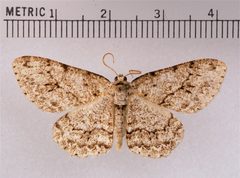
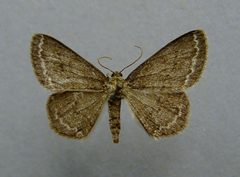
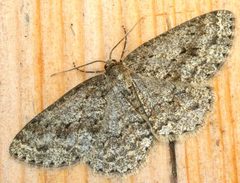
Pronunciation
How to pronounce Ectropis crepuscularia: //ˈɛktrəpɪs ˌkrɛpʊˈskjʊˌlɛərɪə//
These audio files are automatically generated. While they are not always 100% accurate, they are a good starting point.
Identification
The Small Engrailed is distinguished from similar Ectropis and other geometer moths primarily by its extreme phenotypic variability, which can complicate visual identification. Geographic range and period may assist in separation from related . In North America, it overlaps with the Spring Cankerworm (Paleacrita vernata) and Small Phigalia (Phigalia strigataria), but differs in having winged females (both sexes winged) and a longer, more extended flight period. Definitive identification may require examination of genitalia or molecular analysis due to the taxonomic uncertainty surrounding the .
Images
Appearance
Extremely variable in color and pattern; individuals range from well-marked with distinct lines and bands to nearly plain, cryptically colored forms. Wings are typically held flat at rest. Overall coloration varies from pale gray to brown, often with wavy transverse lines when markings are present. Some individuals blend seamlessly with wooden substrates.
Habitat
Occurs in wooded and forested areas, including both deciduous and coniferous . Found in suburban and rural settings with trees and shrubs. are attracted to artificial lights at night.
Distribution
Holarctic distribution: North America (east of the Great Plains, Pacific Northwest, Alaska), Europe (British Isles through Central and Eastern Europe to Russian Far East and Kazakhstan), and Asia (north to Arctic circle, south to western Mediterranean, Asia Minor, Caucasus, Balkans).
Seasonality
(two per year) in most regions. period generally begins in March and extends through October, with peak activity varying by latitude. have been observed from early spring through autumn.
Diet
Larvae feed on deciduous trees and some conifers. Specific plant records are limited.
Life Cycle
Two per year in most of its range. stage not explicitly documented in available sources. occurs in soil or leaf litter.
Behavior
are and attracted to artificial light sources. They fly with their backs oriented to natural light sources; artificial lights cause disorientation and spiraling toward the source. Adults rest with wings held flat, often on vertical wooden surfaces where cryptic forms blend effectively.
Ecological Role
Larval stage functions as a herbivore on woody plants. serve as prey for including bats and birds. Contributes to nutrient cycling through larval feeding and subsequent decomposition.
Human Relevance
are frequently encountered by enthusiasts at blacklight and mercury vapor light setups. The is not known to be an agricultural or forestry pest. Its extreme variability makes it a subject of interest for studies on phenotypic plasticity and cryptic .
Similar Taxa
- Ectropis bistortataRelated Ectropis with which it has been taxonomically confused; separation requires detailed examination
- Paleacrita vernataOverlapping range and early spring , but P. vernata has wingless females and more restricted flight period (winter-early spring only)
- Phigalia strigatariaSimilar and geographic distribution, but P. strigataria has wingless females and more restricted temporal range
More Details
Taxonomic Uncertainty
Debate exists as to whether E. crepuscularia represents a single or a complex of closely related species. The extreme phenotypic variation and broad geographic range have complicated taxonomic resolution.
Light Attraction Behavior
Like many , E. crepuscularia is attracted to artificial lights, but this represents disorientation rather than true attraction. Moths navigate using celestial light sources; artificial lights below the horizon cause them to flip their bodies and spiral toward the source.