
Homolobus
Förster, 1862
Species Guides
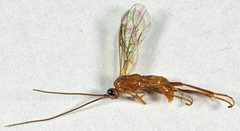
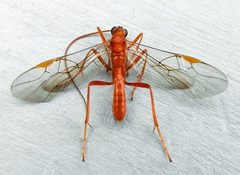
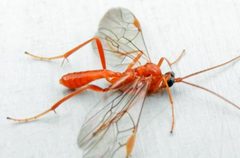
2Homolobus is a of braconid wasps in the Homolobinae, tribe Homolobini. These moderate to large (4.4–14.6 mm body length) are characterized by distinctive wing venation and occipital carina. The genus contains approximately 55 distributed across five subgenera and has a distribution. They are endoparasitoids of caterpillars, particularly those in the Noctuidae and Geometridae.
Pronunciation
How to pronounce Homolobus: /hɔˈmɒloʊbəs/
These audio files are automatically generated. While they are not always 100% accurate, they are a good starting point.
Identification
Body length 4.4–14.6 mm. Long tibial spurs similar to Macrocentrinae, but distinguished by presence of occipital carina and shorter, nearly square submarginal . Ovipositor usually very short, barely extending beyond apex of (except H. armatus, where ovipositor is 0.77× forewing length). Many testaceous (yellowish-brown) with large ocelli. Separated from allied Exasticolus by straight (Rs+M)a (curved in Exasticolus).
Images
Distribution
. Recorded from Denmark, Norway, Sweden, and Iran (northern Iran, with collections from March to November).
Seasonality
active March through November in northern Iran based on collections.
Host Associations
- Noctuidae - endoparasitoid of caterpillars
- Geometridae - endoparasitoid of caterpillars
Behavior
Endoparasitoids of caterpillars. have been collected using .
Ecological Role
agent; parasitizes caterpillars of , potentially regulating herbivore .
Similar Taxa
- ExasticolusAllied in tribe Homolobini; distinguished by curved (Rs+M)a (straight in Homolobus)
- MacrocentrinaeSimilar long tibial spurs, but Homolobus differs in having occipital carina and shorter, nearly square submarginal