
Homolobus infumator
(Lyle, 1914)
Homolobus infumator is a of in the Braconidae, Homolobinae. It was first described from Britain in 1914 and has since been recorded across northern Europe and Iran. Specimens in Iran were collected using during spring through autumn, indicating an extended seasonal activity period. The species belongs to a characterized by distinctive morphological features including a and reduced wing venation.
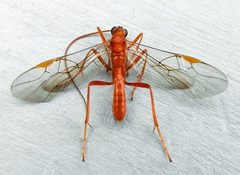
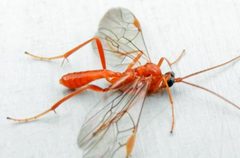
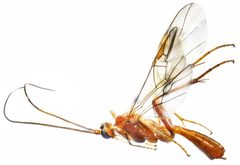
Pronunciation
How to pronounce Homolobus infumator: //hɔˈmɔloʊbəs ɪnˈfjuːmɪtɔr//
These audio files are automatically generated. While they are not always 100% accurate, they are a good starting point.
Identification
In Iran, H. infumator can be distinguished from the sympatric H. truncator using the illustrated key provided by Rakhshani et al. (2012). Members of Homolobus are recognized by their (not elongated as in related ), reduced wing venation with the areolet absent or reduced, and the characteristic infumate (smoked or darkened) wing tips that give this its name.
Images
Distribution
Recorded from Britain (type locality), Denmark, Norway, Sweden, and Iran. In Iran, collected specifically in northern regions. European records indicate presence across Scandinavia and the British Isles.
Seasonality
Active from March through November in northern Iran, based on collections spanning spring, summer, and autumn.
Similar Taxa
- Homolobus truncatorSympatric in northern Iran; distinguished by morphological characters detailed in the Iranian key