
Homolobinae
Genus Guides
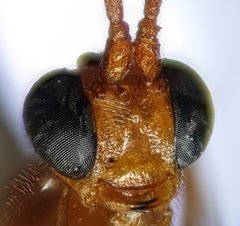
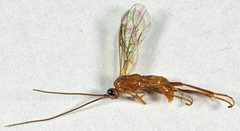
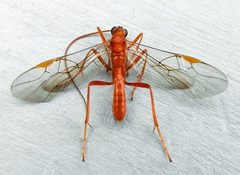
1Homolobinae is a of braconid containing three : Exasticolus, Homolobus, and Westwoodiella. Members are relatively large braconids, often , and function as koinobiont endoparasitoids of caterpillars. The subfamily was previously expanded to include Charmontinae as a tribe. They can be distinguished from similar Macrocentrinae by the presence of an occipital carina.
Pronunciation
How to pronounce Homolobinae: /hɒməˈloʊbɪniː/
These audio files are automatically generated. While they are not always 100% accurate, they are a good starting point.
Identification
Separated from Macrocentrinae by the presence of an occipital carina. Resemble macrocentrines in general body form and size. Non-cyclostome mouthparts and long hind tibial spurs are additional diagnostic features.
Images
Distribution
Global distribution; documented from northern Iran with records including Homolobus infumator and H. truncator.
Seasonality
Activity recorded March through November in northern Iran based on collections.
Host Associations
- Noctuidae - Most recorded belong to this .
- Geometridae - Most recorded belong to this .
Life Cycle
Koinobiont endoparasitoid development within caterpillar . Females lay a single on each host.
Behavior
Most are . Females lay single on caterpillars.
Ecological Role
Koinobiont endoparasitoid of caterpillars, contributing to regulation of lepidopteran .
Similar Taxa
- MacrocentrinaeHomolobines resemble macrocentrines in size and general appearance but differ by presence of occipital carina.
- CharmontinaePreviously treated as tribe Charmontini within Homolobinae; now recognized as separate .
More Details
Taxonomic history
The Charmontinae was previously included within Homolobinae as the tribe Charmontini, but is now recognized as a distinct subfamily.
Genera
Three : Exasticolus and Homolobus (tribe Homolobini), and Westwoodiella (tribe Westwoodiellini).