
Charmontinae
Genus Guides
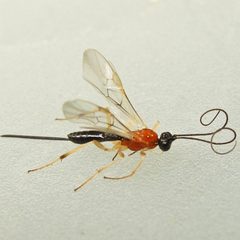
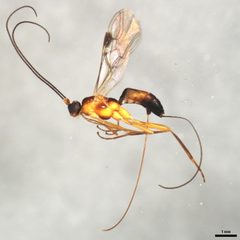
1Charmontinae is a small of within Braconidae (Hymenoptera: Ichneumonoidea). The subfamily contains the Charmon, with 10 recognized distributed primarily in the Palearctic and Oriental regions. The first Southeast Asian record was documented from Thailand in 2023 with the description of Charmon thailandensis. Species identification relies on morphological characters and barcode data.
Pronunciation
How to pronounce Charmontinae: //ˌkɑːrˈmɒntəˌniː//
These audio files are automatically generated. While they are not always 100% accurate, they are a good starting point.
Identification
Members of Charmontinae can be distinguished from other Braconidae by features of the Charmon. Specific diagnostic characters include details of wing venation and body , though precise subfamily-level diagnostic traits require examination of morphological characters detailed in taxonomic literature. The genus Charmon within this subfamily is characterized by features that separate it from related braconid genera, with -level identification requiring comparison of both and molecular data (COI barcode).
Images
Distribution
The Charmon, sole representative of Charmontinae, has a Palearctic-Oriental distribution. Ten are currently recognized, with Charmon thailandensis representing the first documented occurrence in Southeast Asia, specifically from Doi Phu Kha National Park in Nan Province, Thailand.
Similar Taxa
- Other Braconidae subfamiliesCharmontinae is distinguished from other braconid by -level characters of Charmon; precise differentiation requires examination of wing venation and other morphological traits.
More Details
Taxonomic composition
Charmontinae contains a single , Charmon, with 10 recognized . The is considered small and relatively poorly sampled compared to other Braconidae subfamilies.
Molecular systematics
barcode data (COI) have been used to assess phylogenetic relationships within Charmon. Charmon thailandensis appears morphologically similar to C. extensor but occupies a basal position relative to other sequenced based on molecular data.