
Antistrophus
Walsh, 1869
Species Guides
8- Antistrophus jeanae
- Antistrophus laciniatus
- Antistrophus pisum
- Antistrophus rufus
- Antistrophus silphii(Apical Rosinweed Gall Wasp)
- Antistrophus
- Antistrophus(rosinweed stem gall wasp)
- Antistrophus(undescribed Silphium flower gall wasp)
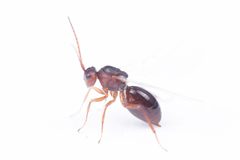
Antistrophus is a of gall wasps in the Cynipidae containing approximately 10 , all restricted to the Nearctic region. Species induce galls on herbaceous plants in four Asteraceae genera: Silphium, Lygodesmia, Chrysothamnus, and Microseris. The genus was first described by Benjamin Walsh in 1869. Some species exhibit complex chemical , using plant volatile monoterpenes as olfactory cues for mate location.
Pronunciation
How to pronounce Antistrophus: //ænˈtɪs.trə.fəs//
These audio files are automatically generated. While they are not always 100% accurate, they are a good starting point.
Identification
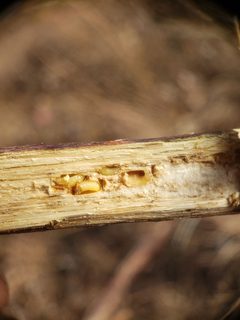
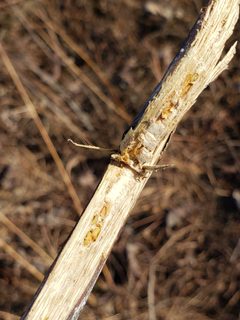
Galls induced by Antistrophus are typically found on stems of their plants. Some species produce externally inconspicuous galls embedded within stems, while others form more visible structures. The A. rufus , previously considered cryptic, can be distinguished using morphological characters including specific phenotypic diagnostic traits; a taxonomic key exists for this complex. Species are generally small typical of the Cynipidae .
Images
Habitat
Prairie and grassland , particularly loess hilltop prairies and similar relict grasslands. Associated with specific plant in the Great Plains and adjacent regions. Some occur in critically imperiled habitat remnants such as Missouri's loess hilltop prairies.
Distribution
Nearctic region only. Documented from the Great Plains and adjacent areas of North America, including Iowa, Missouri, and surrounding states. Distribution of individual is tightly linked to that of their specific plants.
Seasonality
males of A. rufus emerge in spring from galls in stems of plants; females emerge later from the same sites. Activity patterns are tied to of host plants.
Host Associations
- Silphium integrifolium - gall induction for multiple including A. laciniatus and members of the A. rufus complex
- Silphium laciniatum - gall induction for A. rufus; flowering stems used
- Silphium terebinthinaceum - gall induction for A. rufus; show reproductive isolation
- Lygodesmia juncea - gall inductionExclusive for A. lygodesmiaepisum; monophagous association
- Chrysothamnus - gall induction for A. chrysothamni
- Microseris - gall induction for A. microseris
Life Cycle
Larvae develop within galls induced on stems of plants. Galls provide protected environment for development. emerge from galls to mate and oviposit on new host plants.
Behavior
males of A. rufus use olfaction to locate females concealed within plant stems, rather than visual or tactile cues. Males respond to altered host plant volatile monoterpenes—specifically enantiomeric ratios of α-pinene and β-pinene—that serve as proxies for . Adult females use plant volatile monoterpenes (α-pinene, β-pinene, (+)-limonene, (−)-camphene, and β-myrcene) as olfactory cues for host location, representing the first documented case of olfactory host location in a cynipid gall wasp. -specific monoterpene ratios may enable host discrimination.
Ecological Role
Gall-former on herbaceous Asteraceae. Induces stem galls that provide for developing larvae. Some are associated with rare or imperiled prairie and may serve as indicators of habitat quality.
Human Relevance
Potential conservation concern for associated with critically imperiled prairie remnants, such as A. lygodesmiaepisum in Missouri's loess hilltop prairies. Of scientific interest for studies of chemical , - relationships, and speciation.
Similar Taxa
- CallirhytisBoth are cynipid gall wasp ; Callirhytis typically induce galls on oaks (Quercus) rather than herbaceous Asteraceae, and produce harder, more conspicuous galls
- EurytomaBoth are small associated with galls; Eurytoma are chalcidoid often found in galls made by other insects, not primary gall inducers
Misconceptions
The name has been variably misspelled as 'Anistrophus' (without the first 't'). The epithet lygodesmiaepisum has been incorrectly rendered as simply 'pisum' in some sources. A. rufus and related species were previously considered morphologically cryptic but were found to be distinguishable using careful morphological analysis.
More Details
Chemical Ecology
Antistrophus rufus exhibits a novel form of chemical communication in which the gall wasp influences plant chemistry to create mate location cues. Gall induction alters enantiomeric ratios of monoterpenes in Silphium laciniatum stems, and males discriminate between galled and ungalled stems based on these stereochemical differences. This represents a case of the insect manipulating plant chemistry for intraspecific communication.
Taxonomic Complexity
The A. rufus was revised from three to five , with A. laurenae described as new. Species in this complex show possible cospeciation with Silphium plants based on barcode data, though further study is needed. A. laurenae induces externally inconspicuous galls in Silphium integrifolium stems, a host not used by other complex members.
Conservation Status
Some Antistrophus are of conservation concern due to tight association with rare plants in imperiled . A. lygodesmiaepisum is restricted to loess hilltop prairie remnants in northwestern Missouri and adjacent Iowa, where its host Lygodesmia juncea occurs; only about 50 acres of this habitat remain in Missouri.
Sources and further reading
- BugGuide
- Wikipedia
- GBIF taxonomy match
- iNaturalist taxon
- NCBI Taxonomy
- Catalogue of Life
- Rush skeletonplant pea gall wasp | Beetles In The Bush
- ID Challenge #3 | Beetles In The Bush
- Cryptic or underworked? Taxonomic revision of the Antistrophus rufus species complex (Cynipoidea, Aulacideini)
- Plant volatiles are behavioral cues for adult females of the gall wasp Antistrophus rufus
- Stereochemistry of Host Plant Monoterpenes as Mate Location Cues for the Gall Wasp Antistrophus rufus
- Altered host plant volatiles are proxies for sex pheromones in the gall wasp Antistrophus rufus
- New Host Plant and Distribution Records for Antistrophus laciniatus Gillette, 1891 (Hymenoptera: Cynipidae), an Herb Gall Wasp on Silphium integrifolium Michx. (Asteraceae), with Notes on Other S. integrifolium-Associated Wasps