
Antistrophus rufus
Gillette, 1891
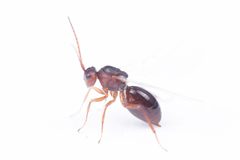
Antistrophus rufus is a gall wasp in the Cynipidae that induces galls in flowering stems of prairie perennials in the Silphium. It is part of the A. rufus , which was revised from three to five based on morphological, ecological, and barcode data. The species exhibits a unique chemical : males and females use plant volatiles as olfactory cues for mate location and host selection. Gall induction alters monoterpene enantiomer ratios in host stems, creating species-specific chemical signals.
Pronunciation
How to pronounce Antistrophus rufus: /ænˈtɪstrəfəs ˈruːfəs/
These audio files are automatically generated. While they are not always 100% accurate, they are a good starting point.
Identification
Distinguished from other members of the A. rufus by morphological characters detailed in taxonomic revision (Nastasi, sp. nov. revision). The complex includes five : A. rufus, A. laurenae (described as new), and three redescribed species. A. laurenae specifically induces externally inconspicuous galls in Silphium integrifolium, a not shared by other complex members. A. rufus itself is associated with Silphium laciniatum and S. terebinthinaceum. Reproductive isolation between subpopulations on different host species has been demonstrated.
Images
Appearance
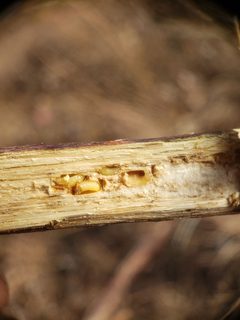
are small in the Cynipidae. As part of the A. rufus , members can be distinguished from by specific morphological characters (50 characters assessed in revision), though detailed external is not extensively described in available sources. Larvae are legless, -like, and develop within plant stems.
Habitat
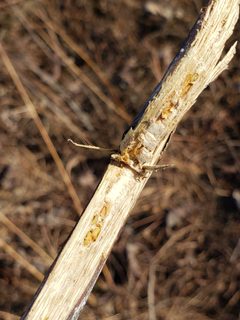
Prairie ; specifically flowering stems of Silphium plants where galls are induced. The inhabits a matrix of dead vegetation in complex prairie .
Distribution
North American prairie region. Described from Illinois, with confirmed records from Kansas, Iowa, and Wisconsin. Occurs where Silphium plants are present.
Seasonality
males emerge in spring before females. Activity coincides with flowering stem development of Silphium plants.
Host Associations
- Silphium laciniatum - plant for gall induction; larvae develop within flowering stemsAssociated with specific monoterpene volatile profiles that serve as olfactory cues for mate location and selection
- Silphium terebinthinaceum - plant for gall induction; larvae develop within flowering stemsReproductively isolated subpopulations demonstrated between on this versus S. laciniatum
- Silphium integrifolium - plantAssociated with A. laurenae within the , not A. rufus itself
Life Cycle
Larvae develop within inconspicuous galls inside flowering stems of Silphium plants. males emerge first in spring, followed by females. Males locate future female sites using olfactory cues from gall-altered plant volatiles. Females locate host plants for oviposition using monoterpene volatile cues.
Behavior
Males rely entirely on olfaction to locate mates concealed within dead plant stems, using changes in monoterpene enantiomer ratios (particularly α-pinene and β-pinene) induced by gall formation as proximate cues. Females use -specific monoterpene blends for discrimination and oviposition site selection. The actively influences host plant chemistry to create these signals.
Ecological Role
Gall-former on prairie Silphium . Gall induction alters plant secondary chemistry, creating volatile signals that may influence interactions. Possible cospeciation with Silphium host plants suggested by Bayesian analysis of barcode data.
Human Relevance
Subject of research on chemical and insect-plant interactions, particularly regarding the novel function of herbivore-induced plant volatiles as mate location cues. No direct agricultural or economic significance documented.
Similar Taxa
- Antistrophus laurenaeMember of same ; distinguished by association with Silphium integrifolium and externally inconspicuous galls
- Antistrophus lygodesmiaepisumCongeneric gall wasp inducing pea-like galls on Lygodesmia juncea; plant and gall differ markedly
- Antistrophus silphiiCongeneric associated with Silphium; distinguished by specific associations and morphological characters
Misconceptions
The A. rufus was previously considered a case of cryptic , but taxonomic revision revealed useful phenotypic diagnostic characters for all members, demonstrating it was not a true cryptic species case.
More Details
Chemical Ecology
A. rufus exhibits a remarkable communication system where gall-induced changes in plant monoterpene stereochemistry serve as proxies. Males respond to synthetic blends matching enantiomeric ratios of galled stems, representing the first documented case of herbivore-induced plant volatiles functioning as mate location cues in insects.
Taxonomic History
The was revised from three to five using morphological, ecological, and barcode data. A. laurenae was described as new, and four species were redescribed with diagnostic characters enabling species identification.
Conservation Context
Dependent on prairie and Silphium plants. Prairie loss in the Midwest may impact , though specific conservation status has not been assessed.
Sources and further reading
- BugGuide
- GBIF taxonomy match
- iNaturalist taxon
- NCBI Taxonomy
- Be thankful for bees this Thanksgiving: Blue orchard mason bees, Rufus-backed cellophane bee, squash bees, perplexing bumble bees, and honey bees — Bug of the Week
- Rush skeletonplant pea gall wasp | Beetles In The Bush
- ID Challenge #3 | Beetles In The Bush
- Cryptic or underworked? Taxonomic revision of the Antistrophus rufus species complex (Cynipoidea, Aulacideini)
- Plant volatiles are behavioral cues for adult females of the gall wasp Antistrophus rufus
- Stereochemistry of Host Plant Monoterpenes as Mate Location Cues for the Gall Wasp Antistrophus rufus
- Altered host plant volatiles are proxies for sex pheromones in the gall wasp Antistrophus rufus