
Aulacideini
herb gall wasps
Genus Guides
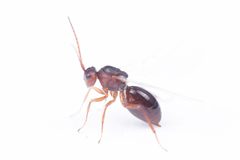
3Aulacideini is a tribe of herb gall wasps within the Cynipidae. Members of this tribe induce galls on herbaceous plants, with documented associations spanning multiple plant families including Asteraceae, Lamiaceae, Papaveraceae, and Plantaginaceae. The tribe has undergone significant taxonomic revision based on molecular phylogenetic analyses, resulting in refined generic boundaries. Notable include Aulacidea, Antistrophus, Neaylax, and the recently erected Fumariphilus.
Pronunciation
How to pronounce Aulacideini: //ˌaʊləˈsɪdeɪˌaɪni//
These audio files are automatically generated. While they are not always 100% accurate, they are a good starting point.
Identification
Aulacideini can be distinguished from the related tribe Aylacini by plant associations: Aulacideini are associated with diverse herbaceous hosts including Asteraceae, Lamiaceae, and Fumarioideae, whereas Aylacini sensu stricto is restricted to Papaver (Papaveraceae). Generic-level identification within Aulacideini relies on morphological characters of and larvae, with diagnostic features including details of , mesosoma, and metasoma structure. The tribe includes previously misclassified due to superficial morphological similarities, now resolved through molecular .
Images
Habitat
Associated with herbaceous vegetation; specific microhabitats determined by plant distribution. Gall induction sites include stems, fruits, and other plant tissues. The tribe occurs in diverse terrestrial environments where host plants grow, including grasslands, meadows, and disturbed .
Distribution
Documented from Europe (Romania, Turkey), with known from Mediterranean and temperate regions. Five species were previously recorded from Turkey as of 2020. The tribe has a broad geographic range corresponding to plant distributions, though precise limits remain incompletely documented.
Host Associations
- Digitalis ferruginea - gall induction on stemfirst record for Aulacidea, possibly first for Plantaginaceae
- Fumaria - gall induction on fruitFumarioideae: Fumarieae; unique among cynipids
- Hypecoum - gall induction on fruitFumarioideae: Hypecoeae; unique among cynipids
- Salvia - association Neaylax restricted to this
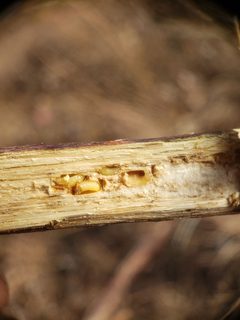
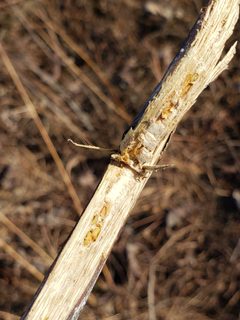
- Silphium integrifolium - gall induction on stemexternally inconspicuous galls
- Sonchus palustris - gall inductionAsteraceae
- Crepis foetida subsp. rhoeadifolia - gall inductionAsteraceae; of Phanacis dobrogicus
Life Cycle
occurs in most documented ; both males and females are known for Aulacidea turcica. Development occurs within plant-induced galls. Terminal instar larvae possess diagnostic morphological characters useful for identification.
Behavior
Females induce galls on plants through oviposition and subsequent manipulation of plant tissue. Gall varies by and host: some produce externally inconspicuous stem galls, while others induce distinct fruit galls. Gall induction represents the primary behavioral interaction with host plants.
Ecological Role
Gall induction modifies plant growth and resource allocation. Galls serve as microhabitats for associated fauna including . Possible cospeciation patterns with host plants have been suggested for some lineages, indicating long-term evolutionary associations.
Human Relevance
Aulacideini have potential value as indicators of plant presence and quality. Some species may influence agricultural or horticultural plants, though specific economic impacts are not well documented. Taxonomic revisions within the tribe have clarified evolutionary relationships among herb gall wasps.
Similar Taxa
- AylaciniHistorically confused with Aulacideini; now restricted to Papaver associations following molecular phylogenetic revision. Aylacini sensu stricto comprises associated only with Papaver (Papaveraceae), whereas Aulacideini encompasses diverse herbaceous .
- PhanacidiniCo-occurs with Aulacideini on Asteraceae ; both tribes induce galls on Crepis and related . Distinguished by morphological and molecular characters, though some historical confusion in generic placement.
More Details
Taxonomic history
The tribe has experienced substantial revision based on molecular phylogenetic analyses. The Fumariphilus was erected in 2022 to accommodate previously misplaced in Aylax and Neaylax, resolving paraphyly and establishing monophyletic lineages. Following this revision, Neaylax was restricted to species associated with Salvia (Lamiaceae), and Aylax was placed in Aylacini sensu stricto.
Research methods
Recent taxonomic work on Aulacideini employs integrated approaches combining morphological character analysis, , scanning electron microscopy of larval structures, and ecological data on associations. These methods have revealed that some previously considered cryptic were instead underexplored morphologically.
Sources and further reading
- BugGuide
- iNaturalist taxon
- NCBI Taxonomy
- Cryptic or underworked? Taxonomic revision of the Antistrophus rufus species complex (Cynipoidea, Aulacideini)
- A new species of herb gall wasp (Cynipidae, Aulacideini, Aulacidea) from Turkey
- Description of Fumariphilus Nieves-Aldrey, gen. nov., a new genus of herb gall wasps, with a key to genera of the tribe Aulacideini (Hymenoptera: Cynipidae)
- New species of gall wasps (Hymenoptera: Cynipidae: Aulacideini and Phanacidini) inducing galls on plants of the genera Sonchus and Crepis (Asteraceae) in Romania (Dobrogea Province) and notes on their parasitoids