
Diaphorininae
Genus Guides
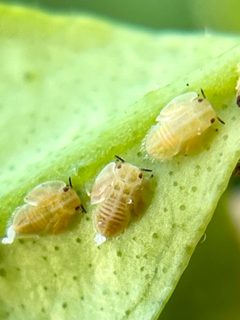
1Diaphorininae is a of psyllids within the Psyllidae. Members are small, plant-feeding Hemiptera characterized by jumping locomotion and typically narrow associations. The subfamily includes economically significant , notably the Asian citrus psyllid (*Diaphorina citri*), a major of .
Pronunciation
How to pronounce Diaphorininae: //ˌdaɪəˌfɔːrɪˈnaɪniː//
These audio files are automatically generated. While they are not always 100% accurate, they are a good starting point.
Identification
Diaphorininae can be distinguished from other Psyllidae by a combination of wing venation patterns and genitalic structures. Members generally possess short, thick and a compact body form relative to some other groups. Precise identification to subfamily level requires examination of microscopic characters including the structure of the male parameres and female proctiger.
Images
Distribution
The has a broad distribution with strong representation in tropical and subtropical regions. Some , including *Diaphorina*, have expanded ranges through human-mediated .
Human Relevance
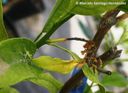
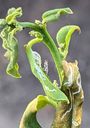
The Asian citrus psyllid (*Diaphorina citri*), a member of this , is among the most economically damaging insect pests of citrus worldwide due to its transmission of *Candidatus* Liberibacter , the causal agents of huanglongbing ().
Similar Taxa
- AphalarinaeAnother of Psyllidae; distinguished by differences in wing venation and genitalic , particularly the structure of the subgenital plate in females.
- PsyllinaeThe nominate of Psyllidae; generally separable by capsule structure and differences in the arrangement of forewing .
More Details
Taxonomic note
The Diaphorininae was established to accommodate previously placed within broader concepts of Psyllidae. The group is supported by both morphological and molecular phylogenetic analyses, though the precise boundaries and included genera remain under study.