
Psyllinae
Genus Guides
10- Arytaina
- Arytainilla
- Cacopsylla(jumping plant lice)
- Ceanothia
- Euglyptoneura
- Nyctiphalerus
- Pexopsylla
- Psylla(jumping plant lice)
- Purshivora
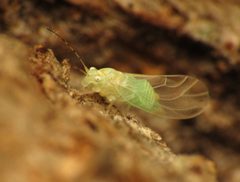
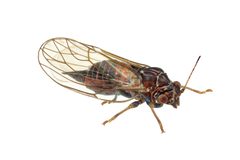
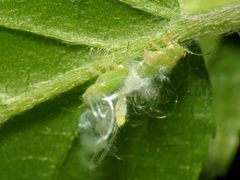
Psyllinae is a of plant-parasitic hemipterans within the Psyllidae, comprising approximately 12 and at least 40 described . Members are commonly known as psyllids or jumping plant lice. The subfamily includes economically significant pest species such as the apple psylla (Cacopsylla mali) and pear psylla (Cacopsylla pyri). Species exhibit biogeographic patterns correlating with altitude and regional flora, with Oriental elements dominating at lower elevations and Himalayan and Australian elements prevalent above 2500 m in montane systems.
Pronunciation
How to pronounce Psyllinae: //ˈsɪlɪniː//
These audio files are automatically generated. While they are not always 100% accurate, they are a good starting point.
Images
Habitat
Montane and lowland ; biogeographic composition varies with altitude. On Gunung Kinabalu, Oriental faunal elements predominate at lower altitudes, while Himalayan and Australian elements become above 2500 m.
Distribution
Documented from Gunung Kinabalu, Malaysia (Sabah), with high apparent local (18 of 22 only known from this locality). Probable Palaearctic faunal elements present in three Cacopsylla species. Related species occur in the Philippines.
Diet
; phloem feeding on plants. Documented host associations include Myrsine dasyphylla (Primulaceae) and Photinia davidiana (Rosaceae). Myrsine represents a novel host for Psylloidea.
Host Associations
- Myrsine dasyphylla (Primulaceae) - of Cacopsylla myrsines; first report of Myrsine as host for Psylloidea
- Photinia davidiana (Rosaceae) - of Cacopsylla photiniae
Human Relevance
Includes minor agricultural pest : Cacopsylla mali (apple psylla) and Cacopsylla pyri (pear psylla).
More Details
Taxonomic Notes
Two Philippine , Cacopsylla aranetae and C. bakeri, were transferred from Psylla to Cacopsylla based on phylogenetic affinities with C. kinabaluensis.
Biogeographic Interpretation
High apparent on Gunung Kinabalu (18 of 22 only known from this mountain) likely reflects insufficient sampling of Bornean and tropical faunas rather than true endemism.