
Diaphorina
Löw, 1880
Species Guides
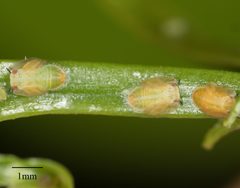
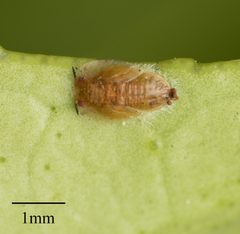
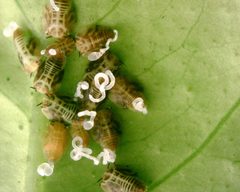
1- Diaphorina citri(Asian citrus psyllid)
Diaphorina is a of Old World sap-sucking hemipteran in the Liviidae, containing approximately 68 to 74 . The genus is typified by the Diaphorininae and includes , the , a globally significant agricultural pest. Species in this genus are phloem-feeders primarily associated with plants in the Rutaceae family.
Pronunciation
How to pronounce Diaphorina: /ˌdaɪəˈfɔːrɪnə/
These audio files are automatically generated. While they are not always 100% accurate, they are a good starting point.
Identification
Members of Diaphorina can be distinguished from other by their placement in the Diaphorininae, characterized by specific wing venation and genitalic structures. The genus is morphologically diverse with approximately 70 described showing variation in coloration and body size. Positive identification to species level requires examination of male genitalia and microscopic features.
Images
Habitat
in this inhabit environments where their plants occur, primarily tropical and subtropical regions supporting Rutaceae vegetation. Specific microhabitat preferences vary by species and are determined by host plant distribution.
Distribution
Old World distribution, with occurring across Asia, Africa, and parts of Europe. The is native to regions spanning from the Middle East through South and Southeast Asia, with some species introduced to other areas through human activity.
Diet
Phloem-feeding on vascular plants. associations are primarily with Rutaceae, though some utilize alternative host plants in other .
Host Associations
- Rutaceae - primary Most feed on plants in this
- Citrus - Includes commercially important citrus
- Murraya - Includes curry leaf tree (M. koenigii)
Life Cycle
Hemimetabolous development with , nymph, and stages. Specific duration varies by and environmental conditions. In D. citri, the life cycle can be completed in 13 to 33 days depending on plant and temperature.
Behavior
are mobile and capable of dispersing between plants. Some show visual attraction to yellow-green colors resembling young citrus shoots. Feeding involves piercing plant tissue to access phloem sap.
Ecological Role
As phloem-feeders, in this can influence plant growth and serve as for plant . D. citri is the primary vector of Candidatus Liberibacter asiaticus, the bacterium causing Huanglongbing (), one of the most destructive citrus worldwide.
Human Relevance
The includes major agricultural pests, most notably D. citri, which threatens global citrus production. Management strategies include using such as Tamarixia radiata and Diaphorencyrtus aligarhensis, as well as approaches. Research on this genus has advanced understanding of insect-plant- interactions and informed development of monitoring tools including -based traps.
Similar Taxa
- TriozaBoth are in Liviidae, but Trioza belongs to Triozinae rather than Diaphorininae, with differences in wing venation and associations
- BactericeraAnother with some agricultural pest , but distinguished by different genitalic structures and typically different plant
More Details
Taxonomic History
The was established by Löw in 1880 and has undergone revision, with the most recent classification placing it in Diaphorininae based on phylogenetic analysis. The Catalogue of Life listed approximately 70 as of 2012.
Research Significance
Extensive genomic resources have been developed for D. citri, including a draft (DIACI_1.1) and transcriptome identifying over 25,600 predicted genes. These resources have supported research on RNAi-based control strategies and understanding of - interactions.
Sources and further reading
- BugGuide
- Wikipedia
- GBIF taxonomy match
- iNaturalist taxon
- NCBI Taxonomy
- Catalogue of Life
- Molecular Biologist Michelle Heck: Challenges of Citrus Greening Disease | Bug Squad
- Walter Leal: Special Award for Citrus Pest Research | Bug Squad
- UC Davis Chemical Ecologist Walter Leal Says We're Like Bolas Spiders: Here's Why! | Bug Squad
- Research Examines Potential of Alternate Host Plant as a Trap Crop for Asian Citrus Psyllid
- Fatal Attraction: A Novel Solution to the Problem of Asian Citrus Psyllid on Residential Citrus
- Mesh to Reduce Bycatch: A Simple Solution to a Sticky Problem
- PSILÍDEO DO CITROS (DIAPHORINA CITRI) CITRUS PSYLID (DIAPHORINA CITRI)
- Diaphorina citri . [Distribution map].
- Diaphorina citri . [Distribution map].
- Asian citrus psyllid, Diaphorina citri (Kuwayama)
- Diaphorina citri . [Distribution map].
- The Asian Citrus Psyllid Genome (Diaphorina citri, Hemiptera)
- Effect of calcium polysulfide on Diaphorina citri (Hemiptera: Liviidae) and its primary parasitoids
- Evaluation of Host Plant Preferred by Asian Citrus Psyllid – Diaphorina citri
- Endosymbionts associated with Diaphorina citri, vector of Candidatus Liberibacter asiaticus
- Potential of the predatory mite Amblyseius herbicolus as biological control agent of Diaphorina citri on plants
- Behavioral Responses and Contact Toxicity of Australian Tea Tree Oil and Its Major Constituents Against the Asian Citrus Psyllid, Diaphorina citri Kuwayama.