
Nipaecoccus
Šulc, 1945
Species Guides
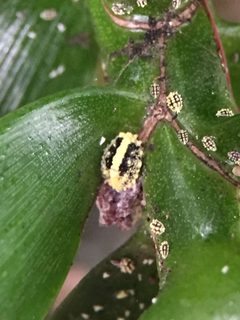
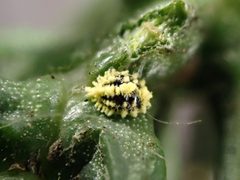
1- Nipaecoccus aurilanatus(Golden mealybug)
Nipaecoccus is a of mealybugs in the Pseudococcidae. The genus includes several economically important pest , most notably Nipaecoccus viridis (hibiscus mealybug or lebbeck mealybug) and Nipaecoccus nipae (coconut mealybug). Species in this genus are characterized by their white, powdery wax covering and feeding habits on a wide range of plants including citrus, palms, ornamentals, and various fruit and row crops. Nipaecoccus viridis has emerged as a significant pest in Florida since 2009, with documented impacts on citrus, blueberries, hemp, and ornamental plants.
Pronunciation
How to pronounce Nipaecoccus: //nɪˈpiː.kə.kəs//
These audio files are automatically generated. While they are not always 100% accurate, they are a good starting point.
Images
Human Relevance
in this , particularly Nipaecoccus viridis, are significant agricultural pests causing direct damage through phloem feeding and indirect damage via honeydew secretion leading to development. N. viridis has been documented on over 50 plants in Florida alone, with major impacts on citrus production in an industry already stressed by . A novel field diagnostic test using 5% sodium hydroxide (pH 14) has been developed for N. viridis identification, producing a species-specific green color reaction in across all life stages. The genus includes species subject to regulations and programs.
Similar Taxa
- PlanococcusBoth contain mealybug pests with similar waxy coverings; N. viridis is frequently found with Planococcus citri in Florida citrus groves and shares overlapping ranges
- ParacoccusSimilar mealybug and pest status; both include in Florida with broad ranges, requiring careful differentiation for management purposes
- FerrisiaOverlapping distribution in Florida and similar appearance as white, waxy mealybugs; females of Ferrisia virgata and Nipaecoccus require microscopic examination for reliable separation
Sources and further reading
- BugGuide
- GBIF taxonomy match
- iNaturalist taxon
- NCBI Taxonomy
- Catalogue of Life
- hibiscus mealybug (Nipaecoccus viridis) adult female - Entomology Today
- Nipaecoccus viridis on citrus - Entomology Today
- Green Light: New ID Test Ready for Invasive Mealybug Pest
- Here We Go Again: Another Invasive Pest in Florida Citrus
- Small but Destructive: Hibiscus Mealybug Emerges as Concerning Pest of Florida Fruits, Ornamentals, Some Row Crops
- Trash Bug Versus Mealybug: Unique Insect Interaction Filmed for First Time
- Nipaecoccus viridis . [Distribution map].
- Nipaecoccus nipae . [Distribution map].
- Nipaecoccus viridis . [Distribution map].
- Nipaecoccus nipae . [Distribution map].
- Coconut mealybug Nipaecoccus nipae (Maskell)(Insecta: Hemiptera: Pseudo coccidae)
- New distributional record of buff coconut mealybug (Nipaecoccus nipae) in Kerala, India
- First Report of Nipaecoccus viridis (Hemiptera: Pseudococcidae) Associated with Citrus Production in the United States
- A Review on the Biology, Ecology and Control of <i>Nipaecoccus viridis</i> (Homoptera: Pseudococcidae)
- First report of invasive species Nipaecoccus viridis (Newstead) (Hemiptera: Coccomorpha: Pseudococcidae) associated with Citrus plantation in Turkey
- The Coffee Red Mealybug, Nipaecoccus coffeae (Hempel) (Hemiptera: Pseudococcidae), an uncommon mealybug attacking coffee plants in Brazil
- Evaluation of potential natural enemies of hibiscus mealybug, Nipaecoccus viridis (Hemiptera: Pseudococcidae) in Florida citrus
- Life history and life table analysis of the predator Hyperaspis polita (Coccinellidae) on the mealybug Nipaecoccus viridis (Pseudococcidae)
- Comparison of electropenetrography waveform libraries for Nipaecoccus viridis (Hemiptera: Pseudococcidae) using different tethering materials and monitor settings
- The Identity and Distribution of the Mealybug SpeciesNipaecoccus filamentosus(Cockerell) (Hemiptera: Pseudococcidae)
- Study of the repellent effect of the insect extract of the mealybug Planococcus cirit on first-phase nymphs of the mealybug Nipaecoccus viridis
- Genome report: genome sequence of the hibiscus mealybug, Nipaecoccus viridis (Newstead), an invasive pest of citrus.