
Nipaecoccus aurilanatus
(Maskell, 1890)
Golden mealybug, coconut mealybug
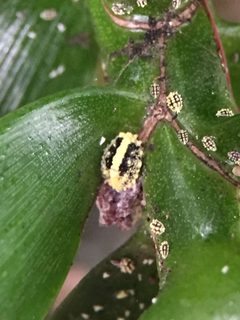
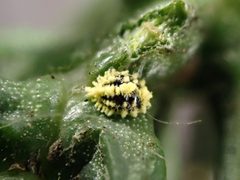
Nipaecoccus aurilanatus, commonly known as the golden mealybug or coconut mealybug, is a of mealybug in the Pseudococcidae. It is native to Australasia and has been introduced to Hawaii and other regions. The species produces white, powdery wax covering its body and is known to exhibit defensive through when disturbed. It serves as prey for larvae, which have been observed incorporating both its wax and live nymphs into their dorsal camouflage packets.
Pronunciation
How to pronounce Nipaecoccus aurilanatus: //nɪˌpiːkoʊˌkʌs ˌɔːrɪˈleɪnətəs//
These audio files are automatically generated. While they are not always 100% accurate, they are a good starting point.
Identification
Nipaecoccus aurilanatus can be distinguished from the closely related Nipaecoccus viridis (hibiscus mealybug) by morphological examination of slide-mounted females; the latter exhibits a unique green coloration in 10% potassium hydroxide (KOH) or 5% sodium hydroxide (NaOH) at pH 14, which N. aurilanatus lacks. N. aurilanatus produces white, powdery wax and has two pairs of slit-like on the dorsum that exude defensive fluid when disturbed.
Images
Distribution
Native to Australia and New Zealand. Introduced and established in Hawaii, United States. Present in North America.
Diet
Phloem-feeding on plant sap; specific plant records are limited in the provided sources.
Behavior
When disturbed or threatened, exudes a bubble of liquid body contents containing free wax through in a defensive termed '.' The dried fluid can gum up mouthparts. First-instar nymphs () are mobile and capable of ; they have been observed being carried by larvae (Ceraeochrysa claveri), potentially facilitating phoretic dispersal.
Ecological Role
Serves as prey for predatory insects, particularly green lacewing larvae (Chrysopidae). larvae incorporate N. aurilanatus wax into their camouflage packets and consume nymphs and . The ' defensive secretions may influence efficacy.
Human Relevance
Documented as a pest of coconut and other plants in its native range and introduced regions. Its N. viridis is a major agricultural pest in Florida, but N. aurilanatus itself has not been documented as causing significant agricultural damage in the provided sources.
Similar Taxa
- Nipaecoccus viridisMorphologically similar ; distinguished by the unique green reaction to alkaline pH (10% KOH or 5% NaOH at pH 14) in N. viridis, which N. aurilanatus lacks. N. viridis is a significant pest in Florida, while N. aurilanatus has not been documented as established there.
- Nipaecoccus nipaeAnother congeneric mealybug with which N. aurilanatus may be confused; N. nipae is known from Florida and has been documented in interactions with larvae. Slide-mounting of females is required for definitive -level identification among Nipaecoccus species.
Sources and further reading
- BugGuide
- GBIF taxonomy match
- iNaturalist taxon
- Catalogue of Life
- hibiscus mealybug (Nipaecoccus viridis) adult female - Entomology Today
- Nipaecoccus viridis on citrus - Entomology Today
- Green Light: New ID Test Ready for Invasive Mealybug Pest
- Here We Go Again: Another Invasive Pest in Florida Citrus
- Small but Destructive: Hibiscus Mealybug Emerges as Concerning Pest of Florida Fruits, Ornamentals, Some Row Crops
- Trash Bug Versus Mealybug: Unique Insect Interaction Filmed for First Time