
Pulvinaria floccifera
(Westwood, 1870)
Cottony Camellia Scale, Cottony Yew Scale, Cottony Taxus Scale
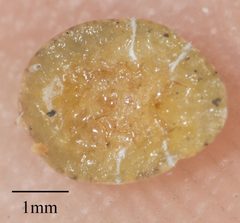
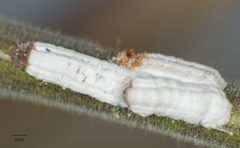
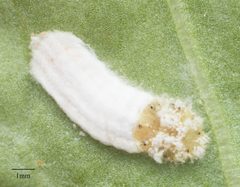
Pulvinaria floccifera is a soft insect (Coccidae) known for producing conspicuous white, cottony ovisacs that cover . It is a significant pest of woody ornamentals including camellia, holly, yew, and tea plants. The has a broad global distribution spanning temperate and subtropical regions. Females are and wingless, while males develop wings for mating. Heavy produce honeydew that supports growth, reducing plant vigor and aesthetic value.
Pronunciation
How to pronounce Pulvinaria floccifera: //ˌpʊl.vɪˈnɛə.ri.ə ˌflɒk.sɪˈfɛr.ə//
These audio files are automatically generated. While they are not always 100% accurate, they are a good starting point.
Identification
Distinguished from other Pulvinaria by the pure white, fluffy ovisac that resembles flocking or cotton, often described as decorative or snow-like. The ovisac is typically longer than the female body. Separated from cottony cushion scale (Icerya purchasi) by preference and ovisac structure; from other soft scales by the distinctive white flocculent wax rather than smooth or colored wax coverings.
Images
Habitat
Associated with woody landscape plants and shrubs; found on leaves and stems of broadleaf evergreens. In natural and cultivated settings including tea orchards, ornamental nurseries, and residential plantings.
Distribution
Widespread globally: recorded from Europe (United Kingdom, France, Germany, Italy, Netherlands, Poland, Portugal, Spain, Sweden, Switzerland, Czech Republic, Denmark, Latvia, Romania, Russia, Ukraine, Yugoslavia, Malta, Madeira, Canary Islands, Sardinia, Montenegro, Georgia, Hungary, Greece, Turkey), Asia (China, Japan, India, Iran, Vietnam, Saudi Arabia, Turkmenistan), Africa (Egypt, South Africa), North America (United States, Canada, Mexico, Bermuda), Central America and Caribbean (Trinidad and Tobago, Jamaica), South America (Argentina), and Oceania (Australia, New Zealand, Seychelles, Faial).
Seasonality
In temperate regions, laying occurs in spring and early summer. Nymphs are present from late spring through fall and winter, completing development by the following spring. emerge in spring to mate and produce ovisacs. In tea-growing regions of Iran, monitoring occurs throughout the growing season (2008-2010 study: weekly sampling March-November).
Diet
Phloem feeder: inserts stylets into vascular tissue of plants to extract sap.
Host Associations
- Camellia sinensis - major pest in tea orchards of northern Iran
- Camellia japonica - primary , reference
- Ilex spp. - holly , significant ornamental
- Taxus spp. - yew, alternative reference
- Callicarpa spp. - beautyberry
- Jasminum spp. - jasmine
- Hydrangea spp. - hydrangea
- Euonymus spp. - euonymus
Life Cycle
are laid within the white cottony ovisac. Nymphs hatch and are initially mobile ( stage), dispersing across leaf surfaces before settling to feed. Nymphs pass through three instars, remaining and feeding throughout summer, fall, and winter. Development completes in spring when emerge. Males develop wings, emerge from beneath their coverings, and fly to locate wingless females. After mating, females produce new ovisacs.
Behavior
Nymphs exhibit limited as before becoming permanently . Females remain fixed in place throughout life. Males are the only mobile adult stage, with brief period for mating. Aggregated spatial distribution pattern for early instars; uniform distribution for later instars and adults in tea orchard studies.
Ecological Role
Herbivore: reduces plant vigor through sap extraction. Honeydew supports growth of fungi (Capnodium spp.), which reduces and aesthetic value of plants. Serves as host for in Encyrtidae and Aphelinidae.
Human Relevance
Significant ornamental pest: reduces aesthetic value of hollies, camellias, and other landscape plants through presence of white ovisacs and black . Economic pest of tea (Camellia sinensis) in northern Iran, where spatial distribution studies support programs. agents have been investigated and utilized.
Similar Taxa
- Pulvinaria aurantiiSimilar ovisac structure; distinguished by preference and geographic distribution
- Pulvinaria polygoniCongeneric soft with cottony ovisac; requires microscopic examination for definitive separation
- Icerya purchasiCottony cushion scale produces similar white ovisac but has different body shape, range, and produces mobile in distinct pattern; I. purchasi has more lobed body and different wax filament arrangement
- Planococcus citriCitrus mealybug produces white waxy secretions but lacks the organized ovisac structure and has filamentous body margins rather than flat oval form
Misconceptions
The white 'flocking' on hollies is sometimes mistaken for artificial snow decoration or fungal growth; it is actually the insect's protective ovisac. The black that often accompanies is frequently blamed as the primary problem, when it is secondary to honeydew production.
Sources and further reading
- BugGuide
- GBIF taxonomy match
- iNaturalist taxon
- NCBI Taxonomy
- Catalogue of Life
- Encyrtid Holdings | Entomology Research Museum
- Flocked hollies - Cottony camellia scale, Pulvinaria floccifera — Bug of the Week
- Spatial distribution of the cottony camellia scale, Pulvinaria floccifera (Westwood) (Hemiptera: Coccidae) in the tea orchards