
Prociphilus caryae
(Fitch, 1856)
hickory woolly aphid
Prociphilus caryae, the hickory woolly aphid, is a of woolly aphid in the Aphididae. Like other members of the Prociphilus, this species is characterized by dense white waxy secretions that cover the body, giving it a distinctive woolly appearance. The species is associated with hickory trees (Carya spp.) as its primary . Woolly aphids in this genus are known for complex that typically involve host alternation between a primary woody host and secondary herbaceous hosts, though specific details for P. caryae are not well documented in available sources.
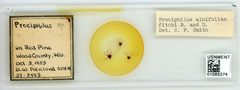
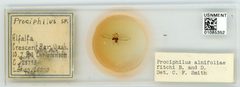
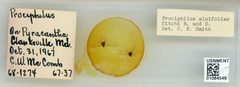
Pronunciation
How to pronounce Prociphilus caryae: /proʊˈsɪfɪləs ˈkɛr.i.aɪ/
These audio files are automatically generated. While they are not always 100% accurate, they are a good starting point.
Identification
Prociphilus caryae can be distinguished from other woolly aphids by its association with hickory trees (Carya spp.) as the primary . The dense white waxy filaments covering the body are characteristic of the Prociphilus, but -level identification requires examination of host plant and morphological details of the cornicles, , and other microscopic features. It may be confused with Prociphilus tessellatus (woolly alder aphid), which occurs on alder (Alnus spp.) rather than hickory.
Images
Habitat
Associated with hickory trees (Carya spp.) in deciduous forest . The inhabits the leaves and twigs of its trees, where the waxy secretions provide protection from and environmental conditions.
Distribution
Eastern North America, where hickory trees of the Carya are native and abundant. The distribution corresponds to the range of its primary plants.
Diet
Feeds on phloem sap of hickory trees (Carya spp.) through . Like other aphids, it extracts nutrients from the vascular tissues of its plant.
Host Associations
- Carya - primary Hickory trees; specific not documented in available sources
Ecological Role
As a phloem-feeding insect, P. caryae functions as a herbivore on hickory trees. The dense waxy secretions produced by this may serve as a defense against and . The species likely serves as prey for various predators including lady beetles (Coccinellidae), lacewings (Chrysopidae), and other insectivorous arthropods. Honeydew excreted by feeding colonies may support fungi and provide food for ants and other insects.
Human Relevance
May occasionally be noticed by observers of hickory trees due to the conspicuous white woolly masses on leaves and twigs. Not considered a significant economic pest of hickory timber or nut production based on available documentation. The is primarily of ecological interest as a component of forest insect .
Similar Taxa
- Prociphilus tessellatusAlso a woolly aphid with dense white waxy secretions, but occurs on alder (Alnus spp.) rather than hickory. The two can be distinguished by plant association.
- Other Prociphilus speciesSeveral other in the occur on different plants including ash (Fraxinus), elm (Ulmus), and other woody plants. Host specificity is the primary distinguishing feature.
Sources and further reading
- BugGuide
- GBIF taxonomy match
- iNaturalist taxon
- NCBI Taxonomy
- Catalogue of Life
- Gall darn it! Gall insects on hickory, oak, and elm, Phylloxera caryaecaulis, Andricus palustris, Colopha ulmicola — Bug of the Week
- Coccinelidae | Beetles In The Bush
- When is a locust borer not a locust borer? | Beetles In The Bush
- These Insect Costume Designers are Dressed to Impress
- Bug Eric: February 2009