Uroleucon picridis
(Fabricius, 1775)
Ox-tongue Aphid
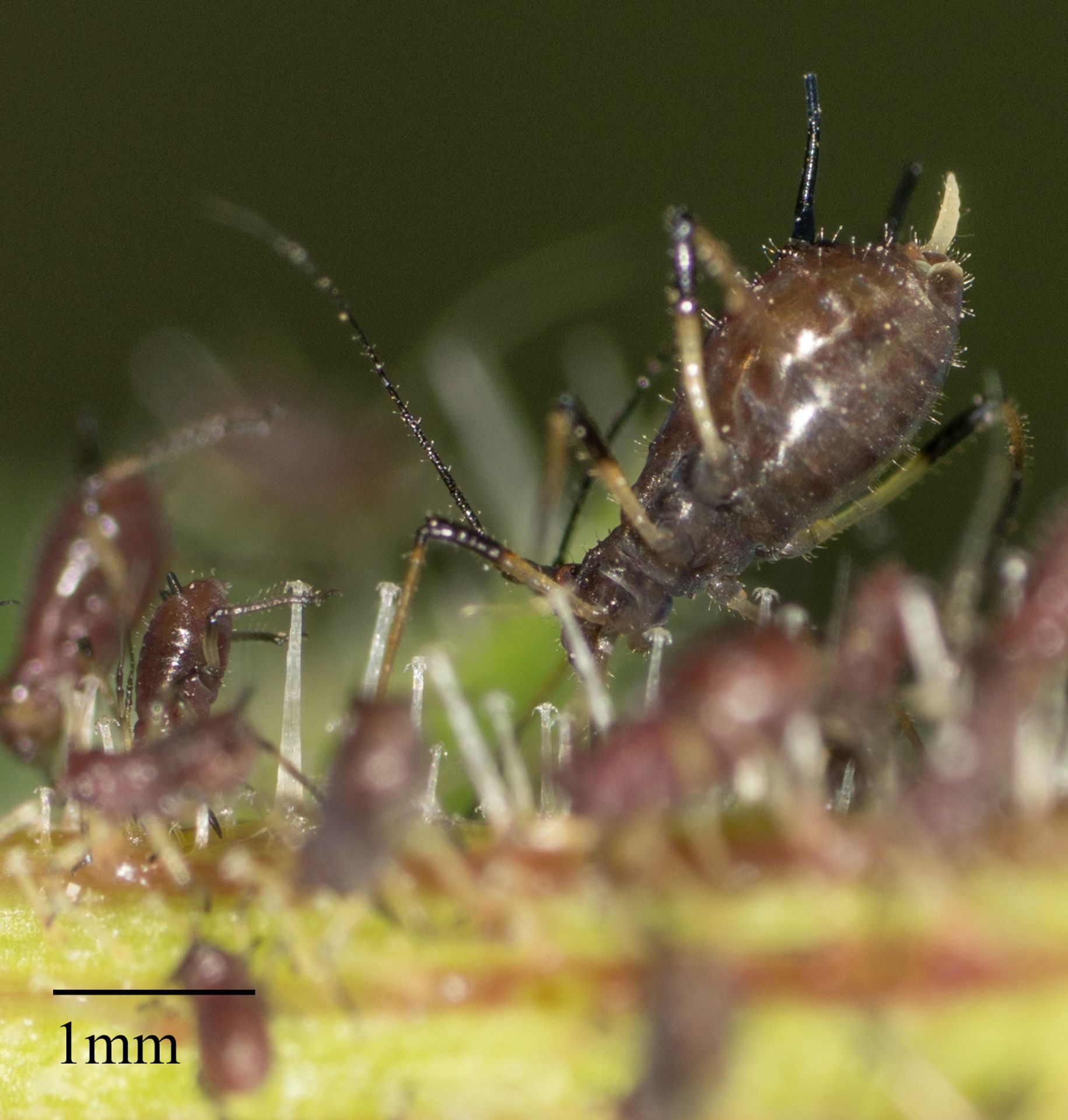
Uroleucon picridis, commonly known as the Ox-tongue , is a of aphid in the Aphididae. Like other members of the Uroleucon, it is a sap-sucking insect that feeds on plants in the Asteraceae family. The species exhibits parthenogenetic during the growing season, with colonies consisting entirely of females. It serves as an important food source for numerous including lady beetles, lacewings, flower flies, and spiders, making it a significant component of garden and agricultural .
Pronunciation
How to pronounce Uroleucon picridis: /ˌjʊəroʊˈljuːkɒn ˈpɪkɹɪdɪs/
These audio files are automatically generated. While they are not always 100% accurate, they are a good starting point.
Identification
Uroleucon picridis can be distinguished from other aphids by its association with plants in the Asteraceae , particularly ox-tongue (Picris) and related . Members of the genus Uroleucon are typically larger than many other genera and often have distinctive coloration. U. picridis may be separated from the closely related Uroleucon ambrosiae (brown ambrosia aphid) by plant preferences, with U. picridis specializing on different Asteraceae hosts. Specific morphological features for -level identification require microscopic examination of characters such as siphunculi and cauda structure.
Images
Habitat
Found in supporting its plants in the Asteraceae , including meadows, grasslands, roadsides, and gardens. The has been observed on cup plant (Silphium perfoliatum) and other native and ornamental plants in this family.
Distribution
Recorded from the conterminous 48 United States. The has a broad distribution across North America where suitable plants occur.
Seasonality
Active during spring and summer when plants are in active growth. Colonies can experience rapid explosions during favorable conditions in early summer.
Diet
Feeds on phloem sap of plants in the Asteraceae , including ox-tongue (Picris), cup plant (Silphium perfoliatum), black-eyed Susan, coneflower, and sunflower. Like other aphids, it inserts its stylets into vascular tissues to extract nutrients.
Host Associations
- Picris - primary eponymous
- Silphium perfoliatum - cup plant, observed supporting large colonies
- Rudbeckia - black-eyed Susan
- Echinacea - coneflower
- Helianthus - sunflower
Life Cycle
Reproduces parthenogenetically during spring and summer, producing live young without mating. This all-female allows for rapid growth when conditions are favorable. and -laying likely occurs in autumn, though specific details for this are not well documented. Multiple occur per year.
Behavior
Exhibits synchronized collective twitching and kicking responses (CTKR) when colonies are disturbed by or vibrations. This coordinated defensive may help deter attacks by small parasitic and other natural enemies. The produces honeydew as a waste product, which attracts ants and other insects.
Ecological Role
Serves as a critical prey base for diverse predatory insects and spiders in natural and managed . Colonies function as 'feeding factories' that support of lady beetles, lacewings, flower flies, predatory , long-legged flies, lynx spiders, and parasitic . These subsequently disperse to control pests on other plants. The honeydew produced by aphids contributes to nutrient cycling and supports sugar-feeding insects.
Human Relevance
Generally considered a minor pest of ornamental and native plants. While large colonies can cause temporary aesthetic damage or minor stress to plants, the is primarily beneficial as a food source for natural enemies that provide of more damaging pests. No significant economic damage has been documented. May serve as an indicator of health in gardens and natural areas.
Similar Taxa
- Uroleucon ambrosiaeBrown ambrosia aphid, closely related and morphologically similar, but typically associated with different plants including Ambrosia (ragweed) and other Asteraceae . U. picridis is distinguished by host preference for Picris and related genera.
- Uroleucon hypochoeridisAnother congeneric with similar and ; distinguished by associations and subtle morphological characters.
- Aphis neriiOleander aphid, shares similar colonial and defensive twitching responses, but differs in bright yellow and black coloration and association with milkweeds and oleander.
More Details
Defensive Behavior Research
Studies of related Uroleucon , including U. hypochoeridis, have documented sophisticated collective defense . When colonies detect or vibrations through visual or tactile cues, individuals engage in synchronized twitching and kicking that can dislodge small attackers. This represents an evolved cooperative defense against natural enemies.
Predator Attraction
Honeydew produced by Uroleucon aphids contains volatile organic compounds that act as , attracting and from distances. This chemical signaling makes colonies highly discoverable by agents including flower flies (Syrphidae), whose larvae are among the most effective predators in many .
Sources and further reading
- BugGuide
- GBIF taxonomy match
- iNaturalist taxon
- NCBI Taxonomy
- Catalogue of Life
- Death to aphids: Brown ambrosia aphid, Uroleucon ambrosiae and other assorted aphids meet flower fly larvae, Syrphidae — Bug of the Week
- Cup plant feeds brown ambrosia aphid, Uroleucon ambrosiae, which in turn provides dinner for lynx spiders, lady beetles, long-legged flies, flower flies, and green lacewings — Bug of the Week
- Archive — Bug of the Week
- Bug of the Week