
Pterocomma
Buckton, 1879
Willow Bark Aphids
Species Guides
6- Pterocomma bicolor(Reddish-brown Willow Bark Aphid)
- Pterocomma populeum(Poplar Bark Aphid)
- Pterocomma rufipes(Rufous Willow Bark Aphid)
- Pterocomma salicis(Black willow bark aphid)
- Pterocomma sanguiceps
- Pterocomma smithiae(black willow aphid)
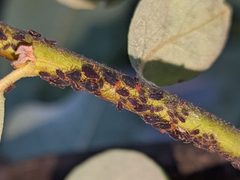
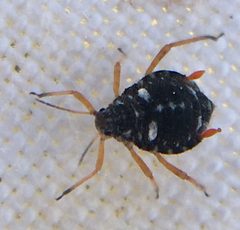
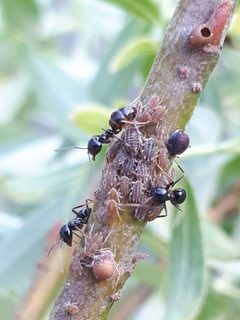
Pterocomma is a of aphids in the Aphididae, commonly known as willow bark aphids. in this genus are phloem-feeding insects primarily associated with woody plants in the genus Salix (willows) and Populus (poplars). The genus exhibits a specialized ecological relationship with ants, which frequently tend colonies and mediate between host plants. Pterocomma species harbor the obligate bacterial endosymbiont Buchnera aphidicola, which provides necessary for survival on their nutrient-poor phloem sap diet.
Pronunciation
How to pronounce Pterocomma: //ˌtɛroʊˈkɒmə//
These audio files are automatically generated. While they are not always 100% accurate, they are a good starting point.
Images
Habitat
Associated with woody plants, particularly willow (Salix) and poplar (Populus) trees. occupy specific microhabitats on host plants including branches, 2-year-old twigs, and bark crevices.
Distribution
Europe; Northern America; distribution records from Denmark, Norway, Sweden, and Vermont (USA). Individual have broader ranges: Pterocomma populeum occurs in Europe, North Africa, and Asia, with introduced in North America, South America, and Australia.
Diet
Phloem sap; the diet is rich in but deficient in , necessitating nutritional supplementation from bacterial endosymbionts.
Host Associations
- Salix - primary plantwillow
- Populus - primary plantpoplar
- Buchnera aphidicola - obligate endosymbiontprovides for development and
- Lasius niger - mutualist-mediated and colony tending
Behavior
Ecological Role
Insect pest of poplar and willow trees; participates in - mutualisms where ants provide protection and services in exchange for honeydew.
Human Relevance
Pterocomma populeum is recognized as a common pest of poplar trees in forestry and ornamental plantings, capable of causing shoot dieback under heavy .
Similar Taxa
- Other Aphididae genera on SalicaceaePterocomma is distinguished by its specific association with bark and twig on Salix and Populus, combined with obligate mutualism for ; other aphids on willows and poplars may occupy leaf-feeding or lack comparable ant-mediated dispersal .
Sources and further reading
- BugGuide
- Wikipedia
- GBIF taxonomy match
- iNaturalist taxon
- NCBI Taxonomy
- Catalogue of Life
- Molecular phylogeny of Macrosiphini (Hemiptera: Aphididae): An evolutionary hypothesis for the Pterocomma-group habitat adaptation
- Ant‐mediated dispersal of the black willow aphid Pterocomma salicis L.; does the ant Lasius niger L. judge aphid‐host quality?
- Complete genome sequence of the obligate endosymbiont Buchnera aphidicola of the poplar bark aphid Pterocomma populeum.