
Pterocomma salicis
(Linnaeus, 1758)
Black willow bark aphid
A bark-feeding specialized on willow trees, commonly known as the black willow bark aphid. Forms mutualistic relationships with ants, particularly Lasius niger, which actively transport and tend colonies. The has been documented in -mediated studies, suggesting ants may evaluate quality when relocating aphid colonies.
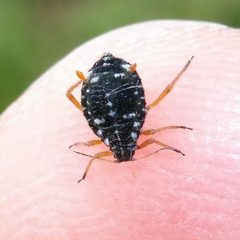
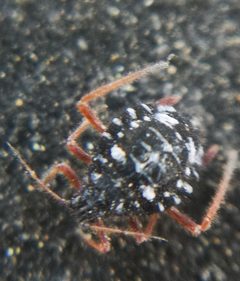
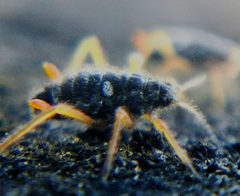
Pronunciation
How to pronounce Pterocomma salicis: /ˌtɛroʊˈkɒmə ˈsælɪsɪs/
These audio files are automatically generated. While they are not always 100% accurate, they are a good starting point.
Identification
Distinguished from other willow aphids by its dark coloration and bark-feeding habit on Salix . Most other willow-feeding aphids (e.g., in Chaitophorus, Pterochloroides) are green, yellow, or pale in color. The combination of black body, willow specificity, and presence in -tended colonies on bark distinguishes P. salicis from and similar aphids.
Images
Appearance
Dark-colored , typically black or very dark brown. As a bark-feeding , body form is relatively robust compared to leaf-feeding aphids. Long and cornicles (siphunculi) present, characteristic of the Aphididae. Winged and wingless morphs occur; winged forms (alatae) have darker, more sclerotized bodies adapted for .
Habitat
Associated with willow (Salix) trees, specifically on bark rather than leaves. Colonies occur on woody stems and branches. Requires presence of tending ants for optimal colony persistence and .
Distribution
Documented from Belgium (including Brussels-Capital, Flemish, and Walloon regions) and Denmark based on GBIF records. Likely more widespread across Europe given plant distribution and historical description by Linnaeus (1758).
Diet
Phloem-feeding on willow (Salix spp.). Feeds on bark tissue rather than leaves.
Host Associations
- Salix - obligate plant-level association; specific willow not confirmed in available sources
- Lasius niger - mutualistic partnerAnts tend colonies and mediate ; ants have been observed to judge quality during relocation
Behavior
Forms dense colonies on willow bark. Engages in with ants, exchanging honeydew for protection and transport. -mediated is a key behavioral feature: Lasius niger actively relocate aphids between plants, with evidence that ants assess host quality during dispersal decisions.
Ecological Role
Primary consumer converting plant phloem into accessible to higher . Honeydew production supports and potentially growth. Ant mutualism may influence local ant structure and foraging patterns.
Similar Taxa
- Pterocomma spp. share willow association but differ in coloration, body size, or specific microhabitat preferences; P. salicis distinguished by black coloration
- Chaitophorus spp.Other common willow aphids, but typically pale green or yellow and often leaf-feeding rather than bark-feeding
More Details
Ant-aphid mutualism specificity
Study by Fischer et al. (2002) demonstrated that Lasius niger can discriminate between plants of differing quality when dispersing P. salicis colonies, suggesting sophisticated partner choice in this mutualism.