
Pseudacysta perseae
(Heidemann, 1908)
Avocado Lace Bug
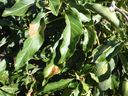
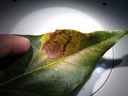
Pseudacysta perseae is a lace bug in the Tingidae, originally described by Heidemann in 1908. It is a significant foliar pest of avocado (Persea americana), causing characteristic damage to leaves. The has undergone substantial range expansion from its original Caribbean distribution to include Mexico, the southern United States, and Central America. It has been introduced to California, where genetic studies indicate at least two separate invasion events. The species passes through four nymphal instars and exhibits in antennal coloration, with males having a substantially darker fourth antennal segment.
Pronunciation
How to pronounce Pseudacysta perseae: /ˈsjuːdəˌsaɪstə ˈpɜːrsiˌiː/
These audio files are automatically generated. While they are not always 100% accurate, they are a good starting point.
Identification
males exhibit with respect to the coloration of the fourth antennal segment, which is substantially darker than in females. The was previously reported to have five nymphal instars, but this has been corrected to four instars based on developmental studies. As a lace bug in the Tingidae, it can be distinguished from other avocado pests by its characteristic reticulated wing covers and association with lace bug damage patterns on avocado foliage.
Images
Habitat
Avocado orchards and areas with avocado . The is specifically associated with avocado plants (Persea americana) and has been recorded in commercial avocado production regions.
Distribution
Originally described from the Caribbean region. Currently distributed in North America (Mexico, USA including California, Florida, Georgia, Louisiana, Texas), Central America & Caribbean (Bermuda, Cuba, Dominican Republic, Guadeloupe, Guatemala, Jamaica, Martinique, Puerto Rico, Trinidad and Tobago, United States Virgin Islands), and South America (French Guiana, Venezuela). Range expansion into California has been documented, with genetic evidence for multiple invasion events.
Diet
Phytophagous; feeds on avocado foliage. Specific feeding mechanism involves typical of Hemiptera, extracting plant fluids from avocado leaves.
Host Associations
- Persea americana - primary avocado
Life Cycle
Developmental stages include and four nymphal instars (corrected from previous reports of five instars). Thermal requirements for development have been estimated at 476.19 , with minimum, optimal, and maximum temperature thresholds estimated at approximately 1.72-9.78°C, 31.04-31.57°C, and 34.05-39.38°C respectively. At 32°C, females exhibit multiple egg-laying peaks throughout their lifespan, with maximum daily of approximately 6 eggs and average daily egg-laying rate of 3.08 eggs over a 69-day span.
Behavior
At 32°C, females show four distinct -laying peaks around days 11, 35, 54, and 63 of life. Maximum egg proportion of 0.49 occurs around day 31, with average daily fertility proportion of 0.10. The causes characteristic damage to avocado leaves through feeding activity.
Ecological Role
Primary pest of avocado production. Serves as for various natural enemies including (Erythmelus klopomor in the Mymaridae, and Trichogrammatidae), predatory mirids (Stethoconus praefectus), and fungi (Metarhizium anisopliae and bassiana). Subject to efforts in affected regions.
Human Relevance
Significant agricultural pest of avocado crops, causing foliar damage that can impact tree health and productivity. Management strategies include applications and conservation of natural enemies. Subject to ongoing research on thermal to inform management timing and predict in avocado production regions. Foreign exploration for natural enemies has been conducted to support programs.
Similar Taxa
- Corythucha spp.Other lace bug in the same Tingidae; Pseudacysta perseae is distinguished by its specific association with avocado and geographic distribution
- Corythucha arcuataOak lace bug in the same , which shares the same Erythmelus but is distinguished by plant association
Misconceptions
The was previously reported to pass through five nymphal instars; this has been corrected to four instars based on detailed developmental studies.
More Details
Thermal biology
Development and are strongly influenced by temperature fluctuations. Studies utilizing multiple nonlinear regression models (Brière-2, Lactin-2, Lobry-Rosso-Flandrois, Performance-2, Ratkowsky) have characterized temperature-dependent development, with optimal temperatures around 31°C and upper thermal limits near 34-39°C.
Natural enemy complex
Documented natural enemies include: (1) Erythmelus klopomor (Mymaridae), first recorded in Florida; (2) Trichogrammatidae egg parasitoids recorded in Mexico; (3) predatory mirid Stethoconus praefectus, established in Florida; (4) coccinellid Cycloneda sanguinea, Stethorus sp., and Pentilia sp.; and (5) fungi Metarhizium anisopliae and bassiana with field incidences of 3% and 9.4% respectively in Mexican .
Invasion history
genetic structure indicates range expansion through multiple introduction events, with evidence for a second invasion into California distinct from earlier establishment. This pattern suggests ongoing and potential in suitable avocado-growing regions.
Sources and further reading
- BugGuide
- GBIF taxonomy match
- iNaturalist taxon
- NCBI Taxonomy
- Catalogue of Life
- Publications | Entomology Research Museum
- Pseudacysta perseae (Heidemann). [Distribution map].
- Pseudacysta perseae . [Distribution map].
- Avocado Lace Bug, Pseudacysta perseae (Heidemann) (Insecta: Hemiptera: Tingidae)
- Distribución y enemigos naturales de la chinche de encaje del aguacate Pseudacysta perseae (Hemiptera: Tingidae) en Nayarit, México
- The effects of fluctuating temperatures on degree-day development and life history parameters of Pseudacysta perseae (Hemiptera: Tingidae)
- DistribuciÓN Y Enemigos Naturales de la Chinche de Encaje Del Aguacate Pseudacysta Perseae (Hemiptera: Tingidae) En Nayarit, MÉXico
- Biology ofStethoconus praefectus(Distant) (Heteroptera: Miridae), A Newly Established Predator of the Avocado Lace Bug,Pseudacysta perseae(Heteroptera: Tingidae), in Florida
- First Record ofErythmelus klopomor(Hymenoptera: Mymaridae) as a Parasitoid of the Avocado Lace Bug,Pseudacysta perseaeHeteroptera: Tingidae)
- Range expansion by avocado lace bug, Pseudacysta perseae (Hemiptera: Tingidae): a reassessment of population genetic structure reveals evidence for a second invasion into California.