
Pseudacysta
Blatchley, 1926
avocado lace bug
Species Guides
1- Pseudacysta perseae(Avocado Lace Bug)
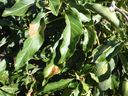
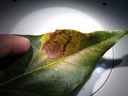
Pseudacysta is a of lace bugs ( Tingidae) containing a single described , P. perseae. The genus is notable for its specialized association with avocado as a plant. The sole species is a significant agricultural pest causing foliar damage to avocado crops and has undergone substantial range expansion across the Americas.
Pronunciation
How to pronounce Pseudacysta: //ˌsuːdəˈsɪstə//
These audio files are automatically generated. While they are not always 100% accurate, they are a good starting point.
Identification
Pseudacysta can be distinguished from other lace bug by its status and exclusive association with avocado (Persea americana). The genus is characterized by typical lace bug with reticulated, lace-like forewings. males exhibit in antennal coloration, with the fourth antennal segment substantially darker than in females. The genus contains only one described , P. perseae, simplifying identification at the species level.
Images
Habitat
Commercial and wild avocado orchards; associated exclusively with avocado trees (Persea americana).
Distribution
Native to the Caribbean; expanded to Mexico, United States (California, Florida, Georgia, Louisiana, Texas), Central America (Guatemala), and South America (French Guiana, Venezuela). Present in Bermuda, Cuba, Dominican Republic, Guadeloupe, Jamaica, Martinique, Puerto Rico, Trinidad and Tobago, and U.S. Virgin Islands. California show evidence of multiple invasion events.
Diet
Phloem feeder; feeds on avocado leaf tissue.
Host Associations
- Persea americana - obligate avocado; sole known plant
Life Cycle
, four nymphal instars, . Thermal requirement for development estimated at 476.19 . Development time varies with temperature regimen; optimal development occurs around 31°C. Females exhibit multiple egg-laying peaks throughout adult life, with maximum observed around day 35.
Ecological Role
Agricultural pest causing foliar damage to avocado crops. Serves as for natural enemies including (Trichogrammatidae, Mymaridae), predatory insects (Cycloneda sanguinea, Stethorus sp., Pentilia sp., Stethoconus praefectus), and fungi (Metarhizium anisopliae, bassiana).
Human Relevance
Significant economic pest of avocado production. Subject to programs involving applications and using natural enemies. Range expansion has increased its agricultural impact across multiple growing regions.
Similar Taxa
- CorythuchaBoth are lace bug with reticulated forewings, but Corythucha contains multiple with broader ranges and different host plant associations.
- StephanitisAnother lace bug with similar , but associated with different plants and not restricted to avocado.
Sources and further reading
- BugGuide
- Wikipedia
- GBIF taxonomy match
- iNaturalist taxon
- NCBI Taxonomy
- Catalogue of Life
- Publications | Entomology Research Museum
- Pseudacysta perseae (Heidemann). [Distribution map].
- Pseudacysta perseae . [Distribution map].
- Avocado Lace Bug, Pseudacysta perseae (Heidemann) (Insecta: Hemiptera: Tingidae)
- Distribución y enemigos naturales de la chinche de encaje del aguacate Pseudacysta perseae (Hemiptera: Tingidae) en Nayarit, México
- The effects of fluctuating temperatures on degree-day development and life history parameters of Pseudacysta perseae (Hemiptera: Tingidae)
- First Record ofErythmelus klopomor(Hymenoptera: Mymaridae) as a Parasitoid of the Avocado Lace Bug,Pseudacysta perseaeHeteroptera: Tingidae)
- DistribuciÓN Y Enemigos Naturales de la Chinche de Encaje Del Aguacate Pseudacysta Perseae (Hemiptera: Tingidae) En Nayarit, MÉXico
- Biology ofStethoconus praefectus(Distant) (Heteroptera: Miridae), A Newly Established Predator of the Avocado Lace Bug,Pseudacysta perseae(Heteroptera: Tingidae), in Florida
- Range expansion by avocado lace bug, Pseudacysta perseae (Hemiptera: Tingidae): a reassessment of population genetic structure reveals evidence for a second invasion into California.