
Smiliinae
Stål, 1866
Tribe Guides
9- Acutalini
- Amastrini
- Antianthe
- Ceresini(Buffalo Treehoppers and allies)
- Micrutalini
- Polyglyptini
- Smiliini
- Telamonini
- Tropidarnis
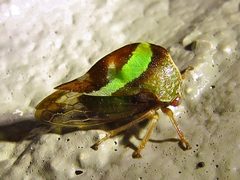
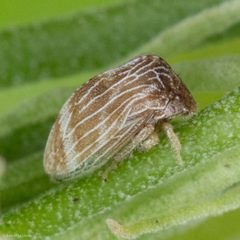
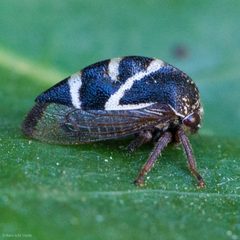
Smiliinae is a large of treehoppers (Membracidae) comprising approximately 100 organized into 10 tribes, with the majority of diversity concentrated in the Americas. The subfamily includes approximately 140 described , though this likely underrepresents true diversity. Members are characterized by elaborate pronotal modifications that produce bizarre shapes including thorn-like projections, -mimicking forms, and other structures whose functions remain incompletely understood. The nominotypical tribe Smiliini contains 169 species in 23 genera and is predominantly Nearctic in distribution, with evolutionary origins traced to Central America and Mexico followed by multiple dispersals to temperate North America.
Pronunciation
How to pronounce Smiliinae: /smaɪˈlaɪniː/
These audio files are automatically generated. While they are not always 100% accurate, they are a good starting point.
Identification
Smiliinae can be distinguished from other Membracidae by tribal-level characters including the margin of the , pronotum shape, size of pronotal humeral angles, presence or absence of pronotal longitudinal rugae, forewing size, fusion patterns of R and M in fore- and hind wings, and shape of the apex of the female second valvulae. The subfamily excludes the primitive Centrotinae, which is distinguished by an exposed scutellum not covered by the expanded pronotum. Within Smiliinae, the tribes Smiliini and Telamonini (reinstated from synonymy with Smiliini) are distinguished by the morphological characters listed above; Smiliini in the broad sense was not recovered as monophyletic in phylogenetic analyses. The Antianthe, Hemicardiacus, Smilirhexia, and Tropidarnis are currently placed as Smiliinae incertae sedis due to uncertain tribal assignment.
Images
Habitat
Primarily associated with woody vegetation, especially deciduous trees. The tribe Telamonini is predominantly associated with oak (Quercus) forests and woodlands, with 45 of 68 recorded from Quercus. White oak (Quercus alba) is the most common plant for this tribe. High-elevation are occupied by some , such as Cornutalis in the Colombian highlands. The tribe Ceresini extends into the Palaearctic region, representing the primary Old World distribution of the otherwise New World .
Distribution
Overwhelmingly New World in distribution, with the vast majority of tribes and restricted to the Americas. The tribe Ceresini contains Palaearctic representatives, providing the only significant Old World presence. Within the New World, the tribe Smiliini is predominantly Nearctic, with evolutionary origins in Central America and Mexico followed by multiple events to temperate North America. The tribe Telamonini is also Nearctic in distribution. Neotropical diversity is extensive, with many genera restricted to tropical regions of Central and South America.
Diet
Phloem feeding on plant vascular tissues. Nymphs represent the predominant feeding stage; feeding records are often considered unreliable due to adult movement between plants. The tribe Telamonini has been documented feeding on 22 plant , 41 , and 80 of mostly woody deciduous trees. Oak (Quercus) is the host plant group, with nearly half of all telamonine species collected from more than one plant genus.
Host Associations
- Quercus alba (white oak) - primary most common telamonine plant
- Quercus (oak) - primary 45 of 68 Telamonini recorded from oak
- Baccharis (Asteraceae) - first recorded plant for Cornutalis
- Alchisme - plant for Cornutalis
Life Cycle
Nymphs are the predominant feeding stage and are on plants, making them more reliable indicators of true host associations than . Nymphs of several Telamonini have been reared to the adult stage on host plants, confirming host plant relationships. First morphological for nymphs of 14 Telamonini species have been established, with nymphal showing differences among species within the Archasia, Glossonotus, Heliria, and Telamona that suggest current generic definitions require revision.
Behavior
Many engage in mutualistic associations with ants, in which treehoppers provide honeydew and receive protection from . However, not all species maintain associations; some ant-mimicking species such as Poppea setosa appear to lack such mutualisms, with ant mimicry possibly serving as protective mimicry in the absence of direct ant attendance. Some species exhibit extreme pronotal modifications including ant-mimicking forms and elaborate projections; the adaptive functions of many of these structures remain incompletely understood, with hypotheses including thorn mimicry, ant mimicry, and aid in of volatile (the latter lacking experimental support).
Ecological Role
As phloem feeders, Smiliinae extract plant sap and excrete honeydew, serving as a source for ants and other insects. mutualisms involving Smiliinae may provide indirect benefits to plants through reduced feeding by other phytophagous insects due to ant defensive activity. The close evolutionary association between Smiliinae (particularly Telamonini and Smiliini) and oak (Quercus) host plants represents a significant specialized plant-insect interaction in Nearctic forests.
Human Relevance
No significant economic importance; treehoppers have attracted disproportionate scientific attention relative to their low economic impact due to their extraordinary morphological diversity. Some serve as study organisms for evolutionary and phylogenetic research, and for understanding plant-insect and mutualism systems. The has been used in developing insect camera trap monitoring techniques (e.g., Stictocephala basalis).
Similar Taxa
- CentrotinaePrimitive distinguished by exposed scutellum not covered by expanded pronotum; occurs in both Old and New Worlds, whereas Smiliinae is primarily New World
- DarninaeNeotropical including -mimicking forms; distinguished by tribal and generic-level morphological characters
- Membracinae including diverse Umbonia; distinguished by pronotal and wing venation characters
More Details
Tribal classification
Smiliinae contains 10 tribes: Acutalini, Amastrini, Ceresini, Micrutalini, Polyglyptini, Smiliini, Telamonini (reinstated from synonymy with Smiliini), and others. The Antianthe, Hemicardiacus, Smilirhexia, and Tropidarnis are currently placed as incertae sedis within the .
Phylogenetic history
Fossil evidence suggests that diversification and subsequent New World radiation began during Tertiary isolation approximately 65 million years ago after South America separated from Africa. Only the primitive subfamily Centrotinae occurs in both Old and New Worlds; all other Membracidae subfamilies are restricted to the New World.
Generic non-monophyly
Phylogenetic analyses indicate that several in Smiliini and Telamonini are not monophyletic, including Atymna, Cyrtolobus, Heliria, and Telamona, suggesting need for taxonomic revision.
Sources and further reading
- BugGuide
- Wikipedia
- iNaturalist taxon
- NCBI Taxonomy
- Catalogue of Life
- Bizarre, beautiful extremes | Beetles In The Bush
- A new species of Cornutalis Sakakibara (Membracidae: Smiliinae: Acutalini) from Colombia
- Morphology-based phylogenetic analysis of the treehopper tribe Smiliini (Hemiptera: Membracidae: Smiliinae), with reinstatement of the tribe Telamonini
- The host plants of the Telamonini treehoppers (Hemiptera: Membracidae: Smiliinae) and the first diagnoses of nymphs for 14 species
- Synonymy of Paraphetea Sakakibara and Creão-Duarte and Flynnia McKamey (Hemiptera: Membracidae: Smiliinae), with a Reinstated Combination, New Distribution Records, and a Key to All Species of Thuridini
- Open-source insect camera trap with vibrational detection and luring for monitoring Stictocephala basalis (Walker, Hemiptera: Membracidae: Smiliinae).
- Three new monobasic genera and three new species of the New World treehopper tribe Acutalini (Hemiptera, Membracidae, Smiliinae) with a key to all genera.
- The immatures of the New World treehopper tribes Acutalini Fowler and Micrutalini Haupt (Hemiptera, Membracidae, Smiliinae).