
Telamonini
Goding, 1892
Genus Guides
9- Archasia
- Carynota
- Glossonotus
- Heliria
- Palonica
- Telamona
- Telamonanthe
- Telonaca
- Thelia(locust treehopper (referring to T. bimaculata))
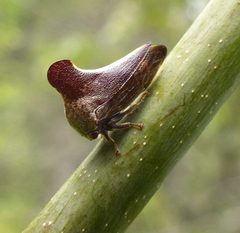
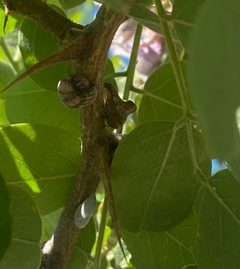
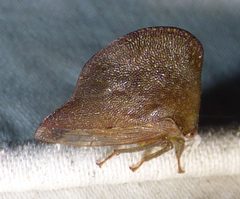
Telamonini is a tribe of treehoppers in the Membracidae, comprising approximately 9 and at least 50 described . The tribe was reinstated from synonymy with Smiliini based on morphological phylogenetic analysis. Members are predominantly Nearctic in distribution, with strong evolutionary associations with oak (Quercus) as plants. Nymphs represent the predominant feeding stage and are critical for accurate host plant determination, as movements often produce unreliable records.
Pronunciation
How to pronounce Telamonini: /ˌtɛləməˈnaɪnaɪ/
These audio files are automatically generated. While they are not always 100% accurate, they are a good starting point.
Identification
Telamonini can be distinguished from the related tribe Smiliini by several morphological characters: the margin of the , the shape of the pronotum, the size of the pronotal humeral angles, the presence or absence of pronotal longitudinal rugae, the size of forewing , variations in the fusion of R and M apically in both fore- and hind wings, and the shape of the apex of the female second valvulae. Within Telamonini, nymphal shows differences among within Archasia, Glossonotus, Heliria, and Telamona that suggest current generic definitions may require revision.
Images
Habitat
Associated with mostly woody, deciduous trees; strongly linked to oak (Quercus) forests and woodlands.
Distribution
Nearctic region, with historical origins in Central America and Mexico followed by multiple dispersals to temperate North America.
Diet
Phloem-feeding on plants; nymphs are the predominant feeding stage.
Host Associations
- Quercus (oak) - primary plant45 of 68 telamonine have been recorded from oak; white oak (Q. alba) is the most common plant
- Quercus alba (white oak) - most common plantSingle most frequently recorded plant for the tribe
- Telamona monticola host range - exampleRecorded from 29 plant , the most species in the tribe
Life Cycle
Nymphs are the predominant feeding stage and have been successfully reared to the stage on 15 plant . Nymphal collections are essential for accurate plant determination, as adult records are often unreliable due to adult movement. First morphological have been provided for nymphs of 14 species.
Behavior
exhibit movement between plants that makes plant records based solely on adult captures potentially unreliable.
Similar Taxa
- SmiliiniFormerly included Telamonini as a junior synonym; distinguished by pronotal rugae, wing venation patterns, and female genitalia
- Atymna, Cyrtolobus, Heliria, Telamona (as currently defined)These are not monophyletic based on phylogenetic analysis, indicating that morphological convergence or inadequate character sampling may complicate identification
Sources and further reading
- BugGuide
- Wikipedia
- iNaturalist taxon
- Catalogue of Life
- Belostomatidae | Beetles In The Bush
- Morphology-based phylogenetic analysis of the treehopper tribe Smiliini (Hemiptera: Membracidae: Smiliinae), with reinstatement of the tribe Telamonini
- The host plants of the Telamonini treehoppers (Hemiptera: Membracidae: Smiliinae) and the first diagnoses of nymphs for 14 species