
Darninae
Amyot & Audinet-Serville, 1843
Tribe Guides
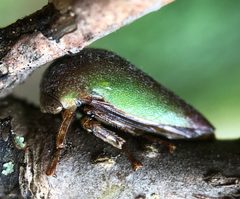
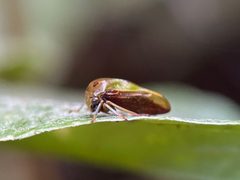
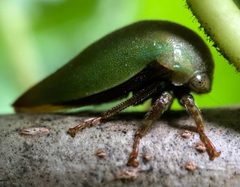
1Darninae is a of treehoppers ( Membracidae) comprising approximately 30 arranged in five tribes: Cymbomorphini, Darnini, Hemikypthini, Hyphinoini, and Procyrtini. The subfamily is predominantly Neotropical in distribution and is characterized by diverse pronotal modifications. Members are phytophagous, with some documented feeding on Asteraceae and Solanaceae. The subfamily Darninae represents one of several major lineages within Membracidae that diversified during the Tertiary period following the isolation of South America.
Pronunciation
How to pronounce Darninae: //ˈdɑːr.nɪ.neɪ//
These audio files are automatically generated. While they are not always 100% accurate, they are a good starting point.
Identification
Darninae can be distinguished from other membracid by combinations of morphological characters including pronotal structure and wing venation patterns. The subfamily is considered largely Neotropical, contrasting with the more subfamily Centrotinae. Within Darninae, the five tribes are distinguished by specific pronotal and genitalic characters: Cymbomorphini, Darnini, Hemikypthini, Hyphinoini, and Procyrtini. -level identification typically requires examination of male genitalia and detailed pronotal .
Images
Habitat
Primarily associated with Neotropical forest and woodland . Specific preferences vary by tribe and . The genus Andinodarnis occurs in the Northern Andes, including cloud forest habitats in Colombia's Cordillera Occidental.
Distribution
Largely Neotropical, with distribution centered in the New World tropics. Documented from Mexico through Central America and South America, including the Andean region. Specific records include Colombia (Cordillera Occidental, PNN Tatamá), Ecuador, Mexico (Oaxaca, Puebla), Argentina, and the southern United States (Texas, Arizona).
Diet
Phytophagous; feeds on plant sap from xylem and phloem. Specific plant associations documented for some include Asteraceae and Solanaceae.
Host Associations
- Asteraceae - plantDocumented for Andinodarnis
- Solanaceae - plantDocumented for Andinodarnis
Similar Taxa
- CentrotinaeMore primitive with exposed scutellum (not covered by expanded pronotum), whereas Darninae has the scutellum covered by the pronotum. Centrotinae is , while Darninae is largely restricted to the New World.
- MembracinaeAnother New World , but distinguished by different pronotal modifications and tribal composition. Includes such as Umbonia with pronounced in pronotal structure.
- SmiliinaeNew World containing -mimicking such as Poppea and Cyphonia; distinguished from Darninae by pronotal and tribal-level classification.
More Details
Taxonomic composition
The includes five tribes: Cymbomorphini (5 ), Darnini (16 genera), Hemikypthini (3 genera), Hyphinoini (5 genera), and Procyrtini (1 genus). Notable genera include Darnis, Stictopelta, Hyphinoe, and the recently described Andinodarnis from the Andes.
Evolutionary history
Fossil evidence suggests that diversification within Membracidae and subsequent New World radiation began during Tertiary isolation approximately 65 million years ago after South America separated from Africa. Only the primitive subfamily Centrotinae occurs in both Old and New Worlds; all other subfamilies including Darninae are restricted to the New World.
Research significance
Darninae has been subject to phylogenetic and evolutionary studies due to its diverse pronotal morphologies. The contains with exaggerated pronotal structures whose functional significance remains incompletely understood, with hypotheses including (resembling thorns or buds), mimicry, and aids.