
Ceresini
Goding, 1892
Buffalo Treehoppers and allies
Genus Guides
10- Anisostylus
- Hadrophallus
- Paraceresa
- Parantonae
- Spissistilus(Three-cornered alfalfa hopper (for S. festinus))
- Stictocephala(buffalo treehoppers)
- Stictolobus
- Tortistilus
- Trichaetipyga
Ceresini is a tribe of treehoppers within the Smiliinae ( Membracidae). It is notable among smiliine tribes as the only one with Palaearctic representatives; most other Smiliinae tribes are restricted to the Americas. The tribe includes the Ceresa, known as buffalo treehoppers, as well as genera such as Ilithucia, which are primarily distributed across the Andean highlands of South America. Members of this tribe exhibit the characteristic enlarged and often elaborately modified pronotum typical of Membracidae.
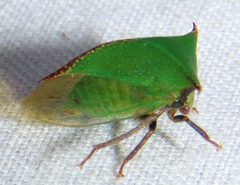
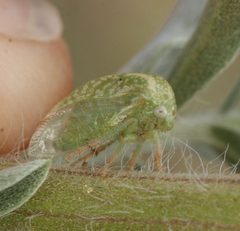
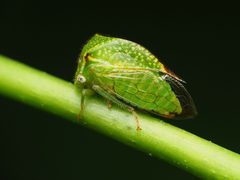
Pronunciation
How to pronounce Ceresini: /tʃɛˈrɛsɪˌniː/
These audio files are automatically generated. While they are not always 100% accurate, they are a good starting point.
Identification
Within Smiliinae, Ceresini can be distinguished from other tribes by morphological characters including features of the pronotum and genitalia. The Ilithucia, placed in this tribe, is characterized by distinctive suprahumeral processes and specific genital morphological traits that separate it from related genera such as Antonae. -level identification requires examination of and original descriptions due to historical taxonomic complexity from overlapping morphological traits.
Images
Habitat
Andean highlands, montane , and Andean páramos in South America; also includes Palaearctic representatives in temperate regions.
Distribution
Primarily Neotropical, with strong representation in the Andean highlands of South America including Colombia. The tribe is uniquely distributed among Smiliinae in also occurring in the Palaearctic region.
Ecological Role
Inhabits remote or threatened montane such as the Andean páramos.
Similar Taxa
- Other Smiliinae tribesCeresini is distinguished from the approximately nine other tribes in Smiliinae by its unique Palaearctic distribution; most other smiliine tribes are exclusively New World.
- Antonae and related generaWithin Ceresini, the Ilithucia has historically been confused with Antonae due to overlapping morphological traits, requiring careful examination of suprahumeral processes and genital for separation.
More Details
Taxonomic history
The tribe has undergone recent taxonomic revision, with a new Ilithucia colombiana described in 2025 from Colombian montane , expanding the known geographic and altitudinal range of the .
Collection significance
Museum collections play an essential role in biodiversity research for this group, particularly given their occurrence in remote or threatened Andean .