
Bolbonota
Amyot & Audinet-Serville, 1843
seed-mimic treehopper
Species Guides
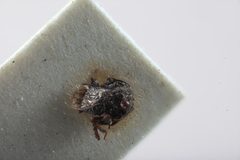
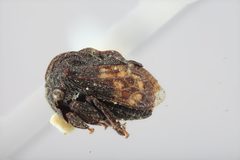
1Bolbonota is a of treehoppers in the Membracidae, tribe Membracini, distributed in the New World tropics and subtropics. are characterized by their dark, globular body form with a corrugated pronotal surface and distinctive red . The genus contains at least a dozen described in Brazil alone, with many more likely awaiting description. Bolbonota species exhibit complex ontogenetic color changes: early instar nymphs are dark, late instars become mottled or streaked white, and adults revert to dark coloration.

Pronunciation
How to pronounce Bolbonota: /bɔlbɔˈnɔta/
These audio files are automatically generated. While they are not always 100% accurate, they are a good starting point.
Identification
Members of Bolbonota can be distinguished from the similar Bolbonotoides (which contains a single Mexican ) by their globular rather than elongate body form. Within the tribe Membracini, Bolbonota lacks the horns or elaborate pronotal projections found in many other genera. are recognized by their dark, corrugated pronotum, globose shape, and often striking red . Late instar nymphs are mottled or streaked white, contrasting sharply with the dark adults. Species-level identification is difficult and requires examination of detailed morphological characters.
Images
Habitat
Found on low shrubs and herbaceous vegetation in various including municipal parks, forest edges, and open woodlands. occur on stems of plants.
Distribution
New World distribution, with records from Brazil, elsewhere in South America, and potentially extending into Central America and the Caribbean. The similar Tylopelta americana occurs in eastern North America.
Diet
Phloem-feeding on plant sap, as is typical for Membracidae. Specific plant records are sparse in the available literature.
Life Cycle
Hemimetabolous development with multiple nymphal instars. Early instar nymphs are dark in coloration, late instars become mottled or streaked white, and revert to dark coloration—a remarkable ontogenetic shift in appearance. of mixed life stages (early instars, late instars, and adults) may occur together on plant stems.
Behavior
Forms on plant stems. Nymphs and are highly sensitive to disturbance and will rapidly disperse when molested. mutualism has been observed, with Camponotus tending nymphs and presumably adults in exchange for honeydew excreted from sap-feeding.
Ecological Role
As phloem-feeders, they transfer energy from plants to higher through mutualisms. The ant association provides protection from and .
Similar Taxa
- BolbonotoidesSimilar with single Mexican ; distinguished by more elongate body form versus globular shape in Bolbonota
- Tylopelta americanaSimilar Membracini in eastern North America; slightly more elongate than Bolbonota species
- Guayaquila xiphiasAnother Membracidae with mutualism in Brazil; distinguished by dramatically different pronotal with horns