
Membracini
Rafinesque, 1815
treehoppers
Genus Guides
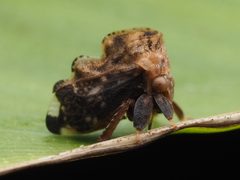
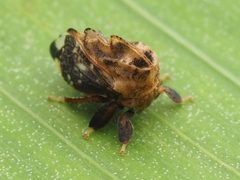
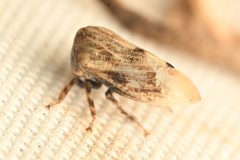
4Membracini is a tribe of treehoppers (Hemiptera: Membracidae) characterized by diverse and often elaborate pronotal modifications. Members of this tribe are found primarily in the Neotropical region, with some extending into North America. The tribe includes such as Enchenopa, Paragara, and Bolbonota, which exhibit varied pronotal shapes ranging from simple globular forms to complex horn-like or thorn-like projections. Several genera within Membracini have been documented to form mutualistic associations with ants, exchanging honeydew for protection.
Pronunciation
How to pronounce Membracini: //mɛmˈbræsaɪnaɪ//
These audio files are automatically generated. While they are not always 100% accurate, they are a good starting point.
Identification
Membracini can be distinguished from other membracid tribes by the combination of an enlarged pronotum that extends posteriorly to cover the scutellum, and specific wing venation patterns. Within the tribe, are often distinguished by pronotal shape: Enchenopa typically show elongated, thorn-like pronotal projections; Bolbonota species exhibit globular, corrugated pronota with red in ; and Paragara species display distinctive maternal care . The tribe differs from the related tribe Hoplophorionini by subtle differences in pronotal structure and geographic distribution patterns.
Images
Habitat
Neotropical forests and woodlands; found on woody shrubs and trees, particularly in the Colombian Amazon and throughout South America. Some extend into North America.
Distribution
Primarily Neotropical region, with center of diversity in South America. Documented from Colombia, Brazil, Argentina, Mexico, and southern United States.
Diet
Phloem sap from plants; specific host plant associations vary by .
Life Cycle
Nymphs undergo multiple instars with pronounced morphological changes between stages. Early instars often differ dramatically in coloration and form from late instars and .
Behavior
Several exhibit maternal care, with females remaining near masses and nymphs. Mutualistic associations with ants are common, involving exchange of honeydew for protection; in some cases parental care appears to be transferred to attendant ants. and nymphs often aggregate on plant stems. Some show in pronotal structure.
Ecological Role
As phloem feeders, they function as herbivores that convert plant sap into honeydew, supporting mutualist . Their pronotal modifications may provide microhabitats for other organisms.
Human Relevance
Some are minor agricultural pests; Enchenopa gracilis has been reported as a pest on pigeon pea (Cajanus cajan) in Brazil.
Similar Taxa
- HoplophorioniniSimilar pronotal modifications and arboreal habits; distinguished by subtle morphological differences in pronotal structure and primarily North American distribution for many .
- CentrotinaePrimitive with exposed scutellum (not covered by pronotum), contrasting with Membracini where the pronotum covers the scutellum.
Sources and further reading
- BugGuide
- iNaturalist taxon
- Catalogue of Life
- Red-eyed poop! | Beetles In The Bush
- Traffic Jam Treehoppers | Beetles In The Bush
- Bizarre, beautiful extremes | Beetles In The Bush
- New taxa, natural history and morphology of Paragara Goding and comparisons with Eunusa Fonseca (Hemiptera: Membracidae: Membracini)