
Potamanthidae
Hackle-gilled Burrower Mayflies
Genus Guides
1- Anthopotamus(hacklegilled burrower mayflies)
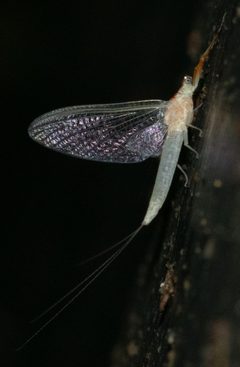
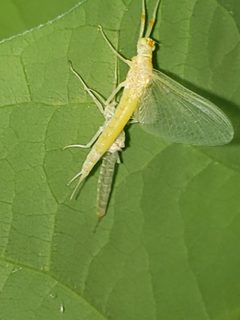
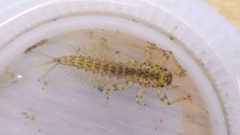
is a of burrowing mayflies comprising approximately 23 across three to four (Anthopotamus, Potamanthus, Rhoenanthus, and Stygifloris). Larvae are , inhabiting spaces in gravel and pebble substrates of streams and rivers, and possess distinctive mandibular tusks used for excavation and defense. are aerial and short-lived. The family has a disjunct distribution spanning North America and East Asia.
Pronunciation
How to pronounce Potamanthidae: //ˌpɒtəˈmænθɪdeɪ//
These audio files are automatically generated. While they are not always 100% accurate, they are a good starting point.
Identification
Larvae are distinguished from other ephemeroid mayflies by their prominent mandibular tusks and lifestyle without tube-burrow construction. They differ from Behningiidae (also tusked burrowers) in gill structure and burrowing — do not form tubes and inhabit coarser substrates. The combination of tusks, preference, and gill-mediated current is diagnostic. require examination of wing venation and genitalia for -level identification.
Images
Habitat
Lotic environments including streams and rivers. Larvae are specialized for the hyporheic zone, inhabiting spaces within coarse gravel and small pebble substrates. They exclude coarse sand or smaller particles due to size limitations on interstitial space. In North America, larvae occupy erosional zones associated with rock substrate in mid-sized streams. In Asia, they occur in streams and rivers across multiple provinces.
Distribution
Disjunct distribution with in North America and East Asia. North American records include central and southeastern Michigan, with such as Anthopotamus verticis and Potamanthus myops. East Asian distribution includes China (multiple provinces), Taiwan, Japan, Korea, Vietnam, and Thailand. Thai records span Chanthaburi, Kanchanaburi, Chiang Rai, and Nan provinces.
Seasonality
typically occurs in early to mid-summer (June in Michigan ). Larval densities peak in late summer and fall following new cohort hatching, with lowest densities in mid-summer after adult emergence. One-year documented in temperate populations.
Diet
Larvae are collector-gatherers. Potamanthus myops derives 96.8% of its diet from detritus. Filter feeding and/or ventilation suggest potential for particulate organic matter capture from water currents generated by gill movements.
Life Cycle
(one-year) in studied temperate . hatch in late summer to fall. Nymphal development occurs through winter and spring, with growth continuing until . Larvae occur in multiple size classes simultaneously, with smaller individuals penetrating deeper into finer substrates than larger conspecifics. Adult emergence is synchronous and brief.
Behavior
Larvae are burrowing dwellers that use mandibular tusks to excavate substrate and gills to generate interstitial water currents for respiration and/or feeding. They do not construct tube burrows, unlike other ephemeroid mayflies. Tusks serve defensive functions and are used in aggressive interactions between individuals. Nymphs maintain contagious spatial distributions. In Rhoenanthus coreanus, females possess longer tusks than males and use tusks as weapons in aggressive encounters.
Ecological Role
Collector-gatherer functional group in stream . Process detritus and contribute to nutrient cycling in the hyporheic zone. As processors, they modify substrate structure through burrowing activity and facilitate water exchange between surface and subsurface .
Human Relevance
Used as bioindicators of stream health due to specific substrate requirements and sensitivity to alteration. Serve as food for fish and other aquatic . No documented direct economic importance.
Similar Taxa
- BehningiidaeBoth are tusked burrowing mayflies, but Behningiidae inhabit fine sandy bottoms in braided rivers, form tube burrows, and lack the hyporheic specialization of . Potamanthidae prefer coarser gravel-pebble substrates and do not construct tubes.
- EphemeridaeBoth are ephemeroid burrowers with tusks, but Ephemeridae construct U-shaped tube burrows in muddy or sandy substrates and have different gill and burrowing .
Misconceptions
Anthopotamus verticis was previously mischaracterized as a surface sprawler or clinger rather than a burrowing dweller; correct classification as a hyporheic burrower was established through microhabitat studies.
More Details
Mandibular tusk allometry
In Rhoenanthus coreanus, tusk size shows sex-specific allometric patterns: positive allometry in females, negative in males. Females have longer tusks than males despite smaller overall body size. Tusk and foreleg length are positively correlated, likely related to coordinated burrowing and feeding functions.
Molecular systematics
COI sequence data support morphological identifications of in Thailand, confirming the utility of for this in regions with high .
Sources and further reading
- BugGuide
- Wikipedia
- GBIF taxonomy match
- iNaturalist taxon
- NCBI Taxonomy
- Catalogue of Life
- Microhabitat of Anthopotamus verticis (Ephemeroptera: Potamanthidae)
- Behningiidae and Potamanthidae (Insecta, Ephemeroptera) in Thailand
- Ecology of Potamanthus myops (Walsh) (Ephemeroptera: Potamanthidae) in a Michigan stream (USA)
- Life history ofPotamanthodes kamonisin a stream of central Japan (Ephemeroptera: Potamanthidae)
- Life History of Potamanthus myops (Walsh) (Ephemeroptera: Potamanthidae) in a Central Michigan Stream
- Allometry of exaggerated mandibular tusks in the burrowing mayfly Rhoenanthus coreanus (Ephemeroptera: Potamanthidae)
- Life History Aspects of <i>Anthopotamus Verticis</i> (Ephemeroptera: Potamanthidae)
- Notes on the Life History of <i>Potamanthus Myops</i> in Southeastern Michigan (Ephemeroptera: Potamanthidae)
- The Larva of Rhoenanthus distafurcus Bae et McCafferty (Ephemeroptera: Potamanthidae) with Notes on Distribution and Biology
- Use of mandibular tusks as weapons in the aggressive behavior of the burrowing mayfly Rhoenanthus coreanus (Yoon and Bae, 1985) (Ephemeroptera: Potamanthidae)
- Comparative Mitogenome of Phylogenetic Relationships and Divergence Time Analysis within Potamanthidae (Insecta: Ephemeroptera).