
Allograpta
Osten Sacken, 1875
Streaktails
Species Guides
3- Allograpta exotica(Exotic Streaktail)
- Allograpta obliqua(oblique streaktail)
- Allograpta radiata(Y-shaped Streaktail)
Allograpta is a large and diverse of hoverflies in the Syrphidae. are brightly colored flower visitors that serve as . Most larvae are predatory, feeding on soft-bodied sternorrhynchans such as aphids. The genus is except for most of the Palearctic region. Taxonomic revision is ongoing, with molecular and morphological studies indicating the genus is monophyletic but contains embedded genera that complicate classification.
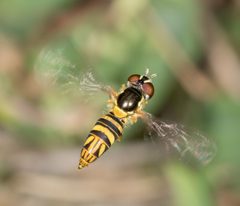
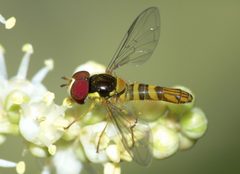
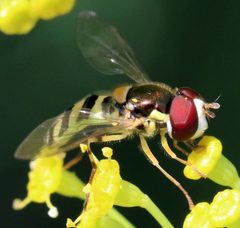
Pronunciation
How to pronounce Allograpta: //ˌæ.loʊˈɡræp.tə//
These audio files are automatically generated. While they are not always 100% accurate, they are a good starting point.
Identification
Members of Allograpta can be distinguished from similar hoverfly by a combination of morphological characters, though precise identification often requires examination of thoracic characters on lateral and portions. The genus is frequently confused with Toxomerus and Episyrphus, particularly in the Neotropics where diversity is high and the group is relatively understudied. -level identification is challenging and may require specialized keys or expert examination.
Images
Habitat
Occurs in diverse environments including agricultural and horticultural crops, agro-ecological sites, and natural vegetation. are associated with flowering plants. Larvae have been collected from strawberry crops and other settings with abundant prey .
Distribution
Widely distributed throughout the Americas from the United States to Argentine Patagonia. Present throughout most of the world except most of the Palearctic region. Specific records include Vermont (USA), various locations in the United States, and the Horticultural Green Belt of La Plata, Buenos Aires, Argentina.
Diet
feed on nectar and pollen. Larvae are primarily predatory on soft-bodied sternorrhynchans, especially aphids. Allograpta exotica has been documented consuming Myzus persicae (green peach aphid) and Frankliniella gemina (), with second instars showing particularly high consumption of thrips. Some have divergent larval habits including leaf-mining, stem-boring, or pollen-feeding.
Life Cycle
Development includes , three larval instars, pupa, and stages. Female flies lay eggs in or near colonies. Larvae progress through three instars before pupating; the pupa is a convex pear-shaped structure attached to leaves, stems, or other substrates.
Behavior
are capable of hovering and are active flower visitors. Larvae are cryptic that may be difficult to detect, resembling discolored patches on leaves or other plant debris. Allograpta exotica has been described as a voracious predator with potential for applications.
Ecological Role
function as of various flowering plants. Larvae serve as agents of agricultural pests, particularly aphids and . The contributes to natural pest suppression in horticultural and agricultural .
Human Relevance
Larvae are beneficial insects in gardens and agricultural systems, providing natural control of and thrip . are important . Misidentification of larvae as pests may lead to accidental destruction of these beneficial insects.
Similar Taxa
- ToxomerusBoth are diverse, common in the Neotropics, and relatively understudied; specimens can be confused without careful examination of thoracic characters
- Episyrphus appear similar in coloration and pattern; however, Episyrphus is primarily an Old World , and E. balteatus is distinguished by secondary black bands on the 3rd and 4th abdominal
- SphaerophoriaMolecular studies indicate this may be nested within Allograpta, complicating taxonomic boundaries
- ExallandraPreliminary phylogenetic studies suggest this is placed within Allograpta, indicating potential paraphyly issues
Sources and further reading
- BugGuide
- Wikipedia
- GBIF taxonomy match
- iNaturalist taxon
- NCBI Taxonomy
- Catalogue of Life
- Bug Eric: The Maggot on the Rosebush: Aphid-eating Flower Fly Larvae
- Hover fly on mallow flower | Beetles In The Bush
- A new wild strain of Caenorhabditis elegans associated with Allograpta exotica (Syrphidae) in Argentina: an update of its ecological niche and worldwide distribution
- Consumption and preference rates of the various larval stages of Allograpta exotica as biological control agents of Myzus persicae and Frankliniella gemina