
Allograpta obliqua
(Say, 1823)
oblique streaktail
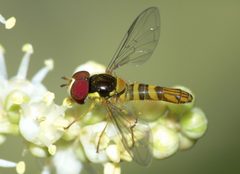
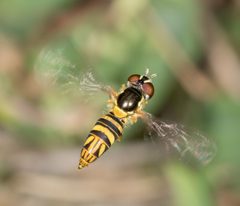
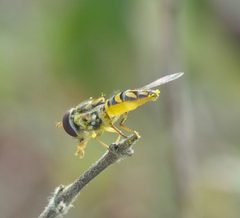
Allograpta obliqua is a common North American hoverfly in the Syrphidae. are small, measuring 6–7 mm, with distinctive yellow thoracic stripes and abdominal banding. The species exhibits in structure: males have eyes while females have dichoptic eyes. Larvae are , reaching 8–9 mm in length with a bumpy, slug-like appearance. The species is active year-round in southern portions of its range and has been documented across much of the continental United States, southern Canada, Mexico, Bermuda, the West Indies, and parts of the Neotropical Americas.
Pronunciation
How to pronounce Allograpta obliqua: /ˌæloʊˈɡræptə əˈblɪkwə/
These audio files are automatically generated. While they are not always 100% accurate, they are a good starting point.
Identification
Distinguished from similar hoverflies by the combination of yellow without complete stripe, four longitudinal yellow stripes or spots on the fourth and fifth abdominal tergites, and the specific pattern of thoracic striping. in structure ( males, dichoptic females) is a notable diagnostic feature. The "oblique streaktail" refers to the abdominal pattern.
Images
Appearance
6–7 mm in length. with yellow stripes. with cross banding and four longitudinal yellow stripes or spots on fourth and fifth tergite. yellow, lacking complete stripe. Males with (eyes meeting dorsally); females with dichoptic eyes (eyes separated). white, oval, approximately 0.84 mm. Larvae 8–9 mm, bumpy and slug-like in form.
Habitat
Associated with environments supporting , as larvae require aphids as prey. found in varied settings including urban and agricultural areas where flowering plants occur. Specific microhabitat preferences for oviposition include leaves and branches near aphid colonies.
Distribution
Continental United States (including New York State), Quebec (Canada), Bermuda, Mexico, West Indies, and parts of the Neotropical Americas. GBIF records indicate presence across Brazil (all states), Norway, and Hawaii (United States).
Seasonality
occur throughout the year in southern portions of range. Activity patterns in northern regions likely seasonal, though specific months not documented in sources.
Diet
Larvae are of aphids. feed on nectar and pollen; specific floral associations not documented in available sources.
Life Cycle
laid on leaves or branches near aphids. 2–8 days. Larvae hatch and feed on aphids. Larval development details beyond size and form not documented. details not documented in available sources. emerge and reproduce; time not specified.
Behavior
Larvae actively prey on aphids. visit flowers for nectar and pollen, contributing to pollination. Specific behavioral details regarding mating, , or territoriality not documented in available sources.
Ecological Role
Larvae function as agents of . serve as of flowering plants. The contributes to both pest suppression and pollination services in where it occurs.
Human Relevance
Larvae provide beneficial service through , potentially reducing agricultural pest damage without chemical intervention. contribute to pollination of wild and cultivated plants. No documented negative impacts on human activities.
Similar Taxa
- Other Allograpta speciesSimilar size and general syrphid ; distinguished by specific abdominal striping patterns and facial markings
- Other aphidophagous hoverflies (Syrphidae)Convergent ecological role and larval ; identification requires examination of color patterns and structural features
Sources and further reading
- BugGuide
- Wikipedia
- GBIF taxonomy match
- iNaturalist taxon
- NCBI Taxonomy
- Outstanding PBS Deep Look Video: 'Why Do Sunflowers Face the Sunrise?' | Bug Squad
- Does Sneezeweed Make You Sneeze? | Bug Squad
- To Control Lekking Fruit Flies, Male Size Matters (Except When it Doesn't)
- Up Close and Personal With Venomous Moths
- Bug Eric: Sunflower Extravaganza
- Bizarre, beautiful extremes | Beetles In The Bush