
Episyrphus
Matsumura, 1917
Aphid Hover Flies
Species Guides
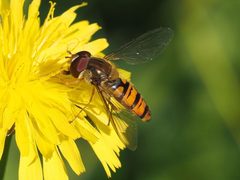
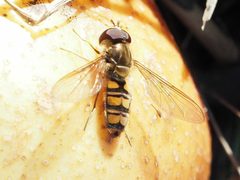
1- Episyrphus balteatus(marmalade hoverfly)
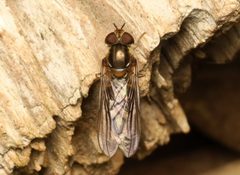
Episyrphus is a of hoverflies in the Syrphinae, commonly known as hover flies. The genus contains two recognized subgenera: Episyrphus and Asiobaccha, with the latter distinguished by a . Larvae are predatory, frequently preying on aphids. The most widely distributed , E. balteatus, exhibits migratory and has been extensively studied for its role in . Taxonomic classification within the genus requires revision due to unclear species boundaries and environmentally variable diagnostic characters.
Pronunciation
How to pronounce Episyrphus: //ˌɛpɪˈsɪrfəs//
These audio files are automatically generated. While they are not always 100% accurate, they are a good starting point.
Identification
of subgenus Asiobaccha are distinguished from Episyrphus by a (stalked) . Identification of species within the is complicated by diagnostic characters that vary with environmental conditions; for example, abdominal coloration and pile coloration on the and scutellum in E. viridaureus have been shown to depend on temperature.
Images
Distribution
The has a broad distribution including Europe, northern India (Rohilkhand region of Uttar Pradesh), and Australia. E. balteatus has a distribution. The distribution of E. viridaureus has been extended to include Australia based on recent taxonomic revision.
Diet
Larvae are predatory, often on aphids. E. balteatus is described as aphidophagous, with larvae actively preying on including aphids such as Aphis craccivora and Aphis gossypii.
Life Cycle
Development from to averages 21.5 days under greenhouse conditions. Total mortality reaches approximately 70%, with 66% occurring in the egg stage, 23% in the larval stage, and 11% in the pupal stage. Females can enter a facultative reproductive as adults; diapause is induced during the second and third larval instars with a critical between 11.8 and 11.9 hours. Some females may live up to 100 days and continue producing fertile eggs.
Behavior
females select oviposition sites based on colony presence and size, with preference for larger colonies. Honeydew attracts females via olfaction and elicits oviposition. Females detect and avoid ovipositing in colonies containing through olfactory cues. E. balteatus exhibits seasonal , with autumn movement southward to grounds around the Mediterranean and beyond. Spring in Western France appear to comprise mainly local individuals with some immigration from southern regions.
Ecological Role
Important agents of in agricultural and nursery settings. The aphidophagous feeding of larvae contributes to natural pest suppression. flower flies serve as of flowering plants.
Human Relevance
Widely utilized in programs for management in greenhouses and agricultural fields. The E. balteatus has been extensively studied for its reproductive capacity and as a natural enemy of crop pests.
Similar Taxa
- EristalisBoth are hoverfly with similar appearance; Eristalis are generally larger and exhibit different larval (rat-tailed maggots in aquatic or decaying organic matter rather than ).
- MetasyrphusBoth are aphidophagous syrphid with predatory larvae; Metasyrphus confrater has been recorded sympatrically with E. balteatus in northern India.
Sources and further reading
- BugGuide
- Wikipedia
- GBIF taxonomy match
- iNaturalist taxon
- NCBI Taxonomy
- Catalogue of Life
- The great potential of citizen science - an opportunity to work together more in the name of preserving insects in 2021 - Buglife Blog - Buglife
- Strathmore B-Lines: Surveying Grasslands and Pollinating Insects in the Strathmore Valley - Buglife Blog - Buglife
- Aphid peril – Aphids, flower flies, lady beetles (MISSING VIDEO AND LINKS) — Bug of the Week
- The Legend of the Pantaloon Bee - Buglife Blog - Buglife
- Insect Migration (Part 1) - Buglife Blog - Buglife
- Mudo Pryfed (Rhan 1) - Buglife Blog - Buglife
- Revision of the subgenus <i>Episyrphus (Episyrphus)</i> Matsumura (Diptera: Syrphidae) in Australia
- Oviposition site selection of Episyrphus balteatus
- Bio-diversity of Episyrphus balteaus De Geer in northern India
- Diapause and overwintering of the hoverflyEpisyrphus balteatus
- Landscape parameters explain the distribution and abundance of Episyrphus balteatus (Diptera: Syrphidae)
- Oviposition behaviour and host colony size discrimination in Episyrphus balteatus (Diptera: Syrphidae)
- Effect of host plants on the feeding potential of Episyrphus balteatus (De Geer) preying on two different aphid species
- Untersuchungen zur Biologie und zum Reproduktionsvermögen von Episyrphus balteatus Deg. (Dipt., Syrphidae) unter Gewächshausbedingungen
- Combination of morphometric and isotopic tools for studying spring migration dynamics in Episyrphus balteatus
- Influence of prey host plant on a generalist aphidophagous predator: Episyrphus balteatus (Diptera: Syrphidae)
- Expanding the fly eye gene regulatory network: From Drosophila to the hoverfly Episyrphus balteatus.