
Syritta pipiens
(Linnaeus, 1758)
Thick-legged Hoverfly, Thick-legged Hover Fly
Syritta pipiens is a common and widespread hoverfly in the Syrphidae, native to Europe and now distributed across Eurasia and North America. It is distinguished by its enlarged hind , which give rise to its 'thick-legged hoverfly.' are fast, agile fliers rarely exceeding one meter above ground and are important of diverse flowering plants. Larvae develop in moist, decaying organic matter including compost, manure, and silage. The is frequently found in human-modified environments such as gardens, farmland, and urban parks.
Pronunciation
How to pronounce Syritta pipiens: /ˈsɪrɪtə ˈpɪpiɛnz/
These audio files are automatically generated. While they are not always 100% accurate, they are a good starting point.
Identification
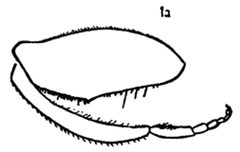
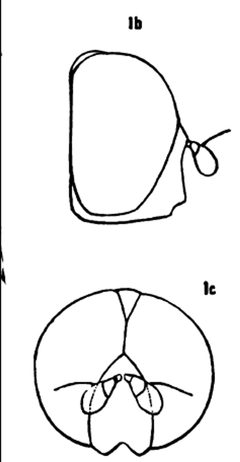
Distinguished from other small hoverflies by the combination of broad hind with spines and paired pale spots on tergites 2 and 3. Resembles predatory crabronid in but lacks wasp waist and has single pair of wings (Diptera). Separated from similar Syrphidae by the lateral thoracic dusting and specific femoral enlargement pattern. Male structure ( with fovea) is distinctive but requires close examination. Often confused with predatory hoverfly but distinguished by non-predatory and larval .
Images
Habitat
Occurs in diverse environments wherever flowering plants are present. Strongly anthropophilic, common in farmland, suburban gardens, urban parks, and compost heaps. Larval stage restricted to moist, rotting organic matter including garden compost, manure, silage, and decaying vegetable waste. Wetland edges near freshwater bodies (lakes, ponds, rivers, ditches) support larval . frequent flowers in open, sunlit areas.
Distribution
Native to Europe; introduced to and established across Eurasia and North America since the 1800s. distribution except absent from the Afrotropical realm. Present in the Azores (Faial, Flores, Pico, São Jorge, São Miguel). Widespread and abundant in Britain and Ireland.
Seasonality
In Ontario, active mid-April to mid-October. In Europe, primary period March to November; likely year-round in warmer southern European regions. Records from all months in Britain and Ireland.
Diet
Larvae are feeding on damp decaying vegetable matter, leaves, compost, and organic waste. males feed primarily on nectar; adult females consume nectar and protein-rich pollen for production. Adults have been observed visiting flowers of water-willow (Dianthera americana), white vervain (Verbena urticifolia), American pokeweed (Phytolacca decandra), candyleaf (Stevia rebaudiana), bluebell (Campanula rotundifolia), and numerous other including Achillea, Allium, Aster, Calluna, Cardamine, Cirsium palustre, Convolvulus, Crataegus, Epilobium, Euphorbia, Galium, Jasione montana, Leontodon, Polygonum cuspidatum, Potentilla erecta, Prunus laurocerasus, Ranunculus, Rosa canina, Senecio jacobaea, Sorbus aucuparia, and Tussilago.
Life Cycle
Complete with four stages: , larva, , . Eggs laid in moist organic substrate. Larva dim yellow, 10 mm long, tapering at both ends with false at ; body covered with microscopic white hairs, three pairs of posterior fleshy processes (first shortest, last longest), seven pairs of each with ~24 hooklets. Puparium 6.8 mm long, yellowish-white to dull brown, elongated oval, retaining larval posterior processes but lacking prolegs. Larval development occurs in rotting organic matter; multiple per year in suitable climates.
Behavior
fly fast and nimbly, typically below 1 m height. Males exhibit specialized visual tracking : when pursuing females, they point at targets and move rapidly in arcs centered on the target, maintaining ~5–15 cm distance until darting for copulation. Males use motion camouflage to approach females. When encountering other males, individuals may oscillate sideways or meet head-on to signal sex. Tracking behavior involves acceleration rates around 500 cm/s². Visual system with enlarged male enables efficient binocular vision for tracking.
Ecological Role
are significant for diverse flowering plants. Larvae function as decomposers in organic waste cycling. Supports including Diplazon sp. and Pachyneuron sp., with nearly 60% larval rate recorded in syrphids. Serves as prey for Pennsylvania ambush bug (Phymata pennsylvanica) and suspected prey for willow flycatchers. Proposed as bio- reflecting environmental health and flowering plant abundance. Larvae have forensic significance as carrion-associated on human cadavers; also recorded damaging daffodil bulbs.
Human Relevance
Important in agricultural and urban landscapes. Larvae contribute to composting and organic waste decomposition. Exception among Syrphidae as non-predatory ; does not provide biocontrol. Used as bio-indicator for environmental monitoring. Forensic relevance for postmortem interval estimation. Male visual tracking has inspired flying robot design. Occasionally considered minor pest when larvae damage ornamental daffodil bulbs.
Similar Taxa
- Eristalis tenax (Drone Fly)Similar size and general hoverfly appearance; both in Eristalinae. Distinguished by E. tenax having more robust, -mimicking body with different color pattern and lacking enlarged hind .
- Predatory Syrphinae (e.g., Syrphus, Episyrphus)Similar and flower-visiting habits. Distinguished by predatory Syrphinae having more slender legs, different abdominal patterning, and predatory larvae on aphids rather than detritivorous habit.
- Small crabronid waspsMimicry target; S. pipiens resembles in . Distinguished by single pair of wings (vs. two pairs), lack of constricted waist, and presence of .
Misconceptions
Frequently mistaken for predatory hoverfly due to -like appearance in , but S. pipiens is not predatory and does not contribute to biocontrol. The name 'pipiens' shared with Culex pipiens mosquitoes is coincidental; these are unrelated dipterans with entirely different .
More Details
Genome
Chromosomally complete sequence of 318.5 Mb with 18,405 protein-coding genes identified.
Visual System
Male enlarged believed to confer enhanced binocular vision; visual tracking system studied as model for robotics.
Forensic Significance
Established carrion association with human cadavers; potential use in for postmortem interval estimation.
Sources and further reading
- BugGuide
- Wikipedia
- GBIF taxonomy match
- iNaturalist taxon
- NCBI Taxonomy
- Catalogue of Life
- Megan Meuti's Way of Tricking Mosquitoes Into Not Biting You | Bug Squad
- A Salute to a Special Veteran, Medical Entomologist Robert Washino, 88 | Bug Squad
- Bloodsuckers in the basement: Subterranean mosquito, Culex pipiens form molestus — Bug of the Week
- There will be blood: Northern House Mosquito, Culex pipiens, and friends — Bug of the Week
- West Nile Virus and other Fly Borne Diseases in the News - Beware of disease vectors: the Northern House mosquito, Culex pipiens, Asian Tiger mosquito, Aedes albopictus, and other biting flies — Bug of the Week
- Sugar Bait Diminishes Humidity Sensing in Two Mosquito Species
- Syritta pipiens (Diptera: Syrphidae), a new species associated with human cadavers
- The genome sequence of the Thick-legged Hoverfly, Syritta pipiens (Linnaeus, 1758).