
Syritta
Lepeletier & Serville, 1828
Species Guides
2- Syritta flaviventris(Peg-legged Compost Fly)
- Syritta pipiens(Thick-legged Hoverfly)
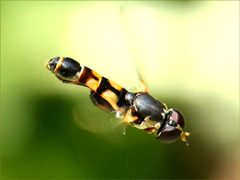
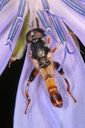
Syritta is a of hoverflies ( Syrphidae) with approximately 18 recognized . The genus likely originated in the Afrotropical region, where the majority of occurs. Only six species are known from the Palearctic region, with two species—S. flaviventris and S. pipiens—occurring in North America, probably introduced by humans. S. pipiens is the most widespread and commonly encountered species, distributed across Eurasia and North America.
Pronunciation
How to pronounce Syritta: /sɪˈrɪtə/
These audio files are automatically generated. While they are not always 100% accurate, they are a good starting point.
Identification
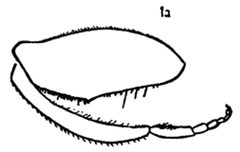
within Syritta are distinguished by features of the male genitalia and subtle differences in coloration. S. pipiens can be recognized by its distinctive enlarged hind with a black stripe. The is part of the tribe Milesiini, which can be separated from other hoverfly tribes by morphological characters of the wing venation and facial structure.
Images
Habitat
Larvae of S. flaviventris and S. pipiens have been reared from decaying platyclades of Opuntia maxima on the Spanish Mediterranean coast, indicating a association with decaying cactus tissue. habitat preferences are not well documented for most .
Distribution
The probably originated in the Afrotropical region. 13 of 18 groups occur south of the Sahara. 15 species inhabit the Oriental and Australian-Pacific regions. Six species are described from the Palearctic region. Two species, S. flaviventris and S. pipiens, occur in North America as far south as Mexico, probably introduced by humans. S. pipiens is currently distributed across Eurasia and North America.
Diet
Larvae of S. flaviventris feed on decaying platyclades of Opuntia maxima. feeding habits are not documented in the available sources.
Host Associations
- Opuntia maxima - larval decaying platyclades used by S. flaviventris and S. pipiens
Life Cycle
Larvae develop in decaying plant material. The larva and of S. flaviventris have been described. emerge from puparia reared from larval collections. Detailed data for most remain preliminary.
Human Relevance
S. pipiens has been reported as a associated with human cadavers in contexts. S. flaviventris and S. pipiens were probably introduced to North America by humans.
Similar Taxa
- other hoverfly generaSyritta can be distinguished from many other hoverfly by the enlarged hind in males, particularly the distinctive black stripe in S. pipiens. Male genitalia provide definitive species-level separation within the genus.
More Details
Taxonomic note
Authorship is sometimes cited as Le Peletier & Audinet-Serville, 1828, equivalent to Lepeletier & Serville, 1828.
Sources and further reading
- BugGuide
- Wikipedia
- GBIF taxonomy match
- iNaturalist taxon
- NCBI Taxonomy
- Catalogue of Life
- Syritta pipiens (Diptera: Syrphidae), a new species associated with human cadavers
- Description of the immature stages of Syritta flaviventris (Diptera: Syrphidae) and new data about the life history of European species of Syritta on Opuntia maxima