
Voria
Robineau-Desvoidy, 1830
Species Guides
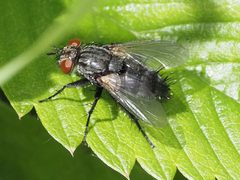
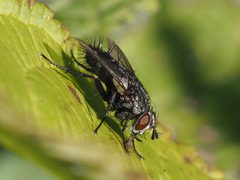
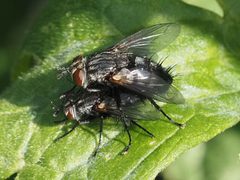
2Voria is a of tachinid flies (Diptera: Tachinidae) comprising approximately 10 described of larval . Species within this genus attack caterpillars of , particularly Noctuidae and Uraniidae. The genus exhibits morphological conservatism with subtle species-level differences, but substantial molecular divergence among geographically isolated . Voria has a distribution spanning Palearctic, Neotropical, Oriental, and Afrotropical regions. The genus has been subject to recent taxonomic revision, with multiple synonyms synonymized and new combinations established.
Pronunciation
How to pronounce Voria: /ˈvɔːr.i.ə/
These audio files are automatically generated. While they are not always 100% accurate, they are a good starting point.
Identification
The Voria is morphologically conservative, with distinguished by subtle morphological differences. Identification to species level requires examination of male terminalia and often molecular data (COI barcode sequences). The genus was revised in 2017 with establishment of new synonyms and combinations; previous names Xenoplagia, Hystricovoria, Afrovoria, Anavoria, and Itavoria are now synonymized under Voria. Distinguishing Voria from other tachinid genera requires knowledge of Dexiinae .
Images
Habitat
occur in dry forest, rain forest, and cloud forest . Elevation range extends from sea level to 2,000 meters. In agricultural contexts, Voria ruralis has been documented in crop systems including soybean and cabbage.
Distribution
distribution including Palearctic (Denmark, Norway, Sweden), Neotropical ( Rica, Mexico, South America), Oriental, and Afrotropical regions. Specific documented localities include Area de Conservación Guanacaste in northwestern Costa Rica, Coahuila in Mexico, and Arizona in the United States.
Host Associations
- Noctuidae - larval primary including agricultural pests such as cabbage looper (Trichoplusia ni) and soybean looper (Chrysodeixis includens)
- Uraniidae - larval documented in Rican dry forest
Life Cycle
Larval development occurs within caterpillars. flies emerge from parasitized host pupae or late-stage larvae. Development time varies with temperature, with distinct , larval, and pupal stages documented for Voria ruralis. Date of fly is used as collection date in inventory studies rather than date of caterpillar capture.
Behavior
Females deposit or larvae on or near caterpillars. Reproductive activity is tied to host presence and abundance. Seasonal occurrence patterns have been documented in Arizona, with activity synchronized with host availability.
Ecological Role
regulating caterpillar in forest and agricultural . Component of tri-trophic interactions between plants, herbivorous Lepidoptera, and parasitoids. Voria ruralis functions as a agent of agricultural pest noctuid larvae, with rates of 20.67% documented on Trichoplusia ni in Mexico.
Human Relevance
Voria ruralis is utilized as a agent against agricultural pest caterpillars, particularly the cabbage looper and soybean looper. The has been studied for development and mass rearing in laboratory culture. rates and biological characteristics have been investigated for South American and North American to assess efficacy in pest management programs.
Similar Taxa
- ArchytasAnother tachinid containing of Lepidoptera larvae; Archytas marmoratus co-occurs with Voria ruralis parasitizing Spodoptera frugiperda in Mexico, distinguished by different associations and morphological features
More Details
Taxonomic Revision
Fleming & Wood (2017) revised the , proposing Xenoplagia, Hystricovoria, Afrovoria, Anavoria, and Itavoria as new synonyms, and establishing new combinations Voria bakeri, Voria setosa, and Voria pollyclari based on .
Molecular Variation
Despite morphological conservatism, Voria exhibits substantial molecular variation among geographically isolated , with COI barcode sequences used to distinguish cryptic diversity.
Inventory Methodology
have been documented through ongoing caterpillar inventory programs where wild-caught caterpillars are reared to of either or fly, enabling precise -parasitoid association records.
Sources and further reading
- BugGuide
- Wikipedia
- GBIF taxonomy match
- iNaturalist taxon
- NCBI Taxonomy
- Catalogue of Life
- Biology of Voria ruralis (Diptera: Tachinidae)1
- Time Required for Development of Voria ruralis and Its Host, the Cabbage looper, at Different Temperatures123
- A new species of Voria Robineau-Desvoidy (Diptera: Tachinidae) from Area de Conservación Guanacaste in northwestern Costa Rica
- Primer registro de Archytas marmoratus y Voria ruralis (Diptera: Tachinidae) y sus niveles de parasitoidismo en dos lepidópteros plaga en Coahuila, México
- Biological Characteristics of a South American Population of Voria ruralis (Diptera: Tachinidae), a Larval Parasitoid of the Soybean Looper (Lepidoptera: Noctuidae) 1
- Seasonal Occurrence of Voria ruralis a Parasite of the Cabbage Looper, in Arizona, and Its Behavior and Development in Laboratory Culture1
- Influence of Three Soybean Genotypes on Development of Voria ruralis (Diptera: Tachinidae) and on Foliage Consumption by Its Host, the Soybean Looper (Lepidoptera: Noctuidae)