
Muscina prolapsa
(Harris, 1780)
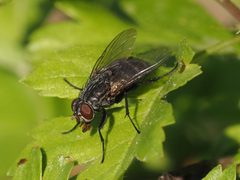
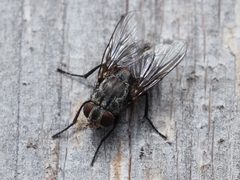
Muscina prolapsa is a of fly in the Muscidae, first described by Harris in 1780. It belongs to a of flies commonly known as "dump flies" or "false stable flies" that are frequently associated with animal waste and decomposing organic matter. The species has been recorded in Europe, including Belgium, Denmark, and the Azores (São Jorge and São Miguel islands). Like other Muscina species, it is likely involved in nutrient cycling through decomposition processes and may serve as a agent for pest fly .
Pronunciation
How to pronounce Muscina prolapsa: //mjuːˈsaɪnə proʊˈlæpsə//
These audio files are automatically generated. While they are not always 100% accurate, they are a good starting point.
Identification
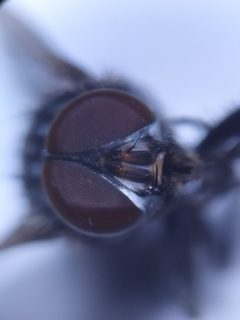
Muscina prolapsa can be distinguished from similar Muscidae by examination of specific morphological features, though detailed diagnostic characters require taxonomic knowledge. It is similar in general appearance to other Muscina , which typically have a gray with dark stripes and a somewhat robust body form. Accurate identification to species level generally requires examination of male genitalia or other microscopic features. It may be confused with Muscina pascuorum, which has been documented as a home-invading species associated with fungi, or with Muscina assimilis, though these species have different ecological associations.
Images
Habitat
Specific preferences for Muscina prolapsa are not well documented in the available sources. Based on -level patterns, Muscina are generally associated with decaying organic matter, including animal manure and decomposing vegetation. Related species in the genus have been documented in forested areas where fungi are abundant.
Distribution
Documented occurrences include Belgium (including Flemish Region), Denmark, and the Azores (São Jorge and São Miguel islands). The full native range and potential introduced range remain incompletely known.
Ecological Role
Based on documented roles of congeneric , Muscina prolapsa likely participates in decomposition of organic matter. Larvae of related Muscina species have been observed to prey upon larvae of pest flies such as horn flies (Haematobia irritans) in cattle , suggesting potential as agents. The species may contribute to nutrient cycling in terrestrial .
Human Relevance
Direct human relevance of Muscina prolapsa is not specifically documented. Related Muscina have been investigated for their potential in of livestock pest flies. Some Muscina species, such as M. pascuorum, are known to enter buildings in autumn and winter, though this has not been specifically reported for M. prolapsa.
Similar Taxa
- Muscina pascuorumSimilar and ; distinguished by ecological association with fungi and documented of entering homes in autumn and winter
- Muscina assimilisCongeneric with similar general appearance; differentiated by specific morphological details and preferences
- Musca domesticaHouse fly in same ; distinguished by thoracic stripe pattern, body proportions, and different ecological associations
More Details
Taxonomic note
The was first described by Harris in 1780. The Muscina is classified in the tribe Reinwardtiini within the Muscinae of Muscidae.
Data gaps
Available sources provide minimal -specific information for Muscina prolapsa. Most ecological and behavioral inferences are drawn from -level patterns or related species, particularly M. pascuorum and M. stabulans (the false ), which are better studied due to their association with livestock and potential biocontrol applications.