Coquillettidia perturbans
(Walker, 1856)
Cattail Mosquito
Coquillettidia perturbans is a mosquito with a broad intercontinental distribution spanning Africa, Asia, Australia, Europe, North America, and South America. It is a documented of Eastern equine encephalomyelitis virus and West Nile virus, with particular significance in due to its ability to fly long distances and feed on large mammals including humans. The species exhibits a distinctive larval : specialized siphons that pierce aquatic plant aerenchyma to obtain oxygen, allowing larvae and pupae to remain submerged and avoid surface and .
Pronunciation
How to pronounce Coquillettidia perturbans: //koʊˌkwɪləˈtiːdiə pərˈtɜːrbænz//
These audio files are automatically generated. While they are not always 100% accurate, they are a good starting point.
Identification
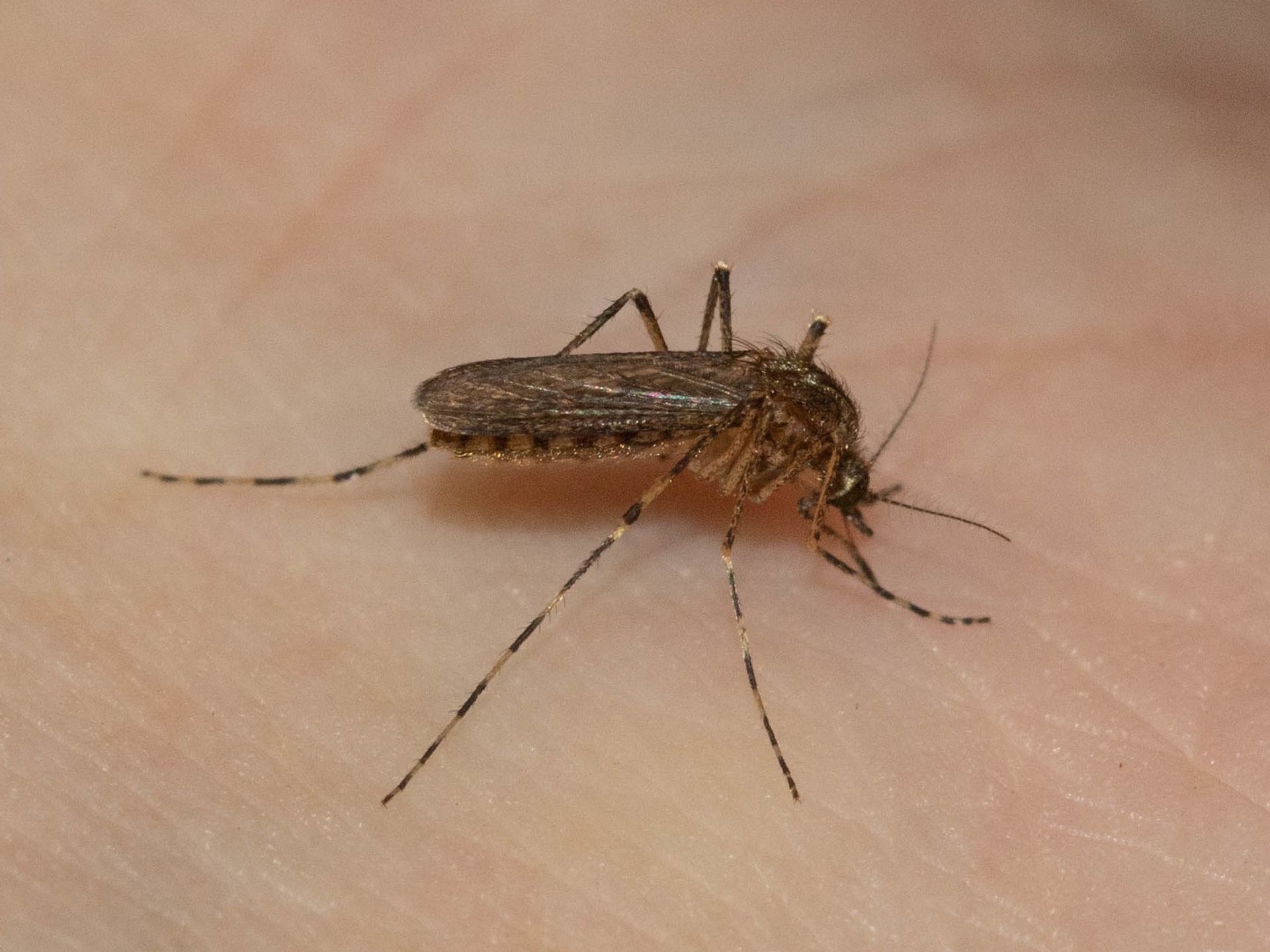
Distinguished from similar mosquitoes by the unique larval and pupal siphon modified for piercing aquatic plant roots to access oxygen—an absent in most other culicids. identified by tear-drop shaped wing and palp arranged around and outer edges, and alternating dark and light leg scale patterns. Distinguished from Mansonia by specific scale patterns and geographic distribution patterns. Molecular identification may be required for definitive separation from congeneric species.
Images
Appearance
range from 2.0 mm to 10.0–15.0 mm in length. Body consists of , , and . Legs display alternating dark and light patterns. Thorax sides covered with groups of scale bristles. Wing and palp scales are tear-drop shaped, arranged around and outer edges in alternating colors. General features include small head, wedge-shaped thorax, elongated slim wings, lengthened nearly cylindrical abdomen, in males and pilose antennae in females, and long slender adapted for piercing and sucking. Larvae and pupae are small with modified siphons for underwater respiration through plant tissue.
Habitat
Permanent marshes and swamps with aquatic vegetation, particularly stands of Typha latifolia (cattails) and Juncus . Larval sites characterized by deeper water, lower dissolved oxygen, and thicker organic debris layers compared to adjacent non-breeding areas. Water must be still (no current), neutral pH, low salt concentration, and low suspended particle matter. Larvae specifically associated with Typha water roots—specialized root structures that grow in the water column—and with interior openings of floating vegetation mats. Found in low elevation areas with high vegetation, warm summers, and high humidity.
Distribution
Documented on every continent except Antarctica: Africa, Asia, Australia, Europe, North America, and South America. In North America, occurs throughout the United States with southern concentration, and in Canada from southern British Columbia northward to Prince George and Fort St. John (500 km range extension), eastern Canada, and Ontario. Also present in the Caribbean and Central America. Range is actively expanding.
Seasonality
In Minnesota, mass occurs primarily in June (unimodal pulse), with 90% of a emerging within 26.6 ± 1.5 days; peak abundance of -seeking females typically in June and July. In colder climates, larval period may extend several months with some individuals as third instar larvae and not molting to fourth instar until July; these individuals may emerge in autumn or undergo a second winter as larvae. Some populations may show autumn emergence.
Diet
females blood-feed on mammals (mammalophilic); implicated in feeding on humans, horses, deer, and emus. Specific plant sugar feeding not documented in sources.
Host Associations
- Typha latifolia - larval/pupal and respiration substratePrimary plant; larvae attach to roots and pierce aerenchyma for oxygen
- Juncus species - larval/pupal and respiration substrateSecondary plant for larval development
- Humans - blood Documented for blood-feeding females; transmission risk
- Horses - blood Documented ; EEE transmission documented
- Deer - blood Documented ; Jamestown Canyon virus transmission implicated
- Resident birds - blood Documented ; EEE transmission
- Emus - blood Occasional ; EEE transmission documented
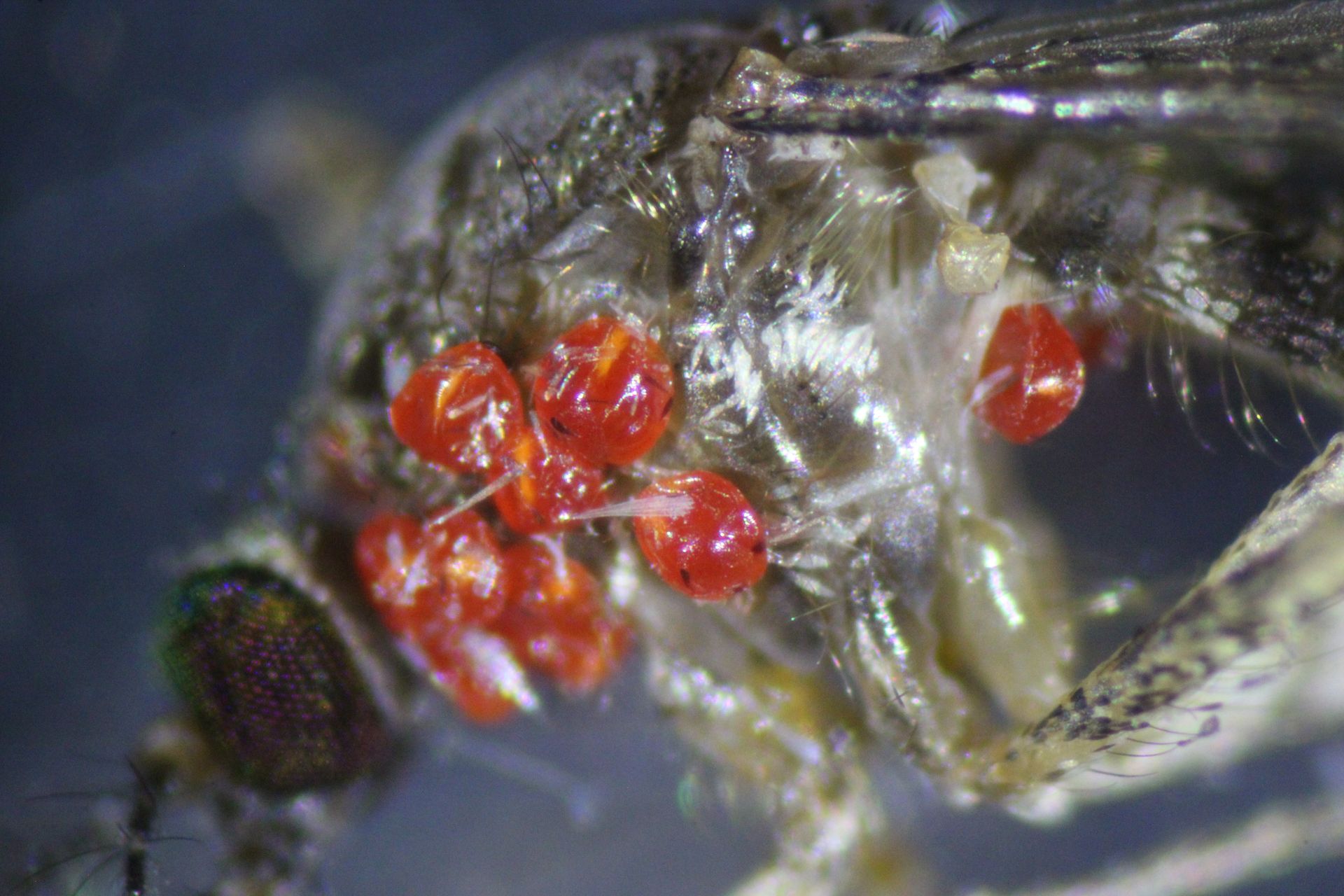
- Arrenurus danbyensis - Larval water mite ; up to 87.5% of newly emerged in Ontario, with estimated 5% reduction in production
Life Cycle
laid in rafts of approximately 100 eggs in marsh or swamp ; hatch after several days depending on temperature. Four aquatic larval instars; larvae possess modified abdominal siphon for piercing plant aerenchyma to obtain atmospheric oxygen while remaining submerged. Pupae also respire through plant tissue. Pupal development ranges from hours to weeks depending on climate. Most larvae overwinter as fourth instar with in early summer; some overwinter as third instar, molting to fourth in July, with potential autumn or second winter as larvae. wings harden and expand fully approximately 24 hours after . Complete spans 7–16 days under favorable conditions; adults may live 5–6 months if hibernation occurs.
Behavior
Larvae and pupae remain submerged throughout development, piercing aquatic plant aerenchyma to obtain oxygen—avoiding surface and exposure. exhibit mass patterns (unimodal pulse) with synchronized -level . Capable of flying long distances. -seeking females show temporal abundance peaks following emergence patterns. Not the primary of EEE in most systems but influences spread through mobility and host range.
Ecological Role
of Eastern equine encephalomyelitis virus, West Nile virus, and Jamestown Canyon virus. Bridges enzootic bird-mosquito cycles to mammalian including humans and domestic animals. Serves as host for parasitic water mites (Arrenurus danbyensis) that reduce reproductive output. Larval association with aquatic vegetation contributes to nutrient cycling in marsh through root interactions.
Human Relevance
Significant public health and veterinary concern as a of Eastern equine encephalomyelitis virus (relative risk 6.38 for human cases in New York State), West Nile virus, and Jamestown Canyon virus. Implicated in EEE transmission to humans, horses, and emus. risk associated with presence of infected mosquitoes; years with human EEE cases in New York State (1971–2012) showed significant association with C. perturbans infected with EEE virus. Geographic range expansion increases potential exposure risk. Not usually the primary EEE vector but contributes to transmission through long-distance and mammalian feeding .
Similar Taxa
- Culiseta melanuraBoth are EEE in eastern North America; Cs. melanura is the primary enzootic vector and was present in all years with human EEE cases in New York State, while Cq. perturbans has lower relative risk (5.50–6.38 vs. 14.67 for Aedes canadensis). Cs. melanura shows different associations and .
- Mansonia dyariShares similar larval in permanent water with aquatic vegetation and possesses modified siphons for plant-associated respiration; co-occurs in Florida phosphate region. Mansonia typically have different and geographic distribution patterns.
- Mansonia titillansEcologically similar with shared larval requirements and plant-piercing respiratory adaptations; co-occurs in Florida. Distinguished by specific morphological features and regional distribution differences.
- Aedes canadensisAssociated with EEE transmission in New York State with higher relative risk (14.67) than Cq. perturbans; occupies different larval (woodland pools vs. permanent marshes) and lacks plant-piercing respiratory adaptations.
More Details
Microbial Associations
females harbor diverse bacterial in ; bacterial fauna similar to Culiseta melanura with few significant differences between . bacteria match major components of other mosquito species' microbial flora, suggesting stable mosquito-microbe associations established after environmental acquisition.
Parasitism Impact
In Algonquin Park, Ontario, larval Arrenurus danbyensis mites parasitized up to 87.5% of newly emerged but only 30% of -seeking females, indicating 42.5% of newly emerged adults do not recruit to host-seeking . Laboratory studies showed no significant effect on adult lifespan or blood-meal size, but significant reduction in production; extrapolated to approximately 5% egg production reduction in natural populations.
Range Dynamics
Documented range expansion includes 500 km northward extension in British Columbia (from southern to northern regions at Prince George and Fort St. John). Range expansion attributed to increasing feeding area extent and transmission dynamics.
Sources and further reading
- BugGuide
- Wikipedia
- GBIF taxonomy match
- iNaturalist taxon
- NCBI Taxonomy
- LARVAL HABITAT CHARACTERISTICS OF COQUILLETTIDIA PERTURBANS (DIPTERA: CULICIDAE) IN MINNESOTA
- ADULT ECLOSION OF COQUILLETTIDIA PERTURBANS (WALKER) (DIPTERA: CULICIDAE) IN MINNESOTA
- New distribution information for Coquillettidia perturbans (Walker) (Diptera, Culicidae) in northern British Columbia, Canada
- Microbial communities within field‐collected Culiseta melanura and Coquillettidia perturbans
- Seasonal and Spatial Distribution of Mansonia Dyari, Mansonia Titillans, and Coquillettidia Perturbans (Diptera: Culicidae) in the Central Florida, USA, Phosphate Region1
- Phenology of Coquillettidia perturbans and Culiseta melanura (Diptera: Culicidae) in East-Central Georgia, USA: Implications for the Ecology of Eastern Equine Encephalitis Virus
- The impact of Arrenurus danbyensis Mullen (Acari: Prostigmata; Arrenuridae) on a population of Coquillettidia perturbans (Walker) (Diptera: Culicidae)
- Cases of Eastern equine encephalitis in humans associated with Aedes canadensis, Coquillettidia perturbans and Culiseta melanura mosquitoes with the virus in New York State from 1971 to 2012 by analysis of aggregated published data
- Observations of the developmental stages of Coquillettidia perturbans (Diptera: Culicidae) with special reference to the pupal trumpets.