Coquillettidia
Dyar, 1905
Species Guides
1- Coquillettidia perturbans(Cattail Mosquito)
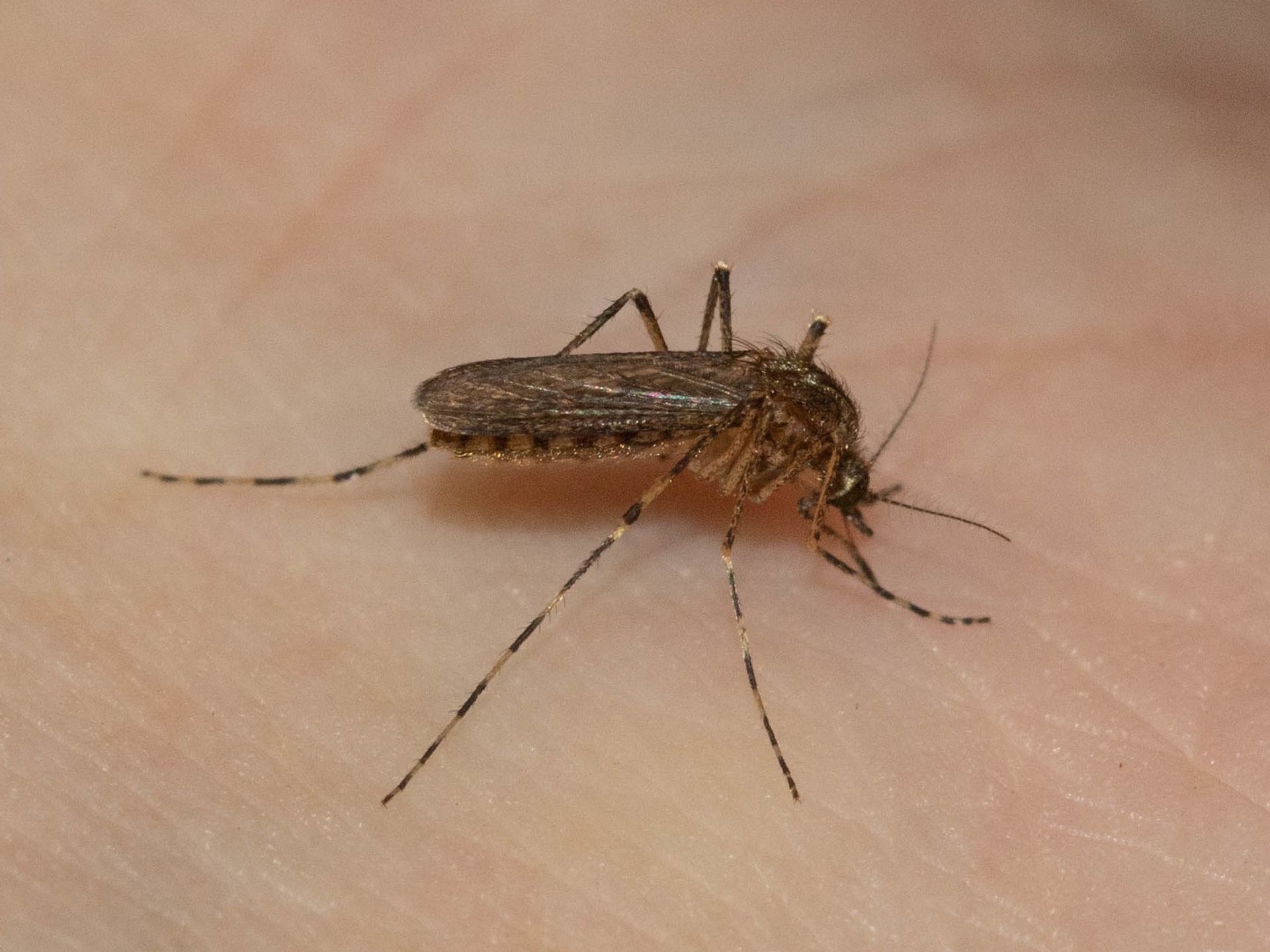
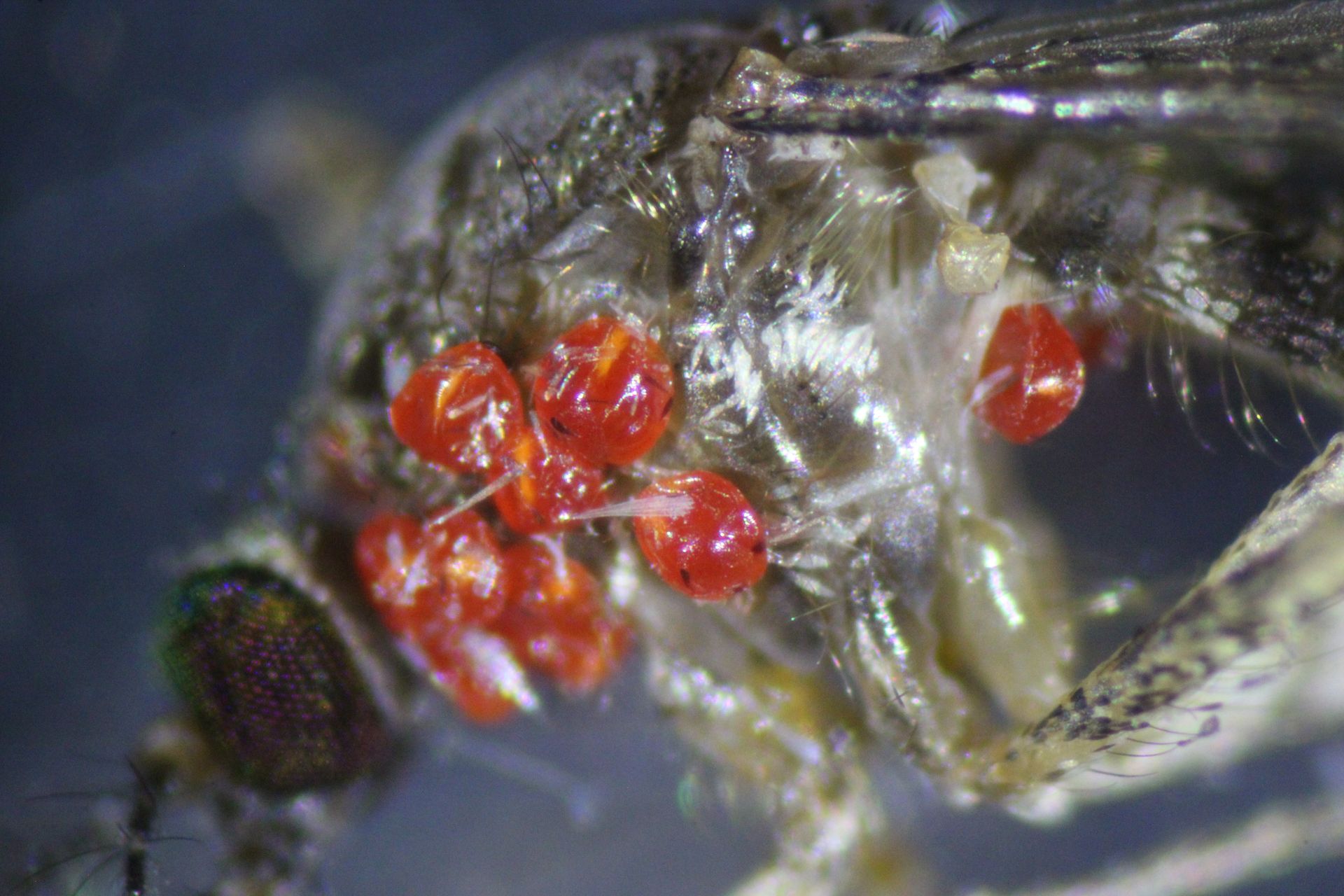
A of mosquitoes erected by Harrison Gray Dyar Jr. in 1905, distinguished primarily by unique features of male genitalia. The genus name honors entomologist Daniel William Coquillett. It comprises 57 in three subgenera: Coquillettidia (primarily Afrotropical with some Asian, Australasian, Palearctic, and one North American species), Austromansonia (restricted to New Zealand), and Rhynchotaenia (confined to the Neotropical Region). Larvae are unique among mosquitoes in attaching to submerged plant roots and stems throughout development using modified respiratory structures.
Pronunciation
How to pronounce Coquillettidia: //ˌkoʊkɪˌlɛˈtiːdiə//
These audio files are automatically generated. While they are not always 100% accurate, they are a good starting point.
Identification
Distinguished from other culicid primarily by male genitalia . Larvae and pupae possess modified respiratory structures—larvae have piercing siphons, pupae have modified respiratory trumpets—used to attach to submerged plant tissues, a trait shared with Mansonia but with distinguishing morphological features. Larvae of Coquillettidia linealis can be differentiated from local C. xanthogaster and Mansonia by formal larval description.
Images
Habitat
Permanent freshwater with emergent aquatic vegetation, particularly marshes with stands of Typha and other aquatic macrophytes. Larvae require submerged plant roots or stems for attachment; in Minnesota, sites with larvae had significantly deeper water, lower dissolved oxygen, and thicker organic debris layers than sites without larvae. Floating vegetation mats with interior openings also support larvae.
Distribution
Widespread across multiple biogeographic regions. Subgenus Coquillettidia: primarily Afrotropical, extending to Asian and Australasian regions, with C. perturbans in North America and two in the Palearctic. Subgenus Austromansonia: to New Zealand. Subgenus Rhynchotaenia: restricted to Neotropical Region. Specific records include Minnesota, British Columbia, Florida, Amazonian Brazil (Pará), Jordan Valley, Corsica, Sardinia, Syria, and southeast Australia.
Seasonality
primarily unimodal, occurring en masse in June in temperate regions (Minnesota), with 90% of within approximately 26.6 days. Peak -seeking female activity in June-July. Some larvae overwinter in third instar, potentially emerging in autumn or requiring a second winter.
Diet
Females of some feed primarily on birds; will also bite cattle. Occasional human biting occurs, primarily at night with peak activity early in the night, and rarely during daylight hours in shady places when is entered.
Host Associations
- Typha - larval attachment siteprimary ; larvae attach to roots, particularly water roots
- birds - blood meal primary for females of some
- cattle - blood meal secondary
- humans - blood meal occasional , primarily
Life Cycle
laid on water surface in areas of emergent vegetation. Hatchling larvae attach to submerged roots or stems using modified siphon, remaining attached throughout larval development. Pupae attach to plants via modified respiratory trumpet until . In temperate , most larvae overwinter in fourth instar, pupate in early summer, with adult emergence in June; some overwinter in third instar, reaching fourth instar in July and either emerging in autumn or passing a second winter as larvae.
Behavior
Larvae exhibit behavioral adaptations to underwater life, with attachment to plant tissues mediated by environmental cues. Dark, anoxic environments favor larval attachment; carbon dioxide produced by plant roots serves as an attractive cue. occurs in unimodal pulses with synchronized mass . Females bite primarily at night, most active early in night; occasionally attack humans in shady areas during daylight when is disturbed.
Human Relevance
C. perturbans is a of . Other are secondary or suspected vectors of Brugia malayi (lymphatic ) and Rift Valley fever. C. venezuelensis transmits Oropouche virus, cause of Oropouche fever. C. linealis is a suspected vector of Ross River virus in Australia. Significant nuisance biting reported for C. linealis in Australia.
Similar Taxa
More Details
Taxonomic history
Originally erected by Dyar in 1905 based on male genitalia; previously treated as subgenus of Mansonia (as Mansonia (Coquillettidia)) in some literature, now generally accepted as distinct
Larval adaptations
Unique among mosquitoes in remaining attached to plant tissues throughout entire larval and pupal development, never surfacing for air; this cryptic habit has delayed formal description of larval stages for many
Sources and further reading
- BugGuide
- Wikipedia
- GBIF taxonomy match
- iNaturalist taxon
- NCBI Taxonomy
- Catalogue of Life
- Behavioural adaptation ofCoquillettidia(Coquillettidia)richiardiilarvae to underwater life: environmental cues governing plant–insect interaction
- ADULT ECLOSION OF COQUILLETTIDIA PERTURBANS (WALKER) (DIPTERA: CULICIDAE) IN MINNESOTA
- LARVAL HABITAT CHARACTERISTICS OF COQUILLETTIDIA PERTURBANS (DIPTERA: CULICIDAE) IN MINNESOTA
- Host-Feeding Patterns of Florida Mosquitoes I. Aedes, Anopheles, Coquillettidia, Mansonia and Psorophora1
- New distribution information for Coquillettidia perturbans (Walker) (Diptera, Culicidae) in northern British Columbia, Canada
- Statistical influence of climate on the population density of culex and coquillettidia mosquitoes
- The larva and pupa of Mansonia (Coquillettidia) buxtoni (Edwards), 1923, (Diptera, Culicidae)
- Description of the fourth‐instar larva of Coquillettidia linealis (Diptera: Culicidae)
- Environmental drivers for Coquillettidia mosquito habitat selection: a method to highlight key field factors
- Observations of the developmental stages of Coquillettidia perturbans (Diptera: Culicidae) with special reference to the pupal trumpets.