
Mansonia dyari
Belkin, Heinemann & Page, 1970
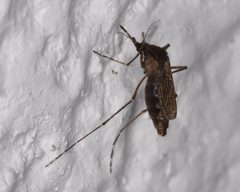
Mansonia dyari is a mosquito in the Culicidae, first described in 1970. It is known from the Americas, with detailed studies conducted in central Florida. The species develops in permanent freshwater with dense aquatic vegetation, attaching larvae and pupae to plant roots rather than free-swimming. show peak activity in early summer and are collected using CO2-baited light traps.
Pronunciation
How to pronounce Mansonia dyari: /mænˈsoʊniə ˈdaɪəri/
These audio files are automatically generated. While they are not always 100% accurate, they are a good starting point.
Identification
Belongs to Mansonia, characterized by larvae and pupae that attach to aquatic vegetation roots using modified siphons; may be distinguished from related Mansonia by detailed morphological examination of genitalia and wing scaling patterns, though specific diagnostic features for M. dyari require taxonomic keys.
Images
Habitat
Permanent, heavily vegetated freshwater including swamps, canals, and borrow pits. Strongly associated with water lettuce (Pistia stratiotes) and water hyacinth (Eichhornia crassipes), where stages attach to submerged roots.
Distribution
Recorded from Caribbean, Middle America, North America, and South America. Specifically documented in Polk and Hillsborough counties in the central Florida phosphate region of the United States.
Seasonality
Peak occur in June and July in central Florida. Adults are likely to based on light trap collection methods.
Life Cycle
Larvae and pupae attach to roots of aquatic vegetation; lacks a free-swimming larval stage typical of many mosquito . Specific details on -laying and longevity not documented in available sources.
Similar Taxa
- Mansonia titillansSympatric in central Florida phosphate region; both share preferences for vegetated freshwater with aquatic plants and are collected using similar trapping methods.
- Coquillettidia perturbansCo-occurs in same Florida and shares Mansonia-like larval attachment to aquatic vegetation; distinguished by belonging to separate within same tribe Mansoniini.
More Details
Taxonomic Note
Catalogue of Life lists this as a synonym, though GBIF and NCBI recognize it as accepted. The 1970 description by Belkin, Heinemann & Page established the species.
Research Methods
studies rely on CO2-baited CDC light traps for collection, which may detection toward -seeking females and underestimate resting or male populations.